
Table of Contents
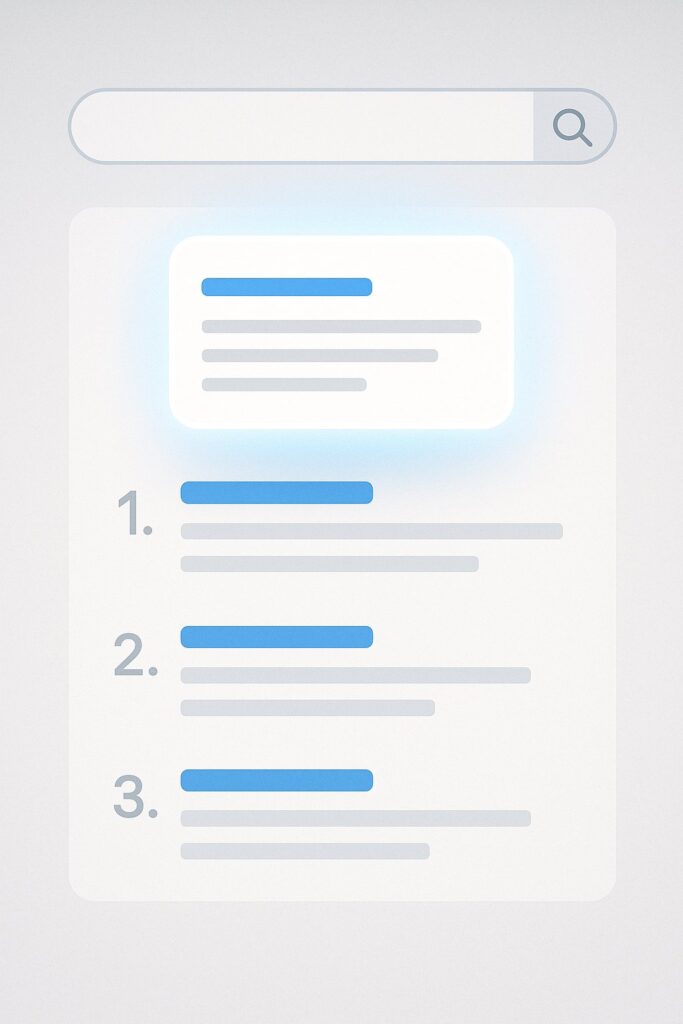
Featured snippets don’t reward the best content. They reward the most snippet-friendly content. There’s a difference, and once you see it, you’ll start winning these boxes consistently.
Google pulls snippets from pages that already rank on page one — usually positions 1-5. So if you’re nowhere near the first page for a query, snippet optimization won’t help you yet. Fix your rankings first. But if you’re hovering in positions 2-8, snippet optimization is your shortcut to the top.
Here’s what most guides won’t tell you: winning snippets isn’t about luck or hoping Google notices you. It’s about reverse-engineering what Google wants and serving it up on a silver platter.
The Snippet Formats Google Actually Uses
Google rotates between four main snippet types, and each one demands a specific content structure. Paragraph snippets answer definition or explanation queries. List snippets show up for process questions or ranking queries. Table snippets appear when users compare options. Video snippets dominate how-to searches where visual demonstration matters.
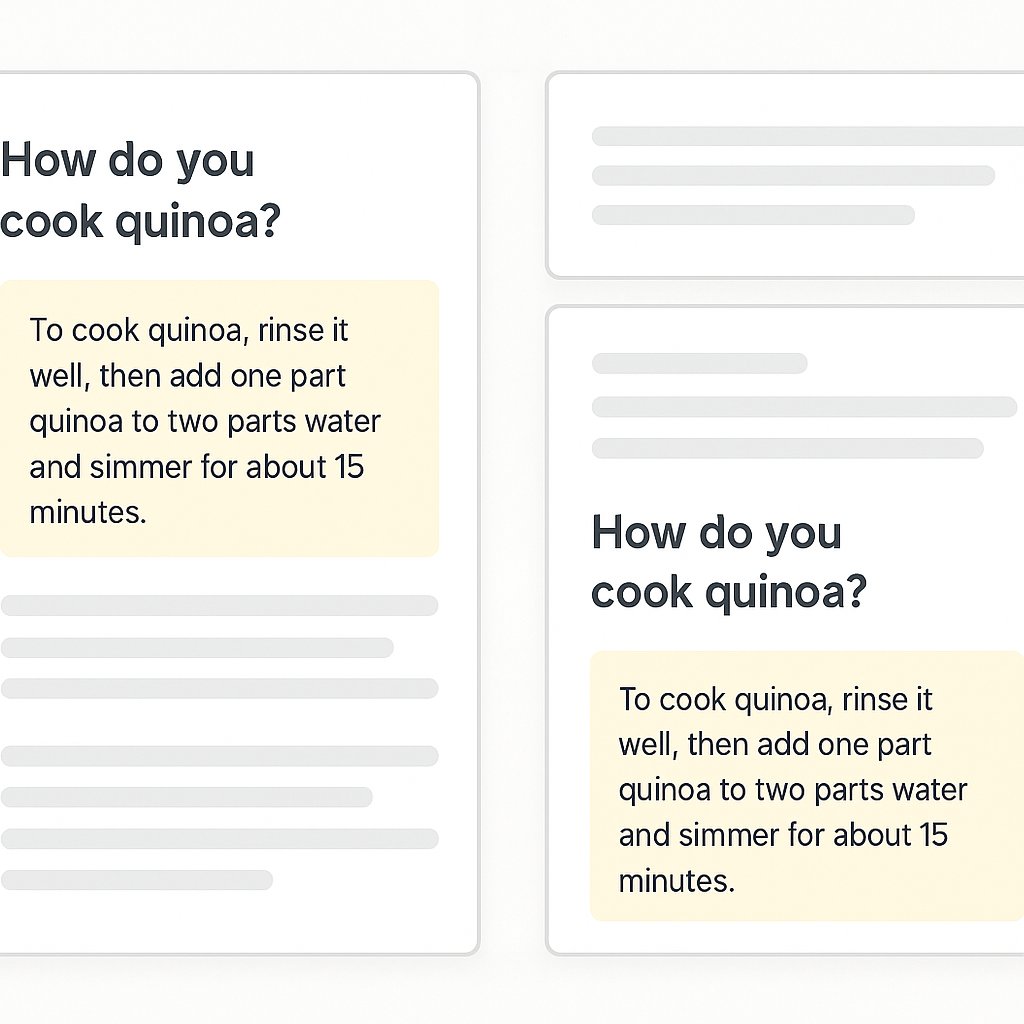
Paragraph snippets are the easiest to win because they just need a tight 40-60 word answer placed directly after a question-formatted heading. Google loves crisp, no-fluff definitions.
List snippets require ordered or unordered lists in your HTML. But here’s the trick: Google often rewrites your list. You might have seven steps, and Google pulls four. You can’t control which ones, but you can control whether your list is structured cleanly enough for Google to parse it.
Why Most Sites Lose to Worse Content
You’ve seen it. A thin, barely-helpful page outranks your comprehensive guide in the snippet box. Why? Because that thin page formatted its answer correctly, and you buried yours in paragraph five.
Google’s snippet algorithm isn’t reading for quality. It’s scanning for patterns. Does this page have a question as an H2? Does it answer that question in the next 2-3 sentences? Is there a cleanly formatted list or table? If yes, it’s a candidate. If no, Google moves on.
This is why Wikipedia wins so many snippets. Not because Wikipedia content is inherently better, but because Wikipedia’s structure is boringly consistent and machine-readable.
The Question-Answer Pairing That Wins
Format your H2 or H3 as the exact question users are asking. Not a creative headline. Not a keyword-stuffed variation. The actual question.
Bad: Understanding Core Web Vitals for Better Performance
Good: What Are Core Web Vitals?
Immediately after that heading, deliver a concise answer in 40-60 words. One focused paragraph. Then expand with details, examples, and nuance below. Google grabs that first tight answer. Readers who want more keep scrolling.
Schema Markup Is Your Secret Weapon
Structured data doesn’t guarantee a snippet, but it sure helps. FAQPage schema and HowTo schema are specifically designed to feed Google’s snippet engine. If you’re not using them, you’re competing with one hand tied behind your back.
FAQPage schema wraps your question-answer pairs in JSON-LD that Google can parse instantly. You’re essentially handing Google the snippet content pre-formatted. HowTo schema does the same for step-by-step processes, including images and time estimates.
Here’s the reality: most of your competitors aren’t bothering with schema. It feels technical, and it requires a plugin or manual coding. That’s your edge. Twenty minutes of schema setup can leapfrog months of content work.
The Tools That Make Schema Dead Simple
You don’t need to touch code. Rank Math and Yoast SEO both have built-in FAQ and HowTo blocks that auto-generate schema. You click a button, type your questions and answers, and the plugin spits out valid JSON-LD in your page source.
If you want more control, Google’s Structured Data Markup Helper walks you through highlighting content on your page and tagging it appropriately. Then it generates the schema code to paste into your site.
Common Schema Mistakes That Kill Your Chances
Don’t mark up content that’s not visible to users. Google will penalize you. The FAQ or HowTo content in your schema must match what’s actually on the page.
Don’t spam schema on every page. Use FAQPage schema on pages that genuinely have multiple questions answered. Use HowTo schema on actual tutorials. Google’s getting better at detecting schema spam, and it’s not worth the risk.
Always validate your schema with Google’s Rich Results Test before you publish. Broken schema is worse than no schema — it signals sloppiness to Google’s algorithm.
Topical Authority Signals Snippet-Worthiness to Google
Google doesn’t pull snippets from random pages. It pulls them from pages it already trusts to answer that topic cluster. If your site has proven authority on a subject through deep internal linking and comprehensive coverage, you’re far more likely to win related snippets.
This is where most SEO strategies fall apart. You optimize one brilliant article for a snippet, but you haven’t built the topical moat around it. Google sees an isolated page, not a subject matter hub.
Internal linking architecture is your proof of topical authority. When you link related content intelligently — connecting your snippet target page to supporting articles, definitions, examples, and FAQs — you signal to Google that this isn’t a one-off post. It’s part of a comprehensive knowledge base.
How Automated Linking Reinforces Authority at Scale
Manual internal linking doesn’t scale. You publish 50 articles, and suddenly you’re supposed to remember which ones should link to which, with what anchor text, and how often. It’s a losing battle.
Tools like AI Internal Links analyze your content contextually and build link networks that reinforce topical clusters automatically. Instead of guessing which articles support your snippet target, the tool identifies semantic relationships and creates the connections Google uses to evaluate authority.
This matters for snippets because Google doesn’t just look at the target page. It looks at the link graph around that page. Are other pages on your site pointing to it as the definitive answer for this topic? Are you linking out to related concepts? Strong internal linking tells Google this page is your authoritative stance on the subject.
Building Topic Clusters That Google Recognizes
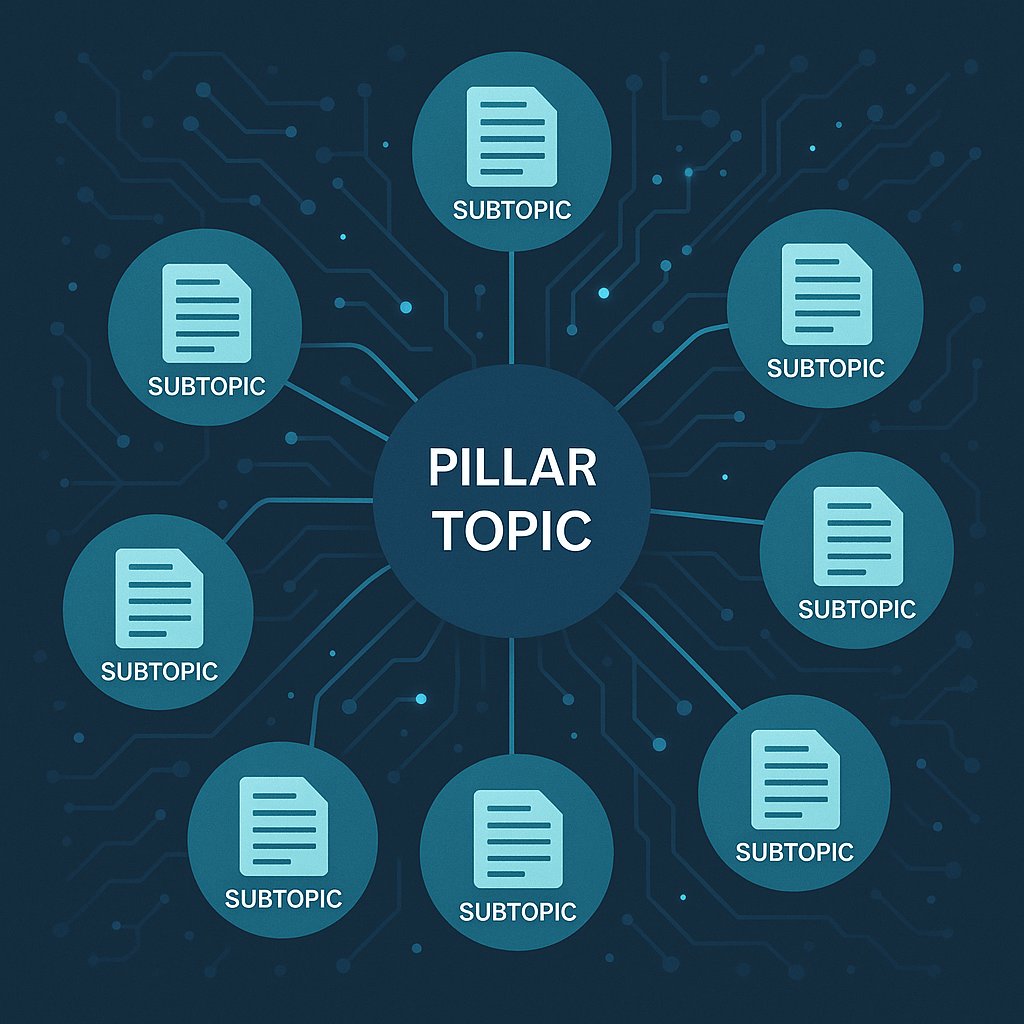
A topic cluster is simple: one pillar page that broadly covers a subject, surrounded by 5-15 supporting articles that dive into specific subtopics. Every supporting article links back to the pillar. The pillar links out to each supporting piece.
Your snippet target should usually be a supporting article, not the pillar. Pillars are too broad. Snippets reward specificity. But the pillar’s existence — and the link network connecting it to your snippet target — proves topical authority.
Example: if you’re targeting a snippet for "what is schema markup," your pillar might be a comprehensive SEO guide. Supporting articles cover schema types, implementation tutorials, and use cases. They all link to each other and back to the pillar. Google sees the cluster and trusts your schema article more.
Templates That Win Snippets Immediately
Forget theory. Here are copy-paste structures that work.
Paragraph Snippet Template
H2: What is [keyword]?
First paragraph: [Keyword] is [concise 40-60 word definition]. [One sentence on why it matters].
Second paragraph: [Expand with examples, context, or nuance].
This structure wins because it front-loads the answer Google wants. You satisfy the snippet algorithm in paragraph one, then keep human readers engaged with depth in paragraph two.
List Snippet Template
H2: How to [achieve outcome]
First paragraph: [Brief 1-2 sentence intro]
Ordered list:
- Step one with actionable verb
- Step two with actionable verb
- Step three with actionable verb
Following paragraphs: [Expand on each step]
Google pulls the list. Readers who want more detail keep reading. Everybody wins.
Table Snippet Template
Use HTML tables for any comparison content: tool comparisons, pros/cons, pricing tiers, feature matrices. Google loves pulling tables into snippets because they’re visually scannable.
Keep tables simple. Three to five columns max. Six to ten rows. More than that, and Google won’t use it.
Tracking and Iterating on Snippet Performance
You can’t improve what you don’t measure. Google Search Console shows which queries trigger snippets for your pages under the Performance tab. Filter by position and look for average positions between 0 and 1. That’s snippet territory.
If you’re ranking in a snippet, check your click-through rate. Snippets can actually lower CTR because they answer the query directly. If your CTR tanks after winning a snippet, consider whether that query is even worth targeting — or if you need to angle your snippet content to drive clicks, not just satisfy curiosity.
The A/B Testing Approach Nobody Uses
You can test snippet formats by publishing two similar articles targeting related queries, each using a different snippet structure. See which one Google rewards. Then apply that winning format to your priority pages.
This is manual work, but it pays off. You’re reverse-engineering Google’s preference for your specific topic area. What works for SaaS queries might not work for recipe queries. Test and learn.
When to Abandon a Snippet Target
Not every snippet is worth chasing. If you’re ranking #8 for a query and the current snippet holder is an authoritative site like Mayo Clinic or Wikipedia, your odds are slim. Focus on queries where the current snippet comes from a site with equal or weaker authority than yours.
Also, beware of snippets that kill clicks. If the snippet fully answers the query and users don’t need to visit your site, you’re doing Google’s job for free. Target snippets that create curiosity gaps — answer part of the question, but leave readers wanting the full story.
Future-Proofing Your Snippet Strategy
Google’s moving toward AI-generated answers in search. The Search Generative Experience will likely replace some traditional snippets. But here’s the thing: AI answers still pull from trusted, well-structured sources. The same tactics that win snippets now will position you as a source for AI-generated results later.
Focus on clean structure, semantic HTML, and topical authority. Those fundamentals outlast algorithm changes. Snippet formats might evolve, but Google’s need for parseable, trustworthy content won’t.
The sites winning snippets today are building the muscle memory and content infrastructure to win whatever Google throws at them next. Start now, and you won’t be scrambling when the next shift happens.