
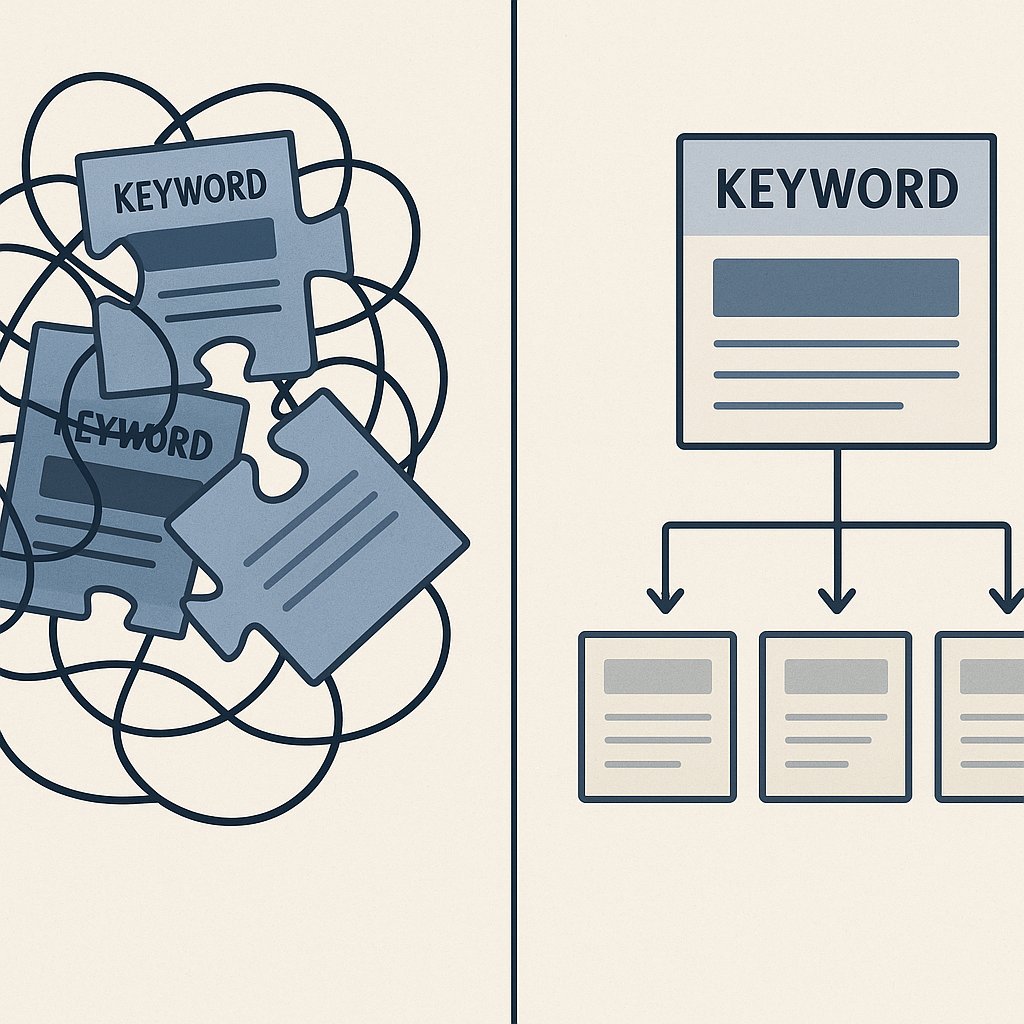
Keyword cannibalization remains one of the most overlooked yet impactful SEO issues in 2026. When multiple pages on your WordPress site compete for the same search query, you’re essentially fighting against yourself in search results. Rather than presenting a single authoritative page to Google, you’re diluting your ranking potential across several weaker contenders. The solution isn’t always consolidation or deletion—strategic internal linking can resolve cannibalization while preserving your content investments.
This comprehensive guide explores how smart internal linking architecture prevents keyword cannibalization, strengthens topical authority, and directs search engines toward your intended ranking pages. You’ll discover detection methodologies, tactical linking strategies, and ongoing optimization approaches specifically designed for WordPress sites dealing with content overlap.
Understanding Keyword Cannibalization in Modern SEO
Keyword cannibalization occurs when multiple pages target the same keyword or search intent, causing search engines to struggle with determining which page deserves to rank. This internal competition fragments your click-through rates, confuses search algorithms, and ultimately weakens your site’s overall performance for those valuable queries.
The Real Impact on Search Performance
Contrary to popular belief, cannibalization doesn’t always mean ranking for position one versus position two. The real damage manifests in fluctuating rankings where different pages swap positions week to week, preventing any single page from building sustained authority. Your conversion rates suffer when visitors land on less relevant pages, and your content’s full value remains untapped.
Google’s evolved algorithms attempt to surface the most relevant page, but when internal signals contradict each other, the engine defaults to showing whichever page it deems slightly more appropriate in that moment. This inconsistency destroys the predictability you need for conversion optimization and content strategy.
Common Causes Beyond Simple Keyword Targeting
Most WordPress sites experience cannibalization not from intentional duplicate targeting but from organic content growth. Blog posts naturally discuss similar topics, category pages overlap with detailed guides, and product variations create near-duplicate content scenarios. E-commerce sites especially struggle when multiple product pages target variations of the same purchasing keywords.
Seasonal content updates compound the issue—publishing a new comprehensive guide without properly linking or redirecting from older versions creates competing versions of essentially the same information. Archive pages, tag pages, and author pages also generate cannibalization risks when left unmanaged in your site architecture.
Post-2023 Algorithm Considerations
Google’s helpful content updates and core algorithm refinements through 2024-2025 have increased sensitivity to topical authority and content purpose. The search engine now better understands when pages serve different intents even with similar keywords, but this sophistication requires clearer internal signals from your site structure.
Pages must demonstrate their unique value proposition through context, depth, and how they connect within your broader content ecosystem. Internal linking provides these contextual signals, telling search engines not just what each page covers but how it relates to your authoritative hub content.
Detection Methods That Actually Work
Identifying cannibalization requires more than searching for repeated keywords across your content. Effective detection combines search console data analysis, SERP observation, and strategic auditing of your internal architecture.
Google Search Console Analysis
Start with Search Console’s Performance report, filtering by specific queries that matter to your business. Export data showing which pages receive impressions and clicks for your target keywords. When three or more pages show consistent impressions for the same query, you’ve likely identified cannibalization.
Pay particular attention to queries where you rank on page one but multiple URLs appear in your data. This splitting of impressions directly reduces your click-through rate potential. Calculate the combined impressions versus actual clicks—often you’ll discover that consolidating these signals could dramatically improve performance.
Manual SERP Testing
Perform incognito searches for your target keywords, noting which pages appear and in what order over multiple days. Cannibalization reveals itself through position swapping—one day your ultimate guide ranks, another day your basic introductory post takes over, then perhaps a tangentially related category page appears.
Document these fluctuations over two weeks minimum to establish patterns rather than temporary ranking volatility. Cross-reference with your Search Console data to understand whether these variations correlate with click distribution changes.

Content Mapping and Intent Analysis
Create a spreadsheet mapping your content by primary keyword, secondary keywords, and true search intent. This exercise often reveals unintentional overlaps invisible during individual content creation. Group pages by the query you’d ideally rank for, then assess whether multiple pages genuinely serve different user needs.
Be honest about intent differentiation—a beginner’s guide and an advanced guide might use similar keywords but serve distinct audiences. However, two blog posts covering the same topic from slightly different angles likely compete rather than complement each other.
Technical Crawl Insights
While crawl tools identify technical issues, analyzing your internal link structure through crawl data reveals which pages search engines consider most important. When cannibalized pages show similar crawl depth and internal link counts, you’ve confirmed that your site architecture provides no clear hierarchy signal.
Examine which pages link to your competing URLs—if your homepage or main navigation links to multiple competing pages, you’re actively reinforcing the cannibalization through equal priority signals.
Internal Linking Architecture That Prevents Cannibalization
Strategic internal linking resolves cannibalization by establishing clear hierarchies, consolidating ranking signals, and guiding both users and search engines toward your intended authoritative pages. This approach preserves your content while directing competitive power appropriately.
Hub-Spoke Model Implementation
Designate one comprehensive page as your authoritative hub for each important keyword cluster. This pillar page should be your most thorough, updated resource on the topic. All related but less comprehensive pages become spokes—supporting content that links to the hub using descriptive anchor text.
The hub page links back to spokes only when contextually relevant for user navigation, creating an asymmetric linking pattern that signals hierarchy. This architecture tells search engines which page deserves ranking priority while maintaining the value of supporting content for long-tail variations and detailed subtopics.
Canonical Anchor Text Strategy
When linking between potentially competing pages, use anchor text that reinforces each page’s unique angle rather than generic phrases. Instead of linking from your beginner’s guide to your advanced guide with ‘click here,’ use ‘advanced strategies for experienced practitioners’ to differentiate search intent.
This descriptive anchoring helps search algorithms understand content relationships and reduces confusion about which page targets which query. Review existing internal links between related pages and update anchors to emphasize differentiation or hierarchy depending on your consolidation strategy.
Breadcrumb and Navigation Hierarchy
Your site’s structural navigation must reflect content priority. Category structures, breadcrumbs, and main navigation should feature authoritative pages prominently while positioning supporting content at deeper levels. This architectural clarity extends beyond internal links to your entire information hierarchy.
When breadcrumbs consistently lead to your hub page before reaching spoke content, both users and search crawlers understand the relationship. This pattern reinforces which page deserves primary ranking consideration while maintaining accessibility to specialized content.
Strategic Noindex Implementation
Some cannibalization scenarios require removing certain pages from search consideration entirely. Thin category pages, archive pages, or older versions of evergreen content that you’ve updated might serve internal navigation purposes without needing independent rankings.
Combine noindex tags with internal links to these pages from your authoritative content. This preserves user experience and site architecture while eliminating search competition. The pages remain accessible and valuable for visitors who need them, but they no longer dilute your ranking signals.
Tactical Linking Patterns for Specific Scenarios
Different cannibalization situations require tailored internal linking approaches. Understanding these specific patterns enables you to apply appropriate solutions rather than generic fixes that might not address your particular challenge.
Blog Post Consolidation Through Links
When you’ve published multiple blog posts over time covering similar ground, resist the urge to delete older content that still attracts backlinks or traffic. Instead, add prominent internal links at the top of older posts directing readers to your most comprehensive current resource on that topic.
Use language like ‘This post has been superseded by our complete guide to [topic]’ followed by a contextually descriptive anchor link. Update the older post’s metadata to support this hierarchy while maintaining the URL for link equity preservation. The older content becomes a gateway to your authoritative page rather than a competitor.
E-commerce Product Variation Management
Product pages with similar variations—different colors, sizes, or minor feature differences—create cannibalization nightmares for e-commerce sites. Establish a primary product page for each core product type, then link all variations to this main page using consistent anchor patterns.
Implement bidirectional linking from the main page to variations only within a structured ‘available options’ section, using minimal anchor text diversity. This pattern tells search engines that one page represents the core concept while acknowledging legitimate variations exist for user choice.
Service Page Hierarchy
Service-based WordPress sites often create separate pages for service variations that target nearly identical keywords. Build a main service landing page optimized for your primary keyword, then create sub-service pages for specializations that link back using anchors emphasizing the parent service category.
The parent service page should link to specialty pages within contextual content explaining when visitors might need those specific variations. This framework serves user navigation while establishing clear ranking priorities for broad versus specific service queries.
Geographic Targeting Without Cannibalization
Local businesses serving multiple areas frequently cannibalize city-specific pages. Create a location-agnostic service description as your hub, then build individual location pages that link to this central resource for detailed service information. Each location page should link to the hub using anchors like ‘our approach to [service]’ that don’t include location modifiers.
From the hub page, link to location pages within a geographic coverage section using city names as anchors. This clear division prevents competition between service descriptions and local targeting while serving both search intents appropriately.
Automation and Scaling Solutions
Manually implementing and maintaining strategic internal linking across hundreds or thousands of WordPress pages becomes impractical at scale. Modern solutions automate these patterns while adapting to content growth and site evolution.
Automated Link Placement Benefits
Automation ensures consistency in your linking patterns—new content automatically receives appropriate links to and from related authoritative pages based on topical relevance. This consistency prevents future cannibalization by establishing clear hierarchies from publication rather than requiring retrospective fixes.
Time savings become dramatic on larger sites. Rather than manually auditing content relationships and updating dozens of pages when publishing new material, automated systems handle contextual linking instantly. This efficiency allows your team to focus on content quality and strategy rather than maintenance tasks.
AI-Powered Contextual Understanding
Modern automation leverages natural language processing to understand semantic relationships between pages beyond simple keyword matching. These systems identify when new content might cannibalize existing pages and automatically establish appropriate hierarchical linking patterns to prevent competition.
For existing cannibalization issues, AI analysis can suggest optimal linking structures based on your content’s actual semantic relationships and search performance data. Tools like AI Internal Links can automate this process, scanning your WordPress site to identify cannibalization risks and implement corrective linking patterns without manual intervention.
Dynamic Link Updates
As pages gain or lose authority over time—through backlink acquisition, content updates, or changing search trends—your internal linking should adapt accordingly. Automated systems monitor these shifts and adjust linking patterns to continuously reinforce your strongest performers while preventing emerging cannibalization.
When you update cornerstone content to be more comprehensive, automation can instantly add links from related pages to this newly strengthened resource. This dynamic optimization keeps your internal architecture aligned with your actual authority distribution rather than static decisions made months ago.
Audit and Monitoring Integration
Automation platforms typically include ongoing monitoring that alerts you to emerging cannibalization issues before they impact rankings. Rather than quarterly manual audits, you receive proactive notifications when new content creates competition risks or when existing pages begin fluctuating in ways suggesting cannibalization.
This continuous monitoring combined with automated fixes creates a self-optimizing system that maintains healthy internal linking architecture as your site grows. The investment in automation pays dividends through prevented ranking losses and reduced manual labor for SEO maintenance.
Ongoing Optimization and Maintenance
Preventing keyword cannibalization isn’t a one-time fix but an ongoing component of your SEO strategy. Establishing processes for continuous monitoring and optimization ensures your internal linking architecture evolves appropriately with your content.
Quarterly Cannibalization Audits
Schedule comprehensive audits every three months focusing specifically on cannibalization signals. Review your top 50 converting keywords in Search Console, examining whether multiple pages show impressions for each query. Document any new cannibalization patterns that have emerged since your last audit.
Compare current ranking patterns against previous quarters to identify deteriorating performance that might indicate developing cannibalization issues. Early detection allows corrective linking before significant ranking losses occur.
Content Update Protocols
Whenever significantly updating existing content, review internal links pointing to and from that page. Updated content often shifts in scope or depth, potentially changing its relationship to other pages. Adjust your linking architecture to reflect these changes, ensuring updated pages receive appropriate hierarchy signals.
Before publishing major new content, conduct a pre-publication audit checking whether the new page might compete with existing content. Plan your internal linking strategy during content creation rather than fixing issues after publication.
Performance Correlation Analysis
Track whether your internal linking changes produce expected outcomes. When you implement hub-spoke architecture for a keyword cluster, monitor whether the hub page consolidates rankings while spoke pages maintain their long-tail traffic. This feedback loop validates your strategies and identifies patterns that work best for your specific site.
Document successful approaches in an internal playbook so your team can replicate effective patterns. Note which types of cannibalization scenarios respond best to specific linking tactics versus situations requiring content consolidation or other interventions.
Algorithm Update Responses
Google’s algorithm updates occasionally shift how search engines interpret internal linking signals and topical authority. After major updates, reassess your internal linking architecture’s effectiveness. Run abbreviated cannibalization audits focusing on keyword clusters that showed ranking volatility during the update.
Stay informed about SEO industry analysis of algorithm changes, particularly regarding how Google evaluates content relationships and site structure. Adapt your internal linking practices to align with evolving best practices while maintaining your core strategic approaches.
Competitive Intelligence Integration
Analyze how competitors structure internal linking for similar content types and keyword targets. While you shouldn’t copy their architecture, understanding alternative approaches provides ideas for optimization. Notice particularly how top-ranking sites in your niche handle potential cannibalization scenarios.
Competitive analysis combined with your performance data reveals opportunities where stronger internal architecture could help you outperform competitors who may have superior content but weaker structural signals.
Measuring Success and ROI
Effective cannibalization prevention through strategic internal linking produces measurable improvements across multiple metrics. Establishing clear measurement frameworks demonstrates the value of your optimization efforts.
Ranking Consolidation Metrics
Track whether multiple pages consolidate into single stable rankings after implementing linking changes. Measure position stability over 30-day periods, looking for reduced fluctuation in your core keyword rankings. Export Search Console data monthly to document which URLs appear for your target queries, aiming for single-page representation.
Successful consolidation manifests as one authoritative page consistently ranking while previously competing pages maintain or improve traffic for their distinct long-tail variations. Total impressions for your target keyword cluster should remain stable or increase even as they concentrate on fewer pages.
Click-Through Rate Improvements
Cannibalization artificially depresses CTR by splitting impressions across multiple listings or causing position instability. After resolving cannibalization, your CTR for affected keywords should improve as users consistently see your most relevant, compelling page in stable positions.
Calculate aggregate CTR for keyword clusters before and after optimization. Even without position changes, eliminating cannibalization often yields 10-30% CTR improvements simply through consistency and relevance matching.
Organic Traffic Quality
Monitor not just traffic volume but conversion rates and engagement metrics for pages affected by your linking changes. When visitors consistently land on your most appropriate page rather than rotating through cannibalized alternatives, conversion rates typically improve alongside traffic stability.
Track bounce rates and time-on-page metrics for formerly cannibalized content. Successfully directing users to authoritative pages while maintaining supporting content for specific queries should produce better engagement across your entire content cluster.
Link Equity Flow Visualization
Use crawl tools to visualize how internal PageRank flows through your site before and after implementing hierarchical linking patterns. Your hub pages should show increased internal link equity after establishing hub-spoke architecture, while spoke pages maintain sufficient authority for their specialized purposes.
This visualization helps communicate your optimization’s impact to stakeholders who may not fully understand SEO technical concepts but can grasp visual representations of authority concentration and distribution.
Strategic internal linking transforms keyword cannibalization from a persistent SEO problem into a manageable aspect of content strategy. By establishing clear hierarchies, implementing appropriate linking patterns, and maintaining ongoing optimization processes, WordPress sites can preserve their content investments while maximizing ranking potential. The key lies not in avoiding topical overlap but in using internal architecture to signal clear intent and authority to search engines, letting your best content rise while supporting pages contribute to comprehensive topical coverage.