
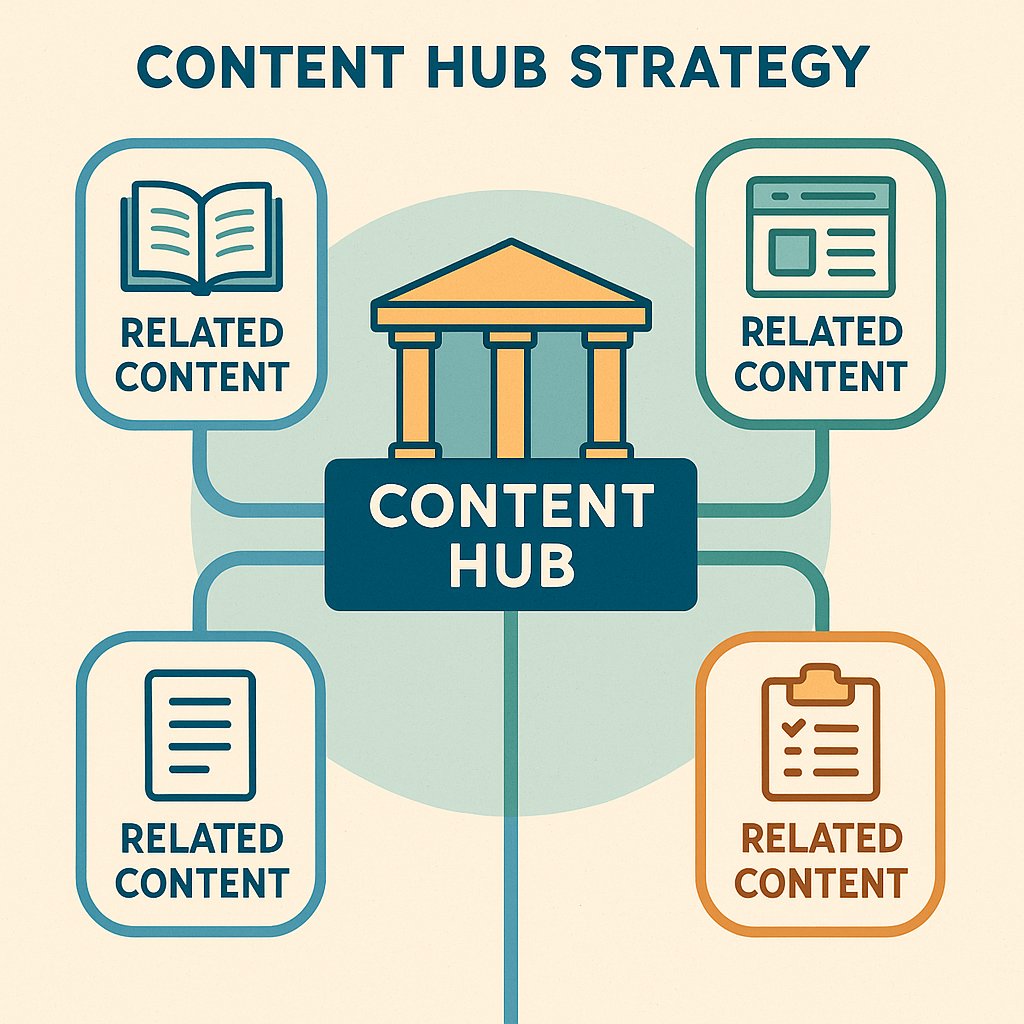
Why Your WordPress Site Needs a Content Hub Strategy
The traditional blog approach of publishing standalone articles is losing its competitive edge. Search engines have evolved to reward websites that demonstrate comprehensive topical expertise rather than scattered content pieces. This shift has made pillar pages and topic clusters the cornerstone of modern WordPress SEO strategies.
Think of your website as a library. Would you prefer a disorganized collection of books scattered randomly, or a carefully curated system where related books are grouped together, with clear guides pointing readers to the most valuable resources? The pillar-cluster model transforms your WordPress site into the latter — an organized knowledge hub that both search engines and users can navigate with confidence.
This architectural approach doesn’t just improve your SEO performance. It fundamentally changes how you create, organize, and link your content. By establishing clear relationships between your pages, you’re telling search engines exactly what you’re an authority on, while simultaneously creating intuitive pathways for your visitors to explore deeper into your content ecosystem.
Understanding the Pillar-Cluster Content Architecture
What Makes a Pillar Page Different
A pillar page serves as the comprehensive foundation for a specific topic on your WordPress site. Unlike typical blog posts that tackle narrow angles, pillar pages provide expansive coverage of a broad subject, typically ranging from 3,000 to 5,000 words or more.
The defining characteristic of effective pillar content is its ability to answer the fundamental questions about a topic while linking out to more detailed subtopics. For instance, a pillar page about ‘Email Marketing’ would cover the essential concepts, strategies, and tools at a high level, then direct readers to cluster pages that dive deep into specific aspects like automation workflows, list segmentation, or compliance requirements.
Pillar pages occupy premium real estate in your site architecture — they’re often linked from your main navigation, receive substantial internal link support from cluster pages, and accumulate authority that can be strategically distributed throughout your content ecosystem.
The Role of Cluster Content
Cluster pages are the supporting cast that makes your pillar shine. Each cluster article explores a specific subtopic in detail, typically targeting long-tail keywords that branch from your pillar’s broader keyword theme.
These pages are intentionally focused and specialized. Where your pillar page might mention ’email segmentation strategies’ in a few paragraphs, a cluster page would dedicate 1,500 to 2,500 words exploring advanced segmentation techniques, tools, examples, and implementation steps.
The magic happens in the connection. Every cluster page links back to its parent pillar, creating a hub-and-spoke structure that signals topical relevance to search engines. This bidirectional linking pattern — pillar to cluster and cluster to pillar — creates a reinforcing web of relevance that elevates the authority of your entire content hub.
How Search Engines Interpret Topic Relationships
Search algorithms have become increasingly sophisticated at understanding semantic relationships between content pieces. When Google’s crawlers discover a well-structured pillar-cluster system, they recognize patterns that indicate depth of knowledge.
The linking structure acts as a map of your expertise. When multiple related pages consistently link to and from a central authoritative resource, search engines interpret this as a signal that your site offers comprehensive coverage of that topic. This topical authority becomes a competitive advantage, particularly for competitive keywords where expertise and depth matter.
Modern ranking algorithms also evaluate user behavior signals. When visitors naturally flow from pillar pages to cluster content and back, spending time exploring your interconnected resources, these engagement patterns reinforce the value and relevance of your content hub to search engines.
Strategic Planning for Your WordPress Content Hub
Identifying Your Core Pillar Topics
Successful content hub strategies begin with strategic topic selection. Your pillar pages should align with your business objectives, audience needs, and realistic keyword opportunities.
Start by analyzing your existing content performance. Which topics already generate traffic and engagement? Which ones align with your products or services? Use keyword research tools to identify broad topics with sufficient search volume to justify the investment, but also consider topics where you can realistically establish authority.
Most WordPress sites benefit from three to seven pillar pages initially. More than that dilutes your focus; fewer limits your ability to demonstrate comprehensive expertise. Each pillar should be distinct enough to avoid keyword cannibalization, yet relevant enough to your overall business focus.
Mapping Cluster Opportunities
Once you’ve identified your pillar topics, brainstorm the cluster pages that will support each hub. Aim for at least eight to twelve cluster pieces per pillar — enough to demonstrate depth without overwhelming your content production capabilities.
Look for cluster opportunities in several places: keyword research tools reveal long-tail variations and related searches; your analytics show which subtopics users already search for on your site; competitor content gaps reveal angles they’ve missed; and customer questions highlight the specific problems your audience wants solved.
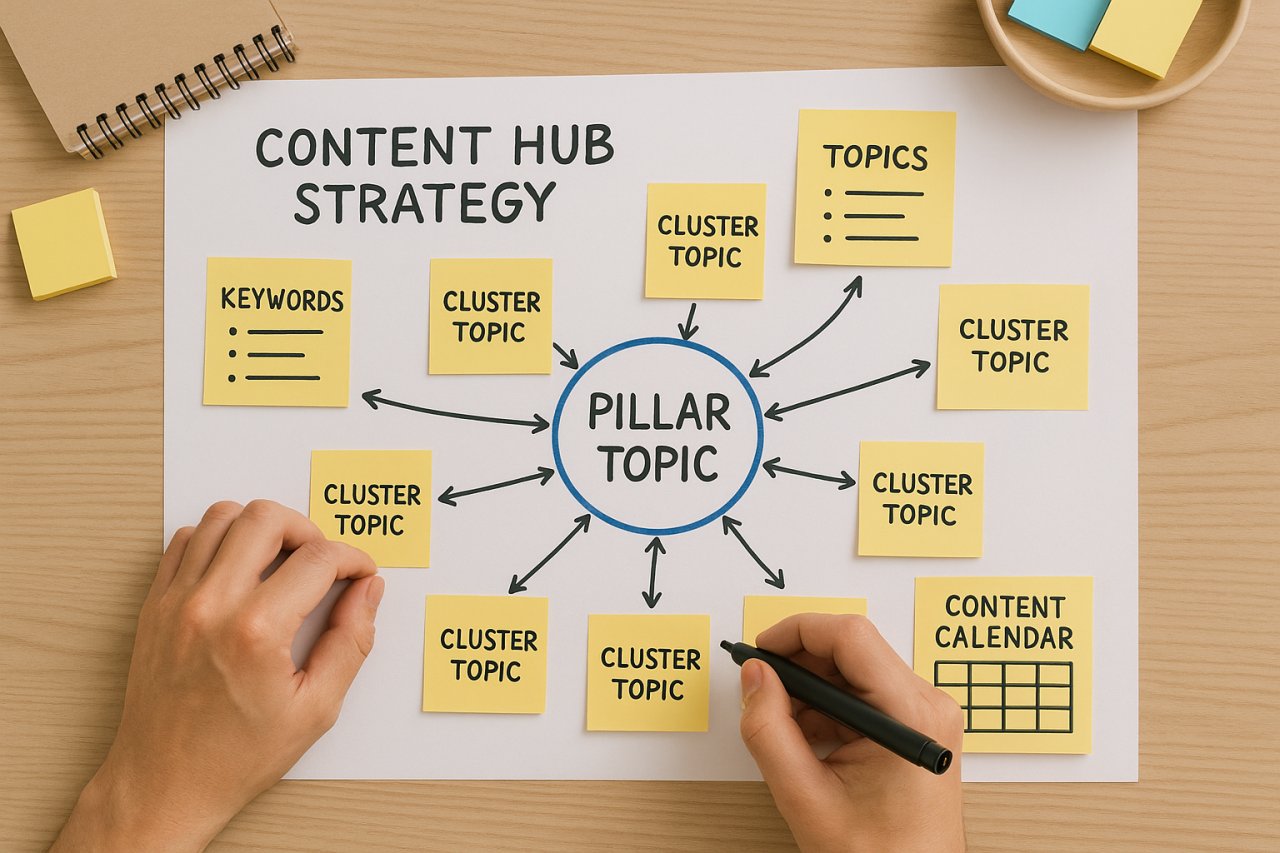
Create a content map that visually connects each cluster to its pillar. This document becomes your blueprint for content creation and internal linking. It helps you maintain consistency, avoid topic overlap between different clusters, and ensure comprehensive coverage of each pillar theme.
Balancing Breadth and Depth
The pillar-cluster model requires strategic decisions about scope. Your pillar pages need breadth — they should cover the essential aspects of a topic without becoming superficial. Your cluster pages need depth — they should thoroughly address specific subtopics without wandering off-topic.
Consider the user journey when determining scope. What would someone who wants to understand the broad topic need to know from your pillar page? What questions would they have that require more detailed exploration? Each cluster should be the natural next step for someone seeking deeper knowledge about a specific aspect.
Avoid the temptation to make pillar pages so comprehensive they never get published. It’s better to launch with a strong foundational pillar and expand it over time based on performance data and user feedback than to delay indefinitely pursuing perfection.
Building Effective Pillar Pages in WordPress
Structural Elements of High-Performing Pillars
Effective pillar pages follow a predictable structure that serves both users and search engines. Begin with a compelling introduction that clearly defines the topic scope and value proposition. Follow with a comprehensive table of contents that links to major sections, improving both user experience and internal navigation.
Break your content into distinct sections using descriptive H2 headings that target relevant keyword variations. Each section should provide enough information to be valuable on its own, while naturally referencing cluster topics that deserve deeper exploration.
Incorporate visual elements strategically. Diagrams, infographics, and comparison tables enhance comprehension and increase time on page. These elements also create natural opportunities for other sites to link to your pillar, building the external authority that complements your internal linking structure.
Optimizing Pillar Content for Engagement
Pillar pages must balance comprehensiveness with readability. Use short paragraphs, bullet points, and varied formatting to maintain visual interest across thousands of words. Strategic use of bold text and emphasis guides readers to key concepts without requiring them to read every word.
Include practical elements that provide immediate value: checklists, templates, frameworks, or actionable steps readers can implement. These tangible takeaways increase engagement metrics and encourage visitors to bookmark your pillar as a reference resource.
The conclusion of your pillar page should guide readers toward next steps. Instead of simply summarizing what you’ve covered, direct visitors to the most relevant cluster pages based on their likely interests or needs. This strategic internal linking transforms your pillar into a true hub that facilitates content discovery.
Technical WordPress Considerations
Pillar pages demand attention to technical performance. Large, content-rich pages can suffer from slow load times if not optimized properly. Implement lazy loading for images, minify CSS and JavaScript, and consider a content delivery network to ensure your pillar pages load quickly regardless of user location.
WordPress page builders can create bloated code that undermines performance. If you’re using builders for your pillar pages, regularly audit their output and optimize where possible. Clean, semantic HTML provides the best foundation for both search engines and user experience.
URL structure matters for pillar pages. Use short, descriptive URLs that clearly indicate the topic: yoursite.com/topic-name works better than yoursite.com/category/year/month/long-descriptive-title. This clean structure reinforces your site architecture and makes your pillar pages more memorable.
Creating and Connecting Cluster Content
Writing Cluster Pages That Convert
Cluster pages should be comprehensive treatments of specific subtopics, typically ranging from 1,500 to 2,500 words. They target more specific, often long-tail keywords that have clearer search intent than your broader pillar topics.
Each cluster page should acknowledge its relationship to the broader topic early. A simple introduction like ‘This guide explores [specific topic], which is a critical component of [pillar topic]’ with a link to your pillar establishes context while creating the essential hub-and-spoke connection.
While cluster pages focus on specific angles, they should maintain the quality and depth that characterizes your pillar content. Superficial cluster pages undermine the authority of your entire hub. Each piece should be publishable as a standalone resource, even while serving its role within the larger ecosystem.
Strategic Internal Linking Between Clusters
The power of the pillar-cluster model extends beyond the hub-and-spoke connections. Related cluster pages should link to each other when contextually relevant, creating a network of topical relationships that reinforces your expertise.
These lateral connections between clusters help search engines understand the relationships between subtopics while providing users with intuitive pathways to explore related content. When writing a cluster page about email automation, naturally linking to your cluster about segmentation strategies makes sense for both search engines and readers.
Tools like AI Internal Links can automate the process of identifying relevant connections between cluster pages, ensuring you don’t miss opportunities to strengthen your content hub’s internal linking structure as your library of content grows.
Maintaining Consistency Across Your Hub
Your content hub should feel cohesive. Establish consistent formatting, voice, and quality standards across all pillar and cluster pages. This consistency signals professionalism and reinforces your authority on the topic.
Create content templates that ensure each cluster page includes essential elements: a clear introduction that positions the topic within the broader pillar theme, comprehensive coverage of the specific angle, practical examples or applications, and strategic internal links to both the parent pillar and related clusters.
Regularly audit your content hub for gaps and opportunities. As your understanding of the topic deepens and search trends evolve, you may identify new cluster opportunities or realize that existing content needs expansion or consolidation to better serve your hub strategy.
Internal Linking Patterns That Maximize Authority Flow
The Hub-and-Spoke Foundation
The fundamental linking pattern in a pillar-cluster system is bidirectional: every cluster page links to its parent pillar, and the pillar links to each cluster page. This creates clear hierarchical relationships that search engines use to understand topic relevance and authority distribution.
Within your pillar page, links to cluster content should use descriptive anchor text that includes relevant keywords. Instead of generic ‘click here’ or ‘learn more’ links, use phrases like ‘discover advanced email segmentation techniques’ that signal both topic relevance and the value proposition of the linked content.
The placement of these links matters. Contextual links within the narrative flow carry more weight than simple lists of related articles. When introducing a concept that has an associated cluster page, link naturally within that introduction rather than saving all cluster links for a separate ‘related articles’ section.
Building Lateral Connections
Beyond the primary hub-and-spoke structure, strategic lateral links between related cluster pages strengthen your topical authority. These connections should be genuinely relevant — link to another cluster page only when it provides value to readers exploring the current topic.
Consider the user journey when creating lateral links. Someone reading about email list building might naturally want to learn about engagement strategies next. That logical progression should be reflected in your internal linking, guiding readers through a narrative that deepens their understanding.
Avoid over-optimization. Not every cluster page needs to link to every other cluster in the same hub. Strategic, selective linking based on genuine relevance will always outperform mechanical, formulaic approaches that prioritize quantity over quality.
Distributing Authority From High-Value Pages
Your pillar pages naturally accumulate authority from external backlinks, social shares, and user engagement. This accumulated authority flows through your internal links, benefiting the cluster pages you link to.
Prioritize linking to your most important cluster pages from prominent positions within your pillar content. The first few outbound links from a page typically carry more weight than those buried at the bottom. Consider which cluster topics align most closely with your business objectives and give them prime linking real estate.
Don’t forget to link your pillar pages from your homepage and main navigation when appropriate. These high-authority pages can channel significant link equity to your pillars, which then distribute it throughout their associated cluster networks.
Measuring and Optimizing Your Content Hub Performance
Key Metrics for Hub Success
Track organic traffic growth for your pillar pages and their associated clusters as a group. Successful content hubs show compound growth as more cluster pages are published and the entire topic cluster gains authority in search results.
Monitor keyword rankings across your topic cluster. You should see your pillar page ranking for broader, high-volume terms while cluster pages capture long-tail variations. If cluster pages outrank your pillar for core terms, you may need to strengthen the pillar’s authority through improved content or additional internal linking.
User engagement metrics reveal how effectively your hub facilitates content discovery. High pages-per-session rates and long average session durations indicate that visitors are exploring multiple pieces within your hub, suggesting your internal linking strategy successfully guides users through related content.
Identifying Content Gaps and Opportunities
Regularly review search queries that bring users to your pillar and cluster pages. Search Console reveals the actual questions and terms people use, often uncovering cluster opportunities you hadn’t considered or indicating that existing clusters need expansion.
Analyze which cluster pages generate the most traffic and engagement. These high performers might deserve promotion to mini-pillars with their own cluster systems, creating a multi-tiered content architecture that demonstrates even deeper expertise.
Look for cluster pages that underperform. Low traffic might indicate poor keyword targeting, insufficient authority from internal links, or content quality issues. Use this data to prioritize content refreshes and link optimization efforts.
Continuous Improvement Strategies
Content hubs aren’t set-and-forget assets. Plan regular updates to both pillar and cluster pages, incorporating new information, examples, and insights. Search engines reward fresh, maintained content, and users appreciate resources that reflect current best practices.
Expand successful hubs over time. As your initial cluster pages gain traction, identify opportunities for additional supporting content. A thriving content hub might grow from eight initial cluster pages to twenty or more, creating an increasingly comprehensive resource.
Monitor competitors’ content strategies within your topic areas. If competitors publish comprehensive content on subtopics you haven’t covered, consider whether those angles deserve cluster pages in your hub. Maintaining topical comprehensiveness relative to competitors is crucial for sustained rankings.
Avoiding Common Pillar-Cluster Implementation Mistakes
Choosing Topics That Are Too Broad or Too Narrow
One of the most common mistakes is selecting pillar topics that don’t align with realistic scope. A pillar about ‘marketing’ is too broad — you’d need hundreds of cluster pages to cover it comprehensively. Conversely, a pillar about ‘writing subject lines for promotional emails’ is too narrow — there isn’t enough breadth to support a meaningful cluster system.
The sweet spot is topics that require meaningful explanation but can be reasonably covered in a single comprehensive page with eight to fifteen supporting cluster articles. Test your topic selection by brainstorming cluster pages — if you easily generate twenty potential clusters, your pillar might be too broad; if you struggle to find five, it’s too narrow.
Neglecting the Bidirectional Linking Structure
Some content creators remember to link from clusters back to pillars but forget to link from pillars to clusters. This one-way linking undermines the hub-and-spoke model’s effectiveness. Your pillar page needs to actively guide readers to relevant cluster content, not just receive links from it.
Equally problematic is creating the initial pillar-to-cluster links but failing to update the pillar as new cluster content is published. Your pillar page should evolve as your hub grows, incorporating references and links to new cluster pages that expand your topical coverage.
Treating Clusters as Traditional Blog Posts
Cluster pages aren’t regular blog posts with a link added to a pillar page. They’re strategic content pieces designed to support a larger topical ecosystem. This means cluster pages should explicitly acknowledge their relationship to the broader topic and actively reference the pillar content.
Cluster pages also require higher quality standards than typical blog posts. They represent your expertise on specific subtopics within your core competency areas. Rushed, superficial cluster content undermines your entire hub’s authority and wastes the strategic value of the pillar-cluster model.
Forcing Pillar Structure on Inappropriate Content
Not every content strategy benefits from the pillar-cluster model. News-oriented sites, highly specialized technical blogs, or sites focused on trending topics might find traditional content strategies more appropriate.
The pillar-cluster model works best for evergreen topics where comprehensive coverage provides lasting value. If your content becomes outdated quickly or you’re targeting very specific technical audiences with narrow interests, consider whether a different content architecture might serve your goals better.
Building Your First Content Hub in WordPress
Start with one pillar-cluster system rather than attempting multiple hubs simultaneously. Choose a topic where you have genuine expertise, existing content assets to build upon, and clear business value from improved rankings.
Audit your existing WordPress content to identify pieces that could be repurposed or expanded into cluster pages. You might already have the foundation of a content hub scattered across your site — consolidating and connecting these pieces is often faster than creating everything from scratch.
Set a realistic publication timeline. Building a complete content hub takes time, but you don’t need to wait until every cluster page is finished. Launch your pillar page with links to planned cluster content, then systematically publish and connect cluster pages over subsequent weeks and months.
Document your internal linking structure as you build. Create a spreadsheet or diagram that maps which cluster pages link to which pillar, which lateral connections exist between clusters, and which opportunities you plan to pursue. This documentation keeps your strategy organized as your hub grows.
The pillar-cluster model represents a fundamental shift in how we approach content strategy for WordPress SEO. By organizing your content into interconnected topic hubs, you’re not just creating better resources for your audience — you’re building the topical authority that modern search algorithms reward. Start with one focused hub, execute it thoroughly, and use the insights gained to expand your content ecosystem strategically over time.