
Table of Contents
- Why Product Page SEO Breaks Most E-commerce Strategies
- Category Page Architecture That Builds Authority
- Product Description SEO That Google Actually Reads
- Site Speed and Technical Foundation
- URL Structure That Scales With Your Catalog
- Content Marketing That Drives Traffic to Products
- Measuring What Actually Matters
Why Product Page SEO Breaks Most E-commerce Strategies
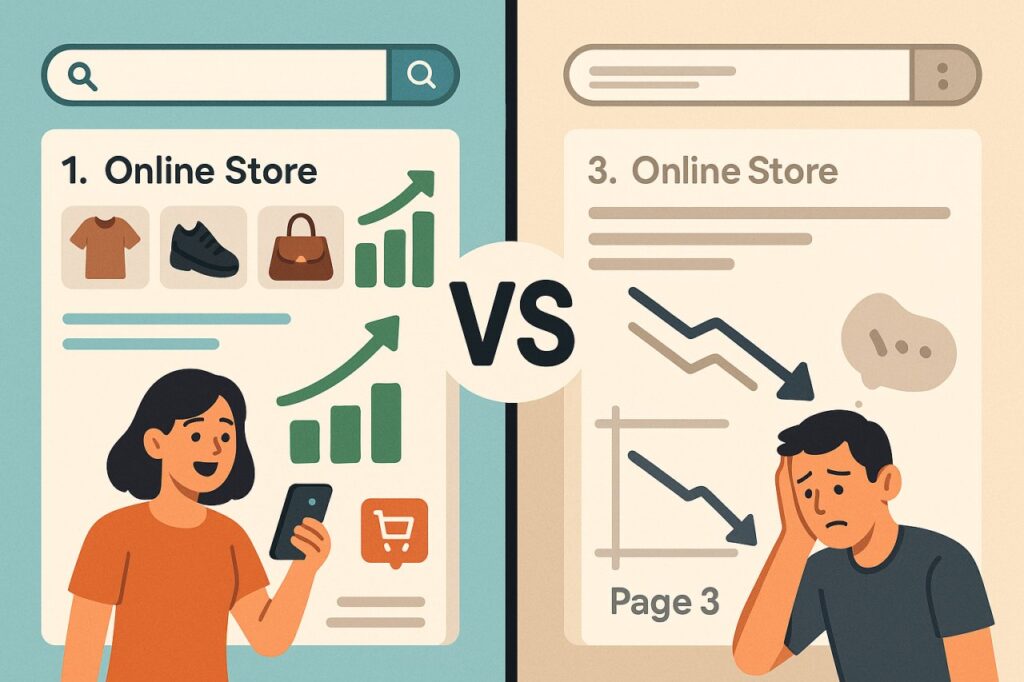
Your homepage won’t save you. Neither will your category pages if they’re thin on content.
The real battle happens at the product level — where search intent meets buying intent. When someone searches “wireless noise-canceling headphones under $200,” they’re not browsing. They’re ready to buy. If your product page doesn’t rank, that sale goes to a competitor whose SEO fundamentals are tighter.
Here’s what most store owners miss: Google treats product pages like any other content. Title tags matter. Meta descriptions drive clicks. Internal links distribute authority. Schema markup makes your products stand out in search results. Skip these, and you’re asking Google to ignore your inventory.
The Product Title Formula That Ranks
Your product title needs to work in three places simultaneously: your page’s H1, your SEO title tag, and Google’s search results.
Start with your primary keyword, then add qualifiers that match how people actually search. “Blue Running Shoes” is generic. “Men’s Blue Running Shoes – Lightweight Cushioned Trainers” captures the full intent. It tells Google exactly what you’re selling and gives searchers the specifics they need to click.
Avoid keyword stuffing. “Best Blue Running Shoes Men’s Lightweight Cushioned Athletic Trainers Sneakers” reads like spam. Google knows it. Shoppers know it. One clear, descriptive title beats a keyword pile every time.
Meta Descriptions That Convert Browsers Into Buyers
Your meta description isn’t a ranking factor, but it’s your sales pitch in search results.
Include your unique selling point, a price range if competitive, and a reason to click now. “Free shipping on all orders. Our men’s blue running shoes feature CloudFoam cushioning and weigh just 8oz. Perfect for marathon training or daily runs” works because it answers the immediate questions: price, features, use cases.
Keep it under 155 characters or Google will cut it off mid-sentence.
Category Page Architecture That Builds Authority
Category pages are where most e-commerce SEO falls apart. They become thin product grids with zero text, giving Google nothing to rank.
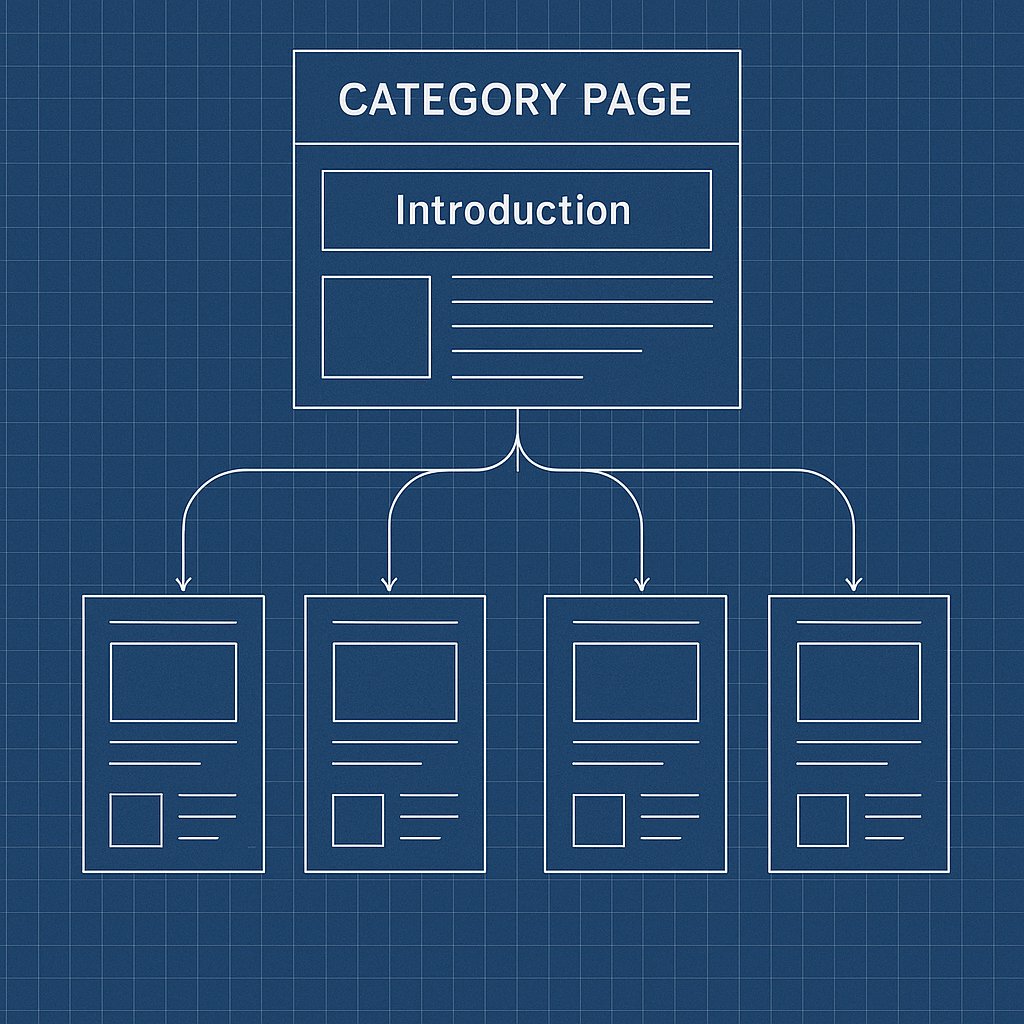
Flip that. Your category pages should be content hubs that support your product pages from above. Add 300-500 words of intro content above the product grid. Explain what makes this category valuable, who it’s for, and why your selection matters.
“Running Shoes” as a category deserves a proper introduction. Talk about cushioning types, terrain considerations, fit tips. Then link down to relevant product pages using descriptive anchors like lightweight marathon trainers or trail running shoes with ankle support.
How Internal Linking Connects Your Catalog
Internal links do two things in e-commerce: they pass authority from strong pages to weak ones, and they keep shoppers moving through your funnel.
Your blog posts about “how to choose running shoes” should link to relevant category and product pages. Your category pages should link to individual products. Your product pages should link to related items and relevant content.
Most stores get this backwards. They link randomly or not at all. The result? Orphaned product pages that Google barely crawls and customers never find.
The Cluster Model for Product Collections
Think of your site as interconnected topic clusters. Your pillar content (like “Complete Running Shoe Buying Guide”) sits at the center, linking to category pages (“Marathon Running Shoes,” “Trail Running Shoes”). Those categories link down to individual products.
This structure tells Google you have topical authority. You’re not just selling random products. You’re a destination for an entire category.
Building this manually is tedious. You’re managing hundreds or thousands of product pages, each needing contextual links. Tools like AI Internal Links can automate this process, analyzing your content and suggesting relevant connections between products, categories, and blog posts.
Product Description SEO That Google Actually Reads
Manufacturer descriptions kill your rankings. Full stop.
If you’re using the same product description as fifty other retailers, Google has no reason to rank you over them. Unique descriptions aren’t optional — they’re the baseline.
Write 300+ words per product. Include your target keyword naturally in the first 100 words. Cover features, benefits, use cases, and specs. Answer the questions shoppers ask before they buy.
Structured Data That Makes Your Products Pop
Schema markup is how you get those rich results in Google: star ratings, price, availability, product images right in the search results.
Implement Product schema on every product page. Include price, currency, availability status, review ratings, and aggregate review scores. This isn’t just about looking good in search results. It directly impacts click-through rates.
Most WordPress e-commerce platforms (WooCommerce, Easy Digital Downloads) have plugins that add schema automatically. Configure them once, let them run.
Site Speed and Technical Foundation
You can have perfect content and still lose rankings if your site loads like it’s 2010.
E-commerce sites are heavy. Product images, multiple scripts, checkout functionality — it all adds up. But Google doesn’t care about your excuses. Core Web Vitals are ranking factors.
Image Optimization That Doesn’t Sacrifice Quality
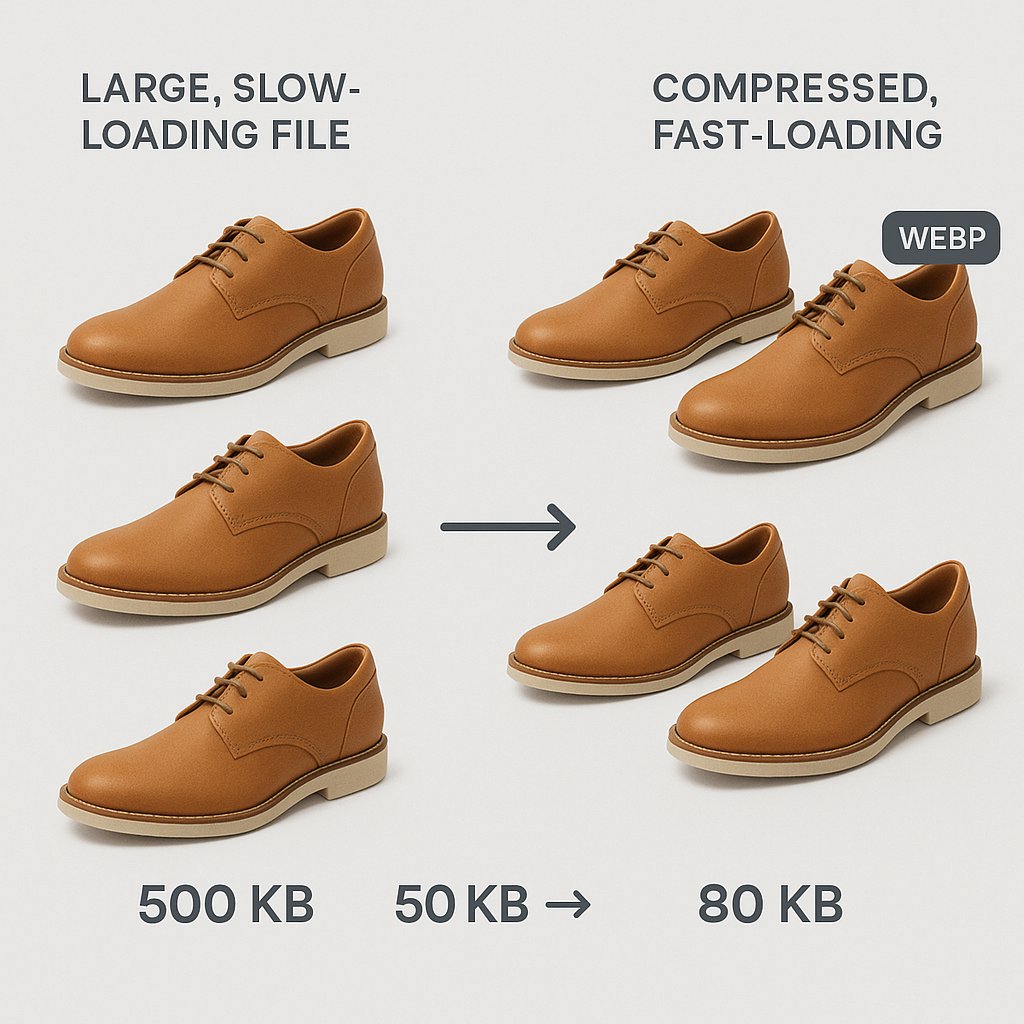
Product images should be under 100KB without looking compressed. Use WebP format. Implement lazy loading so images below the fold don’t slow initial page load.
Add descriptive alt text to every image. “Product image” is worthless. “Men’s blue CloudFoam running shoes side view” helps both accessibility and image search rankings.
Mobile Performance Is Non-Negotiable
More than 60% of e-commerce traffic comes from mobile. If your product pages don’t load fast on a phone, you’re losing half your potential customers before they see your prices.
Test your site on actual devices, not just Chrome DevTools. Check checkout flow, image loading, and button sizes. A desktop-optimized site that breaks on mobile is leaving money on the table.
URL Structure That Scales With Your Catalog
Your URLs should be clean, descriptive, and consistent.
Bad: yourstore.com/product?id=84729
Good: yourstore.com/running-shoes/mens-blue-cloudfoam-trainers
Include your target keyword in the URL. Keep it short. Avoid unnecessary parameters or session IDs that create duplicate content issues.
For category pages, use a logical hierarchy: /category/subcategory/product. This structure helps both users and search engines understand your site organization.
Handling Product Variations Without Cannibalizing Rankings
If you sell the same shoe in twelve colors, don’t create twelve separate URLs that compete with each other.
Use a single canonical URL with variation selectors (dropdowns for color, size). Implement canonical tags properly so Google knows which version to index. Otherwise you’ll dilute your ranking power across near-duplicate pages.
Content Marketing That Drives Traffic to Products
Blog content isn’t separate from your e-commerce strategy. It’s the top of your funnel.
Write buying guides, comparison posts, and how-to articles that target informational keywords. Then link strategically to your products within that content.
“Best Running Shoes for Beginners” should link to your actual beginner-friendly running shoes. “How to Break In New Running Shoes” should link to relevant products and care accessories.
This approach captures shoppers earlier in their journey, builds trust through helpful content, and guides them toward purchase.
E-commerce SEO isn’t about gaming algorithms. It’s about making it absurdly easy for the right customers to find exactly what they need — and then making the buying decision feel inevitable.
User-Generated Content as an SEO Asset
Customer reviews aren’t just social proof. They’re fresh, unique content that Google loves.
Each review adds new keywords, answers questions, and signals to Google that your products are actively discussed. Encourage reviews. Display them prominently. Respond to them. The SEO value compounds over time.
Sites with robust review systems rank higher because they have more content, better engagement signals, and schema markup that showcases ratings in search results.
Measuring What Actually Matters
Vanity metrics don’t pay the bills. Track metrics tied to revenue.
Organic traffic to product pages. Conversion rate by traffic source. Average order value from organic search. Time on site for category pages. These numbers tell you if your SEO is actually driving sales or just inflating visitor counts.
Use Google Analytics 4 to set up e-commerce tracking properly. Monitor which product pages get traffic but don’t convert. Those are optimization opportunities — maybe the price is wrong, maybe the description needs work, maybe internal links aren’t surfacing them to ready buyers.
The Compound Effect of Consistent Optimization
SEO e-commerce isn’t a one-time setup. It’s ongoing optimization.
You add new products. You update seasonal inventory. You expand into new categories. Each change is a chance to improve your site structure, add relevant links, and strengthen your topical authority.
The stores that win aren’t the ones with perfect execution on day one. They’re the ones that improve systematically, week after week, building an SEO foundation that competitors can’t replicate quickly.
Start with your best-selling products. Optimize those pages first. Then move to your most profitable categories. Then expand outward. Progress beats perfection.