
Table of Contents
- Google’s AI Updates Rewrote Search Evaluation
- AI-Driven Content Creation: Beyond GPT Prompts
- Automated Internal Linking Isn’t What You Think
- Predictive SEO: AI Tools That Forecast Rankings
- Machine Learning for Technical SEO Audits
- The Human Element AI Can’t Replace
- What AI-Powered SEO Looks Like in Practice
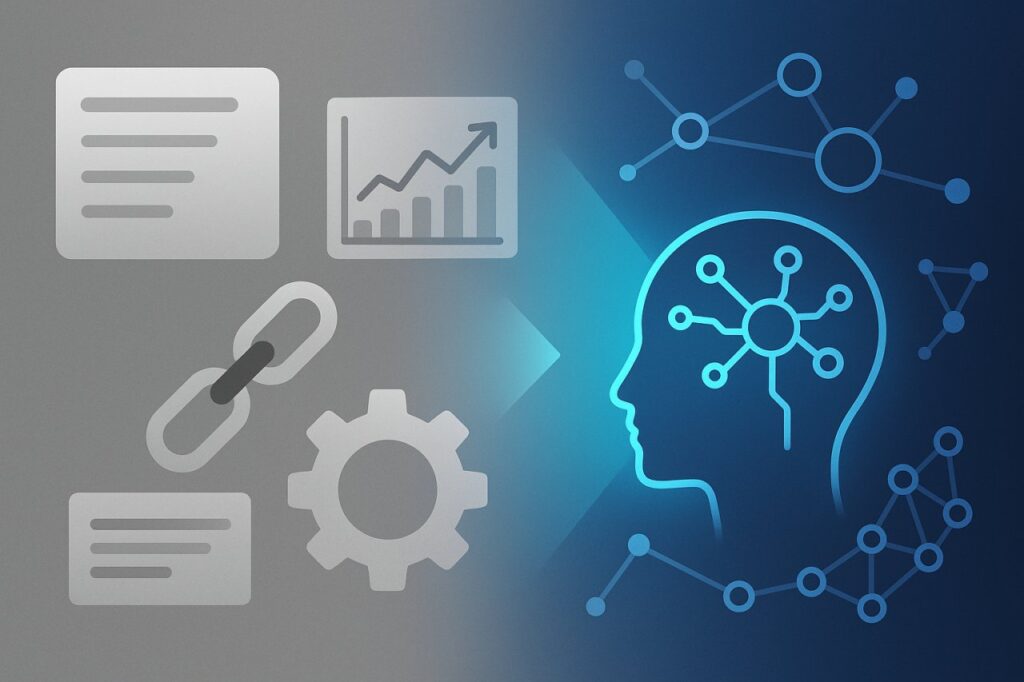
Most marketers still treat AI like a fancy autocomplete tool. They’re missing the bigger picture. AI has fundamentally changed how search engines evaluate content quality, relevance, and user intent — and it’s doing the same for how we optimize sites.
Here’s what changed: the days of keyword density calculators and manual link building are gone. AI doesn’t just assist with SEO tasks anymore. It performs them.
Google’s AI Updates Rewrote Search Evaluation
Let’s get specific about what happened. Google’s Helpful Content Update wasn’t just another algorithm tweak. It deployed machine learning models that evaluate content at the semantic level — not just keyword matches.
These models understand context. They recognize when you’re stuffing keywords versus genuinely answering a question. They can tell when internal links serve users versus when they’re just SEO theater.
The result? Sites that relied on traditional optimization tricks saw rankings drop. Meanwhile, sites with genuinely helpful content — even without perfect on-page SEO — moved up.
What This Means for Your SEO Strategy
You can’t game AI the way you could game PageRank. That’s not pessimism — it’s liberation. Instead of obsessing over keyword density, you focus on what actually matters: comprehensive coverage of topics, natural language, and intelligent site architecture.
AI systems reward depth. A 2,000-word guide that thoroughly answers a question beats five 400-word posts targeting variations of the same keyword. Quality consolidated, not fragmented.
The Shift from Keywords to Topics
Traditional SEO asked: what keywords should I rank for? AI-powered SEO asks: what topics does my site authoritatively cover?
Here’s the practical difference. Instead of creating separate pages for WordPress speed optimization, WordPress performance tips, and speed up WordPress site, you create one comprehensive guide. Then you use AI-powered internal linking to connect it with related content on caching, image optimization, and Core Web Vitals.
Google’s natural language processing recognizes topic clusters. It understands that these pages form a knowledge hub. That topical authority signal is worth more than a dozen exact-match keyword pages.
AI-Driven Content Creation: Beyond GPT Prompts
Yes, everyone’s using ChatGPT to draft blog posts. That’s table stakes now. The real opportunity is in how AI transforms content strategy, not just production.
AI tools can analyze your existing content library and identify gaps. They spot topics you’ve partially covered but never fully addressed. They recognize where your internal linking structure leaves pages isolated.
This isn’t about writing faster. It’s about writing smarter.
Content Optimization AI Actually Does Well
Forget AI-generated fluff. The useful applications are specific:
- Semantic keyword research: AI identifies related terms and questions users actually ask, not just variations of your seed keyword
- Content gap analysis: Compare your content against top-ranking competitors and find topics they cover that you don’t
- Readability optimization: AI flags complex sentences, passive voice, and jargon — making content more accessible
- Title and meta description testing: Generate variations and predict which will drive higher click-through rates
These aren’t theoretical. Tools like Clearscope and MarketMuse already do this at scale.
The Content Quality Problem AI Can’t Solve
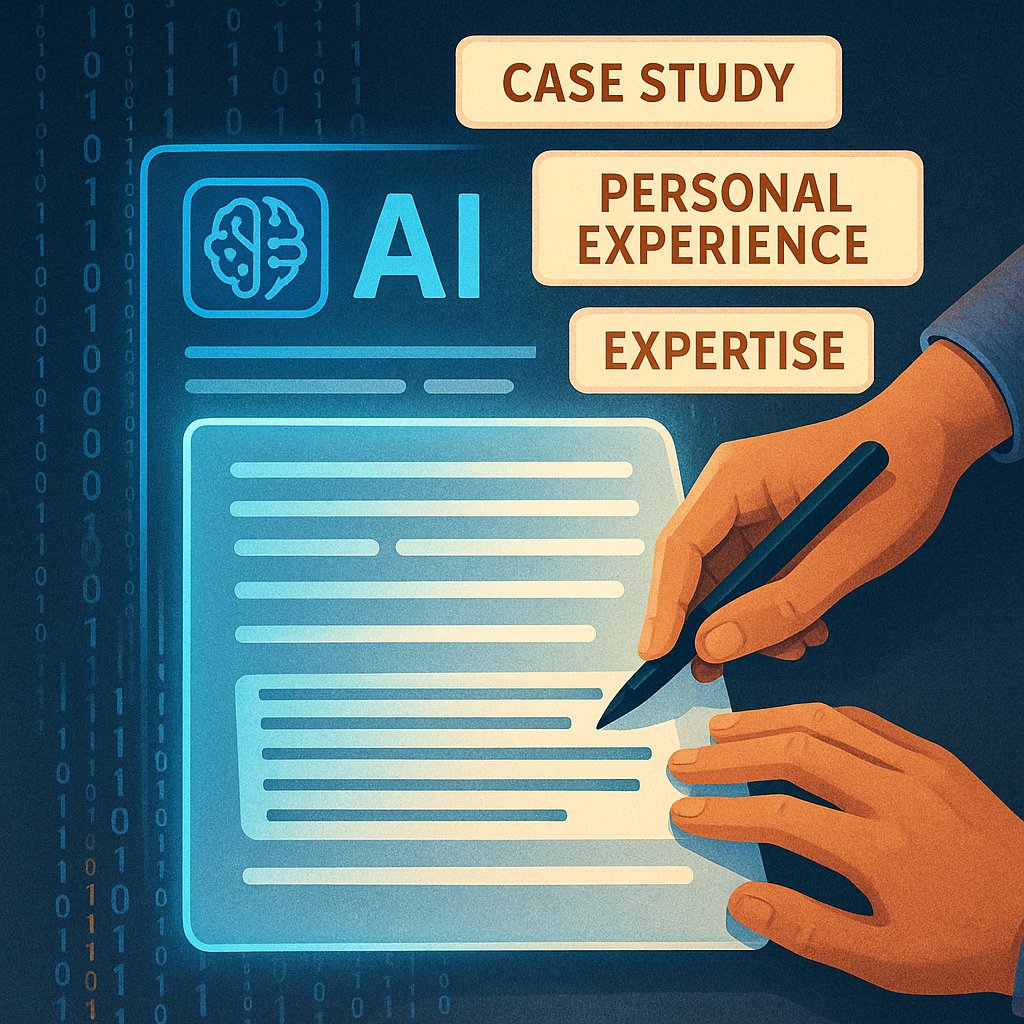
Here’s where practitioners separate from content mills: AI can’t inject expertise, experience, or original insight. It can draft, but it can’t innovate.
The best SEO content in 2026 combines AI efficiency with human judgment. Use AI to handle research and first drafts. Then add the layer AI can’t: your specific knowledge, case studies, and contrarian takes.
Google’s algorithms increasingly reward firsthand experience. An article about WordPress security written by someone who’s actually cleaned hacked sites will outrank an AI-generated overview — even if the AI version has better on-page optimization.
Automated Internal Linking Isn’t What You Think
Most SEO professionals still build internal links manually. They open posts, scan for relevant anchor text, and add links one by one. This worked when you had 50 pages. It breaks down at 500.
AI changes internal linking from a manual task to an automated system. Not through random automation — through intelligent pattern recognition.
Modern AI tools analyze your entire content library. They identify semantic relationships between pages. They suggest links that make sense contextually, not just keyword matches. More importantly, they maintain your internal linking structure as you publish new content.
How AI Actually Improves Link Structures
Traditional internal linking relied on manual judgment: This page talks about WordPress caching, so I’ll link to my caching guide. That’s fine for obvious connections. But what about nuanced relationships?
AI spots patterns you’d miss. It recognizes that your article on page speed mentions database optimization three times — and you have a detailed guide on that topic that’s never been linked from anywhere. It finds orphan pages that could strengthen your topical clusters.
Tools like AI Internal Links automate this entire process. They scan your content, identify relevant anchor opportunities, and add contextual links that strengthen your site architecture. No manual intervention needed.
The result isn’t just convenience. It’s better SEO. Comprehensive internal linking improves crawlability, distributes PageRank, and helps Google understand your content hierarchy. AI does this consistently across hundreds of pages — something no human can maintain manually.
The Difference Between Smart and Dumb Automation
Not all automated internal linking is created equal. Some tools just match keywords and spray links everywhere. That’s worse than doing nothing.
Smart AI considers context. It understands that linking WordPress speed to a caching guide makes sense — but only if the surrounding content is actually discussing performance optimization. It won’t force links just to hit a quota.
This contextual understanding comes from natural language processing. The same technology Google uses to evaluate content quality.
Predictive SEO: AI Tools That Forecast Rankings
Here’s where things get interesting. Some AI platforms now predict how content will rank before you publish it. They analyze hundreds of ranking factors — topic coverage, readability, internal links, competitive landscape — and forecast performance.
This shifts SEO from reactive to proactive. Instead of publishing content and waiting weeks to see if it ranks, you optimize before hitting publish.
Tools like Frase and Surfer SEO offer content scores based on top-ranking competitors. They’re not perfect — no prediction model is — but they’re directionally accurate enough to guide strategy.
What Predictive AI Gets Right
The predictions work best for informational queries with clear search intent. If you’re targeting how to optimize WordPress images, AI can analyze the top 10 results and tell you:
- Average content length (usually 1,800-2,200 words for this query)
- Common subtopics (image formats, compression tools, lazy loading, CDNs)
- Typical heading structure (H2s for different optimization methods)
- Internal linking patterns (links to related speed optimization content)
Match these patterns, add your unique insights, and you’ve got strong odds of ranking. Not guaranteed — Google isn’t that predictable — but strong.
Where Predictive Models Fail
Predictions fall apart for commercial queries and YMYL topics. Rankings for best WordPress hosting depend heavily on brand authority, backlinks, and user engagement signals — factors AI can’t control.
Similarly, health and finance queries prioritize expertise and trustworthiness over content optimization. No AI can predict if Google will consider your site authoritative enough to rank.
Use predictive tools for informational content. Rely on traditional SEO fundamentals for everything else.
Machine Learning for Technical SEO Audits
Technical SEO used to mean crawling your site with Screaming Frog and fixing broken links. That’s still important. But AI adds a diagnostic layer.
Machine learning algorithms can identify patterns in technical issues that humans miss. They spot correlations between site speed problems and specific plugins. They recognize that pages with certain URL structures consistently underperform.
This pattern recognition accelerates troubleshooting. Instead of manually testing dozens of variables, AI points you toward the likely culprits.
AI-Powered Crawling Goes Deeper
Traditional crawlers report issues. AI crawlers prioritize them. They understand which technical problems actually impact rankings versus which are just noise.
A missing alt tag on an icon? Low priority. A crawl depth of 7 clicks for important product pages? High priority. AI learns which issues correlate with ranking improvements.
Some platforms now offer automated fix suggestions. They detect a canonicalization issue and automatically generate the correct tags. They spot duplicate content and suggest consolidation strategies.
The Human Element AI Can’t Replace
Let’s be direct: AI won’t replace SEO professionals. It replaces tasks, not judgment.
You still need strategic thinking. AI can suggest 50 internal link opportunities — you decide which 10 matter most. AI can draft content — you inject the insights that make it valuable. AI can spot technical issues — you determine the fix priority based on business goals.
The practitioners thriving in 2026 aren’t fighting AI. They’re wielding it. They automate the mechanical work and focus on the strategic decisions AI can’t make.
What to Automate, What to Control
Automate these:
- Internal linking maintenance
- Technical SEO monitoring
- Content optimization suggestions
- Keyword research and clustering
- Competitor content gap analysis
Keep control of these:
- Content strategy and topic selection
- Brand voice and messaging
- Link building outreach
- User experience decisions
- Business goal alignment
The goal isn’t to remove humans from SEO. It’s to remove humans from repetitive tasks so they can focus on high-impact strategy.
What AI-Powered SEO Looks Like in Practice
Stop thinking about AI as a single tool. Think of it as a layer across your entire SEO workflow.
You start with AI-powered keyword research that identifies topic clusters, not just keywords. You use AI content optimization to ensure comprehensive coverage. You deploy automated internal linking to maintain site architecture. You monitor with AI crawlers that prioritize issues by impact.
Each piece handles mechanical work. You handle strategy.
The result? You spend less time on busywork and more time on what actually drives results: creating genuinely helpful content, building relationships for links, and aligning SEO with business objectives.
That’s the revolution. Not AI replacing SEO — but AI elevating it.