
Table of Contents
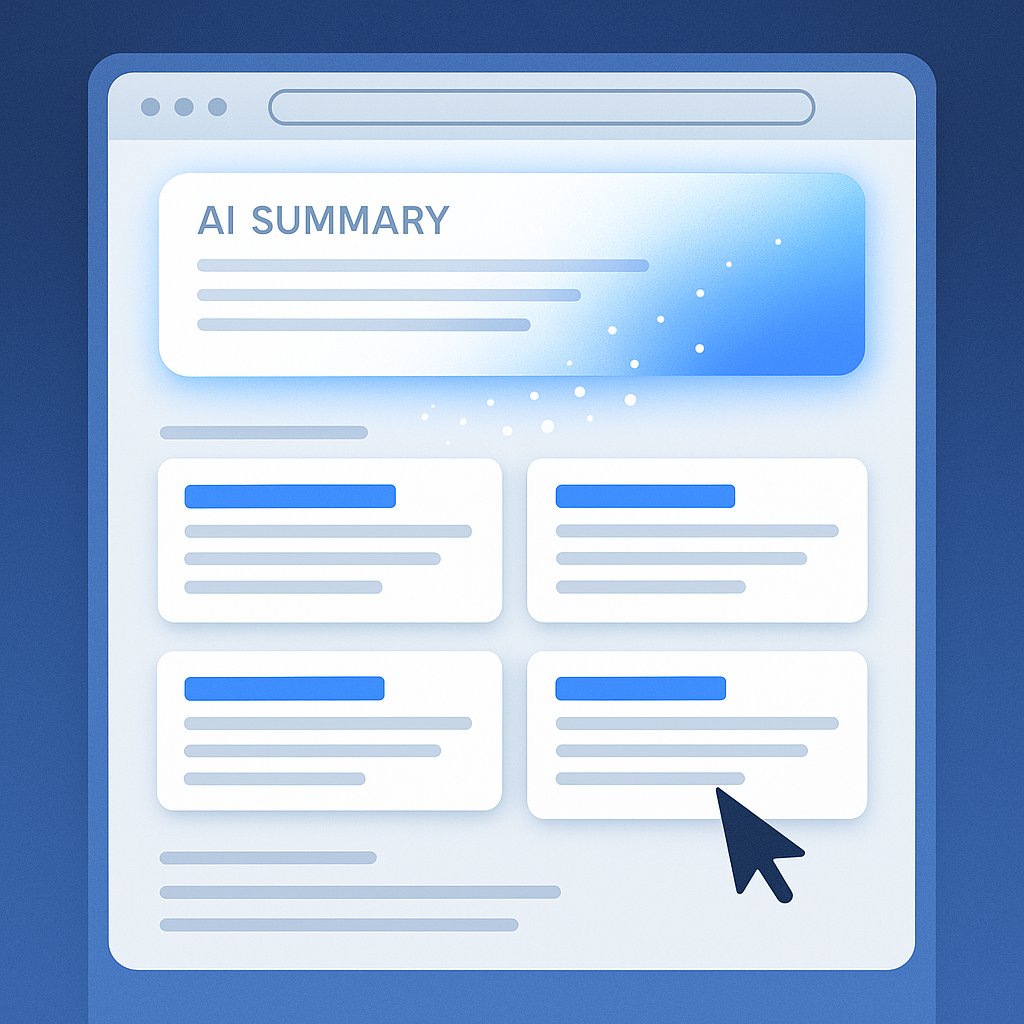
Google’s AI Overviews don’t replace everything. They summarize factual queries and definitions, but they struggle with experience-driven answers, multi-step processes, and content that signals genuine expertise beyond surface facts. The pages that survive—and even get cited in AI Overviews—follow specific structural patterns that you can replicate.
This isn’t about gaming the system. It’s about understanding what Google’s generative engine can’t deliver on its own, then building content around those gaps.
Why Certain Structures Trigger Clicks Instead of Summaries
AI Overviews excel at answering single-intent queries: “what is keyword cannibalization” gets a definition box. But they fall apart when a searcher needs a decision framework, a comparison with trade-offs, or step-by-step guidance with context.
The safe structures share one trait: they position the content as a starting point, not the final answer. A product comparison chart with pros, cons, and “best for” scenarios can’t be summarized into a satisfying AI Overview. Neither can a troubleshooting guide organized by symptom. The searcher still needs to click through to match their specific situation.
Look at how Wirecutter structures buying guides. Each section answers a different question type: “Who should buy this,” “How we tested,” “The best for most people,” “Budget pick,” “What to look forward to.” That format resists compression. An AI Overview might pull one recommendation, but it can’t replicate the decision tree.
The same principle applies to SEO content. If your article can be collapsed into three bullet points without losing value, it probably will be. If it requires the reader to navigate between sections based on their context, they’ll click.
Section Titles That Signal Depth and Pull the Click
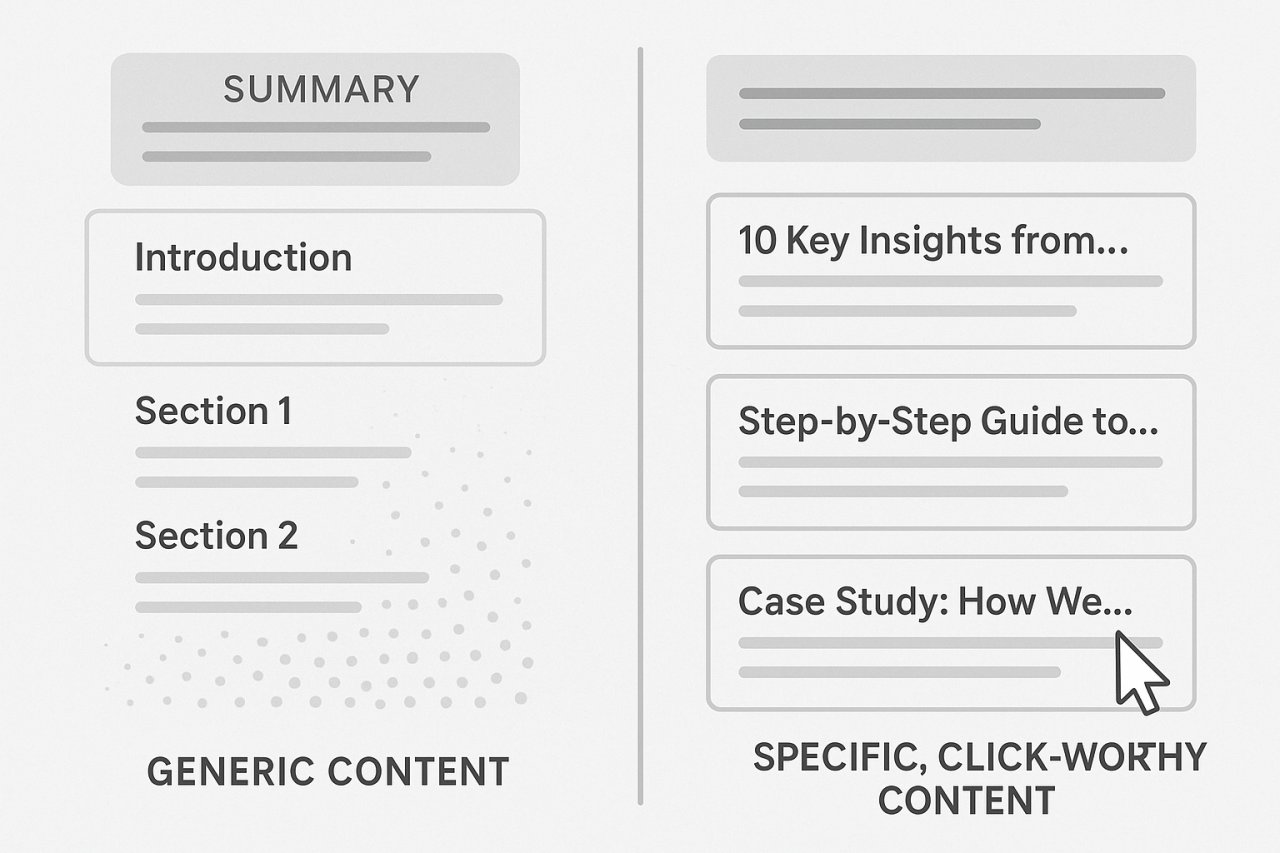
Generic H2s like “Benefits” or “Best Practices” are AI Overview bait. They signal listicle content that’s easy to extract and summarize. Specific section titles do the opposite—they tell the searcher (and Google) that the article addresses scenarios, not just concepts.
Compare these two approaches:
Generic structure (gets summarized):
- What Is Technical SEO
- Why Technical SEO Matters
- Technical SEO Best Practices
- Common Mistakes
Safe structure (pulls clicks):
- When Site Speed Actually Hurts Rankings (and When It Doesn’t)
- The Mobile-First Indexing Traps Most Sites Miss
- Why Your Staging Site Might Be Indexed Right Now
- JavaScript Rendering: Which Frameworks Create Crawl Issues
The second set can’t be absorbed into a paragraph. Each section promises specific knowledge that requires examples, context, or nuance. That’s the pattern: sections framed as specific problems or situations, not topic labels.
Notice how Ahrefs titles their guide sections. They don’t write “How to Use Keyword Research.” They write “How to Find Keywords Your Competitors Rank For (But You Don’t).” That specificity signals the content goes beyond what an AI can summarize from multiple sources.
The Before/After and Scenario Pattern
Another click-safe structure: content organized around real scenarios with before/after states. A searcher looking for “how to fix crawl errors” might see an AI Overview with generic steps. But an article with sections like “If Search Console Shows ‘Discovered – Currently Not Indexed'” or “When Crawled URLs Drop by 40% Overnight” addresses specific situations that require diagnosis, not just instructions.
This works because AI Overviews struggle with conditional logic. They can list steps, but they can’t walk someone through a decision tree based on symptoms.
Internal Linking Patterns That Reinforce Topical Authority
Here’s what most sites miss: AI Overviews don’t just evaluate a single page. They assess whether your site demonstrates depth on the topic. A lone article, no matter how well structured, competes with sites that have built out content clusters.
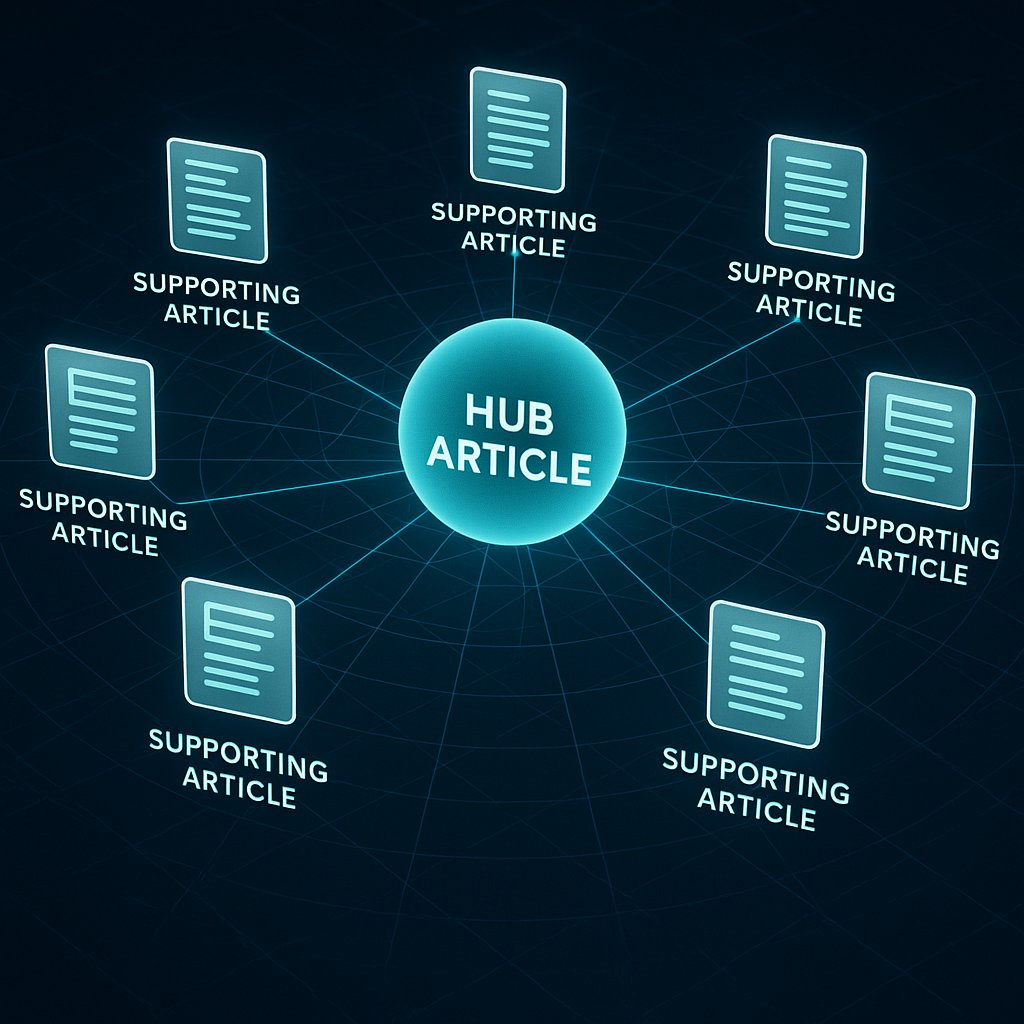
The safest pattern is section-based internal linking: each H2 or H3 links to a dedicated deep-dive on that specific aspect. If your main article is “WordPress Security Best Practices,” and one section covers “Two-Factor Authentication for Admin Access,” that section should link to a standalone guide on 2FA implementation.
This does two things. First, it signals to Google that you’ve covered the topic comprehensively, not just scraped together surface-level advice. Second, it gives the AI Overview a reason to cite your content as a hub—because the depth exists on your site, not just in the Overview itself.
Backlinko’s “Hub and Spoke” approach is a good reference. Their main SEO guide links out to dedicated articles on link building, on-page SEO, technical audits. Each spoke reinforces the hub’s authority. When Google’s generative engine evaluates that structure, it sees a content ecosystem, not a single article competing for the same ranking.
Why Sitewide Patterns Matter More Than Individual Pages
A one-off article with good internal links won’t move the needle. But when your entire WordPress site follows a consistent pattern—main guides linking to implementation posts, implementation posts linking to troubleshooting guides—you build the kind of topical map that AI Overviews reference rather than replace.
The problem is doing this manually. Most sites have scattered internal links: some added during drafting, others tacked on months later, zero consistency in anchor text or linking depth. That inconsistency undermines the EEAT signals you’re trying to build.
Automating Safe Structures Across WordPress Content Libraries
If you’re managing a WordPress blog or resource library with dozens (or hundreds) of posts, manually maintaining section-based internal links isn’t realistic. Every new article shifts the topical landscape. Every update changes which posts should link where.
This is where automation makes sense. Tools like AI Internal Links can systematically reinforce those safe structures across your site, identifying contextual opportunities to link related sections and building out the hub-and-spoke patterns that signal depth to Google’s generative engine. The goal isn’t just more links—it’s the right links in the right sections, consistently applied.
The key is treating internal linking as a sitewide content pattern, not a page-level checklist item. When every article follows the same structural logic—specific section titles, scenario-based organization, deep links to supporting content—you’re building the kind of authority that AI Overviews cite, not cannibalize.
What to Build Right Now
Start with your highest-traffic pages that are already getting AI Overviews. Check Google Search Console for queries where impressions are steady but clicks are dropping—that’s the AI Overview effect. Then audit those pages for the patterns that pull clicks: specific section titles, scenario-based organization, internal links to deeper content.
Rebuild one high-value article using the safe structure approach: frame sections around specific problems, link each section to a supporting post, and make the content too contextual to summarize. Track the click-through rate over the next month. If it stabilizes or improves while the AI Overview remains, you’ve found a structure worth replicating sitewide.
The sites that thrive in the AI Overview era won’t be the ones chasing algorithm updates. They’ll be the ones that built content Google’s generative engine needs to reference because the depth and structure can’t be replicated in a summary box.