

Table of Contents
- Why Traditional On-Page SEO Checklists Miss the Mark
- Building Heading Structures That Guide Both Readers and Crawlers
- Semantic Fields: Going Beyond Single Keywords
- Strategic Internal Link Placement That Actually Moves the Needle
- Practical On-Page SEO Workflow for Long-Form Articles
- Content Clusters and Internal Linking Architecture
- Measuring On-Page SEO Success Beyond Rankings
- The On-Page SEO Patterns That Win in Practice
The gap isn’t content quality. It’s structural intelligence. Google’s algorithms have evolved past keyword density and into understanding topical depth, entity relationships, and how information flows through a page. Your on-page SEO needs to match that sophistication.
This isn’t about basic optimization. You already know to include your keyword in the title. We’re going deeper — into the architecture patterns that signal authority, the semantic fields that build topical clusters, and the internal linking strategies that turn isolated posts into ranking machines.
Why Traditional On-Page SEO Checklists Miss the Mark
The standard on-page SEO checklist — keyword in H1, sprinkle variations in body text, optimize meta tags — was built for a search engine that read pages like a computer. Google doesn’t read like that anymore.
Modern search algorithms parse content through natural language processing models. They identify entities, map relationships between concepts, and evaluate whether your content comprehensively covers a topic. A perfectly keyword-optimized post that lacks semantic depth will lose to a naturally written piece that demonstrates genuine expertise.
Here’s what changed: Google shifted from matching keywords to understanding intent. Your on-page optimization needs to shift from keyword placement to topical coverage.
Building Heading Structures That Guide Both Readers and Crawlers
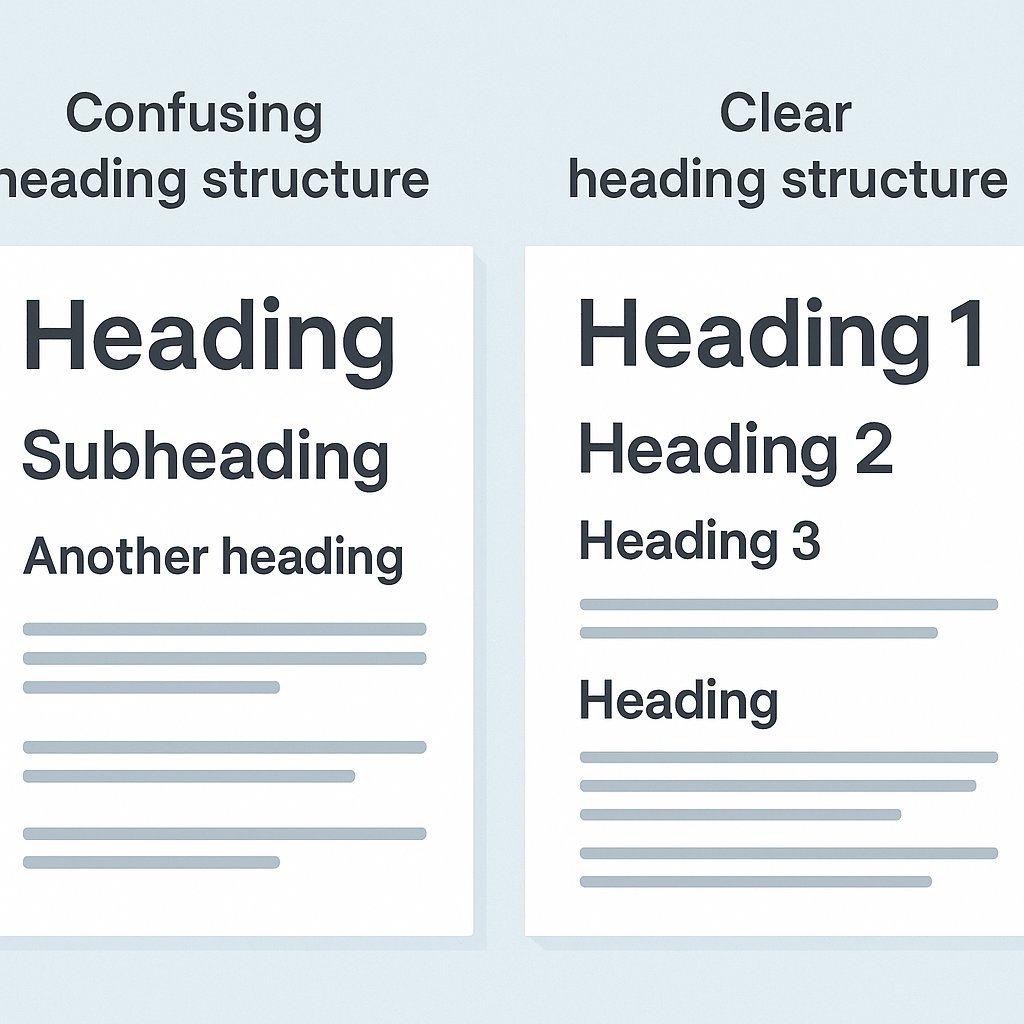
Your heading hierarchy does two jobs simultaneously. For readers, it creates scannable structure. For Google, it maps your topical architecture.
The H1 Is Your Thesis Statement
Your H1 should promise one clear outcome. Not “Everything About Email Marketing” — that’s a topic, not a promise. Try “How to Build an Email List That Converts at 40%” instead. Specificity signals authority.
One H1 per page. Always. It anchors Google’s understanding of what this content delivers.
H2s Define Your Core Subtopics
Each H2 should represent a distinct facet of your main topic. Think of them as chapter titles in a book about your subject. If you’re writing about content marketing strategy, your H2s might cover research, creation, distribution, and measurement.
Bad H2 pattern: sequential steps that could apply to anything (“Step 1: Get Started”, “Step 2: Advanced Techniques”).
Good H2 pattern: specific concepts that define your topic (“Map Your Audience’s Search Journey”, “Create Content Clusters That Build Authority”).
H3s Add Depth Without Clutter
Use H3s to break down complex H2 sections into digestible parts. But here’s where most writers overdo it: not every paragraph needs a subheading. If you can explain a concept in two paragraphs, just write two good paragraphs.
H3s work best when they introduce distinct techniques, examples, or considerations within a broader concept. Under an H2 about “Technical SEO for WordPress,” you might use H3s for “Optimizing Permalink Structure,” “Managing XML Sitemaps,” and “Fixing Crawl Errors.”
When to Use H4 (And When to Stop)
H4s are optional. Use them when you’re creating multi-level how-to guides or deeply nested concept explanations. Beyond H4, you’re probably over-structuring. Flatten it out.
The test: can someone scan your headings alone and understand your article’s argument? If yes, your structure works.
Semantic Fields: Going Beyond Single Keywords
Keyword optimization used to mean repeating your target phrase enough times to signal relevance. Now it means covering the semantic territory around your topic.
What Google’s NLP Actually Looks For
When you write about “content marketing strategy,” Google expects to see related entities: content calendars, audience research, distribution channels, analytics tools. Not because you stuffed keywords, but because that’s how humans naturally discuss this topic in depth.
This is entity-based SEO. Your content should touch on the concepts, tools, and processes that experts in your field would naturally mention. Miss too many, and Google reads your piece as surface-level.
Building Natural Semantic Clusters
Start with your core concept. Then map out the questions, challenges, tools, and related concepts someone exploring this topic would encounter. Write to cover the territory, not to hit a keyword density target.
Example: an article about WordPress security shouldn’t just repeat “WordPress security” fifteen times. It should naturally cover firewalls, authentication, malware scanning, backup solutions, SSL certificates, and plugin vulnerabilities. Each concept reinforces topical authority.
You’re not gaming an algorithm. You’re demonstrating expertise through comprehensive coverage.
The LSI Keyword Myth
Let’s kill this quickly: LSI keywords aren’t a real SEO tactic. Latent Semantic Indexing is a real technology, but Google hasn’t used it for search in over a decade. When SEO tools talk about “LSI keywords,” they mean semantically related terms.
Call them what they are: related concepts and entities. Include them because they add value to your reader’s understanding, not because some tool flagged them.
Strategic Internal Link Placement That Actually Moves the Needle
Internal links are where most on-page SEO falls apart. Writers either ignore them entirely or sprinkle them randomly with optimized anchor text, hoping for the best.
Neither approach works.
Internal Links Serve Three SEO Functions
First, they distribute PageRank through your site. Link from high-authority pages to new or underperforming ones to pass equity.
Second, they establish topical relationships. When you link from a guide about email marketing to your article about lead magnets, you’re telling Google these topics connect.
Third, they improve crawl efficiency. Google discovers and re-crawls pages through internal links. A well-linked page gets crawled more frequently than an orphaned one.
Where to Place Links in Long-Form Content
Context matters more than quantity. A contextual link in the middle of a relevant explanation carries more weight than a forced link in your introduction.
Best placement: within the first third of your article for high-priority links, then scattered naturally through sections where you reference related concepts. Avoid link clusters — three links in one paragraph looks manipulative.
Anchor Text Patterns That Look Natural
Your internal links should use varied, natural anchor text. Mix exact-match keywords with partial matches and descriptive phrases.
Weak pattern: always linking “WordPress SEO plugin” with that exact phrase.
Strong pattern: rotating between “WordPress SEO plugin,” “SEO tools for WordPress,” “this plugin,” and branded anchors when relevant.
Google’s algorithms detect unnatural patterns. Vary your approach.
How AI Can Find Internal Linking Opportunities You’d Miss
Manual internal linking breaks down at scale. Once you have 200+ published posts, finding relevant linking opportunities becomes guesswork. You forget which articles exist, which pages need links, and which anchor text you’ve already used.
This is where automation saves you. Tools like AI Internal Links analyze your entire content library, identify semantic relationships between posts, and suggest contextual linking opportunities based on topic relevance — not just keyword matching.
The advantage: you build internal link networks that reflect genuine topical relationships, not just SEO guesswork. The plugin finds connections between your content that you’d never catch manually, creating a tighter topical cluster structure.
Practical On-Page SEO Workflow for Long-Form Articles
Theory is useful. A workflow you can follow tomorrow is better.
Before You Write: Map Your Topical Territory
Start with search intent research. Look at the top 10 results for your target keyword. What subtopics do they all cover? What angles are they missing? Build an outline that covers the consensus topics while adding your unique perspective.
This gives you a semantic roadmap before you write a word.
While You Write: Structure First, Optimize Second
Write your first draft for clarity and flow. Get your argument down. Then layer in optimization: adjust headings for keyword inclusion, identify places to naturally incorporate related entities, and mark spots where internal links would add value.
Never sacrifice readability for optimization. A well-structured, engaging piece that ranks #8 will outperform a keyword-stuffed mess that briefly hits #3 then tanks.
After You Publish: Monitor and Iterate
On-page SEO isn’t static. Use Search Console to track which queries trigger your page. If you’re ranking for unexpected terms, consider updating content to strengthen those angles. If important queries aren’t performing, add semantic coverage for those areas.
Update your internal links as you publish new content. When you write a new article about content distribution, go back to your content marketing strategy post and add a contextual link. This keeps your older content fresh and reinforces topical clusters.
Content Clusters and Internal Linking Architecture
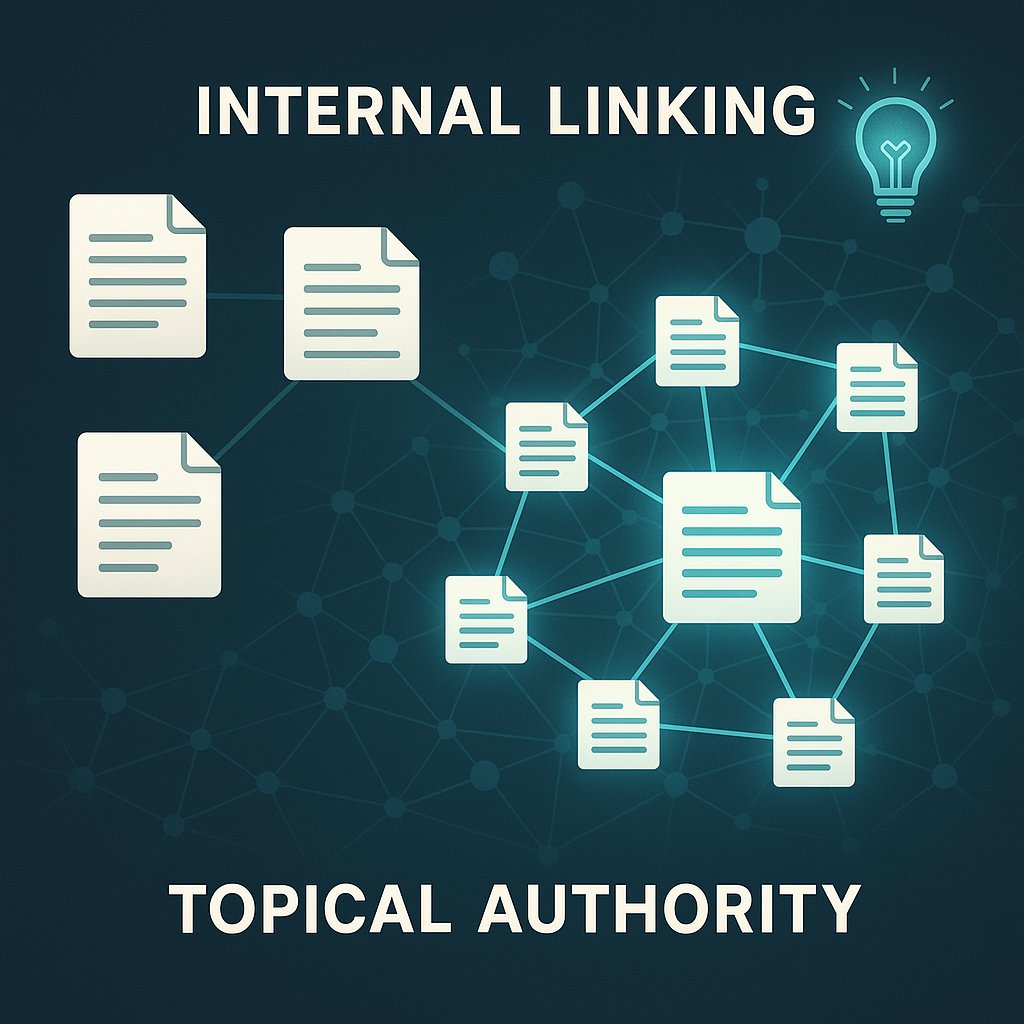
The most sophisticated on-page SEO strategy is building content clusters: a pillar page covering a broad topic, supported by cluster content diving into specific subtopics, all interconnected through strategic internal links.
Why Clusters Outperform Isolated Posts
Google rewards topical authority. A single comprehensive post about email marketing is good. A pillar post about email marketing, linked to in-depth articles about list building, segmentation, automation, and deliverability, is exponentially better.
The cluster structure signals depth of coverage. You’re not just touching on email marketing — you’re demonstrating expertise across the entire domain.
Building Your First Content Cluster
Pick a broad topic you want to own. Create a pillar page (2,000-3,000 words) that covers the fundamentals comprehensively. Then identify 5-10 subtopics that deserve dedicated deep dives.
Write those cluster posts. Link from the pillar to each cluster article in relevant sections. Link from each cluster post back to the pillar using descriptive anchor text. Link between cluster posts when topics overlap.
This architecture compounds. Each new cluster post strengthens the entire network.
Maintaining Clusters as Your Site Grows
The challenge: keeping track of which content belongs in which cluster, and ensuring internal links stay current. At 50 posts, this is manageable. At 500, it’s impossible without automation.
This is exactly where AI-powered internal linking becomes essential. It maintains your cluster architecture at scale, suggesting new linking opportunities as you add content and ensuring your topical networks stay tightly connected.
Measuring On-Page SEO Success Beyond Rankings
Rankings matter, but they’re a lagging indicator. Watch these signals instead:
Crawl frequency: Are your pages getting re-crawled regularly? Check Search Console’s crawl stats. Well-linked pages in strong clusters get crawled more often.
Internal site search: When readers use your search function, which terms appear? This reveals topics you should create dedicated content for.
Engagement metrics: Time on page and scroll depth tell you if your structure is working. A well-optimized page with clear headings and logical flow keeps readers engaged longer.
Impressions growth: Search Console impressions data shows whether Google is associating your page with more relevant queries over time. Growing impressions mean your semantic optimization is working.
Don’t obsess over a single keyword ranking. Build pages that rank for dozens of related queries through comprehensive topical coverage.
The On-Page SEO Patterns That Win in Practice
After optimizing hundreds of long-form posts, patterns emerge. These work consistently:
Clear, specific H1s that promise an outcome. Readers and Google both respond to clarity.
H2 structures that follow a logical progression — not just random aspects of a topic thrown together, but a narrative that builds understanding.
Natural entity coverage that demonstrates expertise without keyword stuffing. Write like you’re explaining the topic to a smart colleague.
Strategic internal links placed in context, not forced into introductions or conclusions just to hit a quota.
Content clusters that interconnect related topics, reinforcing topical authority across multiple pages instead of relying on a single comprehensive post.
On-page SEO has evolved from a technical checklist into an editorial discipline. The writers who master it treat structure as storytelling, keywords as semantic territories, and internal links as architectural elements that build authority at scale.
Start with one piece. Apply these patterns. Measure the results. Then scale the approach across your content library. The difference compounds faster than you’d expect.