
Table of Contents
- The Algorithm Evolved — So Did Search Intent
- AI-Powered Keyword Research Finds Opportunities Humans Miss
- Content Optimization: Beyond Keyword Density
- Internal Linking Strategy Gets Smarter with Machine Learning
- Competitive Intelligence: AI Reveals Competitor Strategies
- Predictive SEO: Forecasting Before You Create
- The Human-AI Partnership: What Still Requires Your Brain
- The 2026 AI SEO Strategy Framework
Artificial intelligence hasn’t just changed the game — it’s rewritten the rulebook entirely. The tools we used to spend hours analyzing keywords and building link strategies? AI does that in minutes, often with better results than manual work. But here’s what most marketers miss: AI isn’t replacing SEO strategy. It’s multiplying what smart strategists can accomplish.
The real shift isn’t about automation replacing humans. It’s about which tasks deserve your brain and which ones waste it.
The Algorithm Evolved — So Did Search Intent
Google’s BERT and MUM updates fundamentally changed how search engines parse language. These AI-powered natural language models don’t just match keywords anymore — they understand meaning, context, and user intent at a level that makes traditional keyword stuffing obsolete.
When someone searches “best running shoes for flat feet,” Google now knows whether they want buying advice, medical information, or product reviews. The algorithm interprets search intent before it even ranks results. That’s neural machine learning in action.
What This Means for Your Content Strategy
You can’t trick an AI that understands language better than most humans. The days of writing for “SEO robots” are done. Write for search intent, not search volume.
This shift forces a fundamental rethinking: instead of targeting high-volume keywords and hoping for traffic, you need to map content to specific user problems. The keyword “productivity apps” gets 40,000 searches per month. But “how to stop procrastinating on email” gets 800 — and those 800 people are ready to buy a solution right now.
AI helps you identify these intent-rich queries that traditional tools miss. ChatGPT can generate dozens of question variations around a topic in seconds. Feed it your main topic and ask for every related question a user might type. You’ll uncover search angles your competitors haven’t even considered.
Machine Learning Knows Your Audience Better Than You Do
AI tools analyze user behavior patterns across millions of searches to predict what content will satisfy intent. When you write an article about “email marketing tips,” machine learning models can tell you which subtopics your audience expects to see covered — and which ones they’ll skip.
Google Analytics 4 uses machine learning to predict user actions. It doesn’t just show you what happened — it forecasts what visitors will do next. That’s powerful intelligence for content planning.
AI-Powered Keyword Research Finds Opportunities Humans Miss
Traditional keyword research meant exporting CSV files from Ahrefs, sorting by search volume, and guessing which terms might convert. AI-powered tools flip this process entirely.
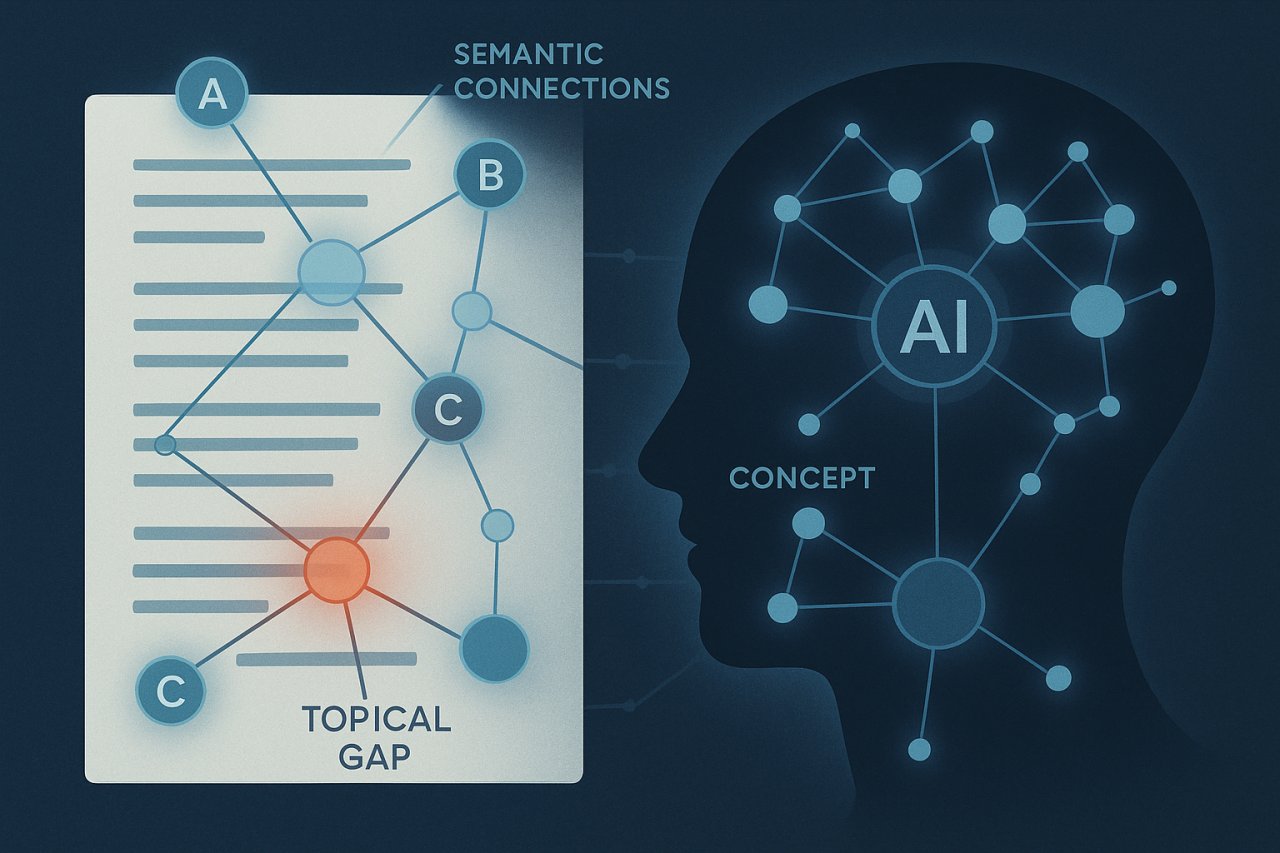
They start with your existing content, analyze what ranks, then identify semantic gaps — keywords you should rank for but don’t. This is reverse engineering at scale.
Clustering Keywords by Intent, Not Just Topic
Semrush and Ahrefs now use machine learning to cluster related keywords automatically. But here’s the breakthrough: they cluster by user intent, not just semantic similarity.
“WordPress speed optimization” and “make WordPress faster” seem similar. But AI analysis reveals that the first attracts technical users looking for detailed guides, while the second attracts beginners wanting quick fixes. Same topic, different content approach.
This intent clustering helps you avoid keyword cannibalization — where multiple pages compete for the same traffic. AI identifies which queries deserve their own dedicated page and which should be folded into existing content.
Predictive Analysis for Content ROI
SurferSEO and Clearscope use machine learning to analyze top-ranking pages and predict how your content will perform before you publish. They score your draft against ranking factors and suggest improvements.
These tools examine hundreds of ranking signals simultaneously — keyword density, semantic relevance, content structure, readability scores. That’s analysis depth no human can match manually.
But don’t follow their suggestions blindly. AI recommendations are statistical averages based on existing top content. Sometimes the winning strategy is doing something completely different.
Content Optimization: Beyond Keyword Density
The old SEO playbook said: pick a keyword, repeat it X times per 1000 words, put it in your title and H2 tags. That playbook is obsolete.
AI-driven content optimization analyzes semantic relationships, topical authority, and content depth. It’s not about keyword frequency — it’s about topical coverage and contextual relevance.
Natural Language Processing Evaluates Content Quality
Tools like MarketMuse and Frase use NLP to compare your content against the entire web’s coverage of a topic. They identify semantic gaps — concepts related to your main topic that top-ranking pages cover but yours doesn’t.
If you’re writing about “content marketing strategy” and haven’t mentioned “buyer personas” or “content calendars,” AI flags that omission. These aren’t just related keywords — they’re expected elements of comprehensive coverage.
This creates a new optimization metric: topical completeness. Google’s algorithms reward content that thoroughly addresses a topic from multiple angles. AI helps you achieve that depth without manual research.
AI Writing Assistants: Where They Help (and Where They Hurt)
ChatGPT, Jasper, and Copy.ai can generate content fast. Really fast. But here’s the problem: they generate statistically probable text, not original insights.
Use AI writing tools for research, outlines, and first drafts. Never publish their raw output. The content sounds generic because it is — it’s an average of everything written before on that topic.
Where AI writing assistants excel: generating title variations, creating meta descriptions, rephrasing awkward sentences, expanding bullet points into paragraphs. They’re editing accelerators, not replacement writers.
Automated Content Audits at Scale
AI can audit thousands of pages in minutes, identifying thin content, keyword cannibalization, and outdated information. Screaming Frog combined with machine learning models can prioritize which pages need updates based on traffic decline and competitive analysis.
This is a massive time-saver for large sites. Instead of manually reviewing every page, AI surfaces the ones that matter most for your SEO performance.
Internal Linking Strategy Gets Smarter with Machine Learning
Here’s where AI delivers its most underrated SEO advantage: automated internal link optimization. Most sites have terrible internal linking — random, inconsistent, and strategically pointless.
Machine learning models can analyze your entire site structure, identify topical relationships between pages, and suggest contextually relevant internal links that actually improve rankings.
Contextual Relevance Over Manual Guesswork
Traditional internal linking meant manually reviewing articles and guessing where links might fit. AI analyzes semantic relationships between content to identify optimal link placements.
If you have an article about “email marketing automation” and another about “lead nurturing workflows,” AI recognizes these topics are semantically connected. It suggests linking them with contextually appropriate anchor text — not just “click here” or the target keyword.
This contextual intelligence mimics how human editors would link content, but at scale across hundreds or thousands of pages.
Authority Distribution Through Smart Architecture
PageRank still matters. Pages with more internal links pointing to them accumulate more authority. But which pages deserve that link equity?
AI-powered internal linking tools analyze your site hierarchy and distribute links strategically. They identify high-value pages (your money content) and build internal link pathways that funnel authority from supporting content to those key pages.
Tools like AI Internal Links automate this entire process — scanning your content, identifying link opportunities based on semantic relevance, and inserting contextually appropriate links. For sites with 50+ pages, this automation saves dozens of hours monthly.
Dynamic Link Recommendations as Content Evolves
Static internal linking dies the moment you publish new content. AI systems continuously analyze your site as it grows, recommending new internal links to connect fresh content with your existing archive.
This dynamic optimization means your internal linking strategy evolves automatically instead of requiring quarterly manual audits. That’s the difference between treating internal links as a one-time task versus an ongoing optimization strategy.
Competitive Intelligence: AI Reveals Competitor Strategies
Competitor analysis used to mean manually reviewing rival sites and taking notes. AI tools now reverse-engineer entire content strategies in minutes.
Gap Analysis at Scale
Ahrefs’ Content Gap tool uses machine learning to find keywords your competitors rank for but you don’t. It goes beyond simple keyword lists — it identifies topical clusters and content types where competitors dominate.
This reveals strategic opportunities. If three competitors all rank for a cluster of “case study” keywords you’re missing, that’s a content format gap, not just a keyword gap.
Backlink Pattern Recognition
AI analyzes competitor backlink profiles to identify link building patterns. It spots which outreach strategies work, which content types earn links, and which sites are most receptive.
This is pattern recognition humans can’t do manually. AI processes thousands of backlinks to find the signal in the noise — the five sites that link to every competitor but not to you, or the content angle that consistently earns links.
Predictive SEO: Forecasting Before You Create
The biggest shift AI brings to SEO strategy is prediction. Instead of creating content and hoping it ranks, AI helps you forecast performance before investing time and resources.
Ranking Probability Scores
Tools like SurferSEO assign probability scores to how well your content will rank based on its optimization against top competitors. If your draft scores 65/100 against the current top 10, AI tells you that before you hit publish.
This turns content creation from guesswork into data-driven planning. You know which topics you can realistically compete for and which ones require more authority building first.
Traffic Forecasting for Content ROI
AI models predict how much traffic a piece of content will generate based on keyword difficulty, your domain authority, and competitive analysis. This helps prioritize content calendar decisions.
Why write a piece that will get 50 visits per month when you could write one that will get 500? Predictive analytics make that calculation possible before you invest the time.
The Human-AI Partnership: What Still Requires Your Brain
AI accelerates execution but can’t replace strategic thinking. Here’s what still requires human judgment.
Brand Voice and Original Perspective
AI generates average content by design. It can’t develop a unique brand voice or controversial opinions that make content memorable. That’s still your job.
The best SEO content in 2026 balances AI-powered optimization with human creativity and original insights. Use AI for research and structure, then inject the perspective only you can provide.
Editorial Judgment and Quality Control
AI suggests topics based on search volume and competition. But it can’t decide if a topic aligns with your brand positioning or serves your actual business goals.
You still need to exercise editorial judgment about which opportunities to pursue. Not every keyword gap is worth filling. Not every AI recommendation deserves implementation.
Ethical Considerations and E-E-A-T
Google’s E-E-A-T guidelines (Experience, Expertise, Authoritativeness, Trustworthiness) emphasize human credibility. AI can’t fake experience or build genuine expertise.
Your author bio, case studies, and original research still matter enormously. AI optimizes content, but your credentials and real-world experience make it trustworthy.
The 2026 AI SEO Strategy Framework
Here’s how to build an AI-enhanced SEO strategy that actually works:
Use AI for scale, humans for strategy. Let machine learning handle repetitive tasks: keyword clustering, content audits, internal link suggestions, competitive gap analysis. Save your strategic thinking for high-level decisions: brand positioning, content angles, link building relationships.
Combine multiple AI tools for complete coverage. No single tool does everything well. Use Ahrefs for keyword research, SurferSEO for content optimization, AI Internal Links for link architecture, and ChatGPT for ideation. Each tool has specific strengths.
Treat AI recommendations as starting points, not final answers. Every AI suggestion should pass through your strategic filter. Does this keyword align with business goals? Does this content serve our audience? Does this link make sense in context?
Invest in content that can’t be AI-generated. Original research, case studies, expert interviews, data analysis — these create moats around your SEO performance. AI can optimize commodity content, but it can’t replicate unique intellectual property.
The winning AI SEO strategy isn’t about replacing human judgment with automation. It’s about using machine intelligence to amplify what strategic thinkers can accomplish. AI handles the grunt work so you can focus on the creative and strategic decisions that actually differentiate your content.
That’s the opportunity. Most of your competitors will use AI to create more mediocre content faster. You can use it to create exceptional content more efficiently.