
Table of Contents
- What Actually Changed in the February 2026 Core Update
- Why WordPress Sites Took the Biggest Hit
- Recovery Strategy: Fix Your Internal Architecture First
- Content Quality Still Matters — But Not How You Think
- What to Do if You’re Still Dropping After 4 Weeks
- Looking Forward: The New Normal for WordPress SEO
Google’s algorithm updates used to feel like rolling dice. This one’s different. The patterns emerging from affected sites point to a fundamental shift in how Google evaluates site structure, content depth, and user navigation paths. If your WordPress rankings took a hit, the problem likely isn’t your content quality — it’s how Google can access, understand, and trust the relationships between your pages.
Here’s what changed, why WordPress sites were disproportionately affected, and exactly how to recover.
What Actually Changed in the February 2026 Core Update
Google’s official statement was predictably vague:
We’ve refined how we assess overall site quality and content relevance.
But the data tells a clearer story. Sites with strong internal linking architecture weathered this update remarkably well. Sites with orphaned pages, shallow link depth, and inconsistent cross-referencing got hammered.
The Content Island Penalty
Google appears to have introduced what SEOs are calling the Content Island Penalty. Pages that receive few or no internal links from other relevant pages on your site now carry significantly less ranking power — even if the content itself is excellent.
Think about it from Google’s perspective: if you wrote a comprehensive guide but never link to it from related articles, are you really signaling that it’s important? The algorithm now interprets weak internal connectivity as a quality signal in itself.
Link Context Weight Increased
The anchor text and surrounding context of internal links now carry more algorithmic weight. Generic click here or read more anchors don’t help Google understand topical relationships. Descriptive, keyword-rich anchors within contextual paragraphs do.
Sites that built internal links programmatically — those auto-generated related posts widgets with generic titles — saw rankings drop. Sites with manually curated, contextual links within flowing content maintained or improved positions.
Crawl Budget Reality Check
Google’s become more aggressive about crawl efficiency. If your site forces Googlebot through five clicks to reach important content, that content now gets devalued. The update seems to heavily favor sites where key pages sit within two clicks of the homepage.
WordPress sites with deep category structures and minimal cross-linking between categories got hit hardest. Flat architectures with strategic internal links performed better.
Why WordPress Sites Took the Biggest Hit
Let’s be honest: most WordPress sites have terrible internal linking. Not because site owners don’t care, but because WordPress doesn’t make it easy to maintain strategic link architecture at scale.
The Default WordPress Structure Problem
Out of the box, WordPress creates these link patterns:
- Homepage links to latest posts
- Category pages link to posts in that category
- Individual posts link to… almost nothing
This creates what I call content dead-ends. Visitors and Google both arrive at a blog post, consume the content, and have nowhere strategic to go next. The only internal links are in the footer or sidebar — places Google increasingly treats as navigational noise.
Plugin Dependency Trap
Many WordPress users rely on related posts plugins that generate links based on tags or categories. These work, but they’re surface-level connections. They don’t understand semantic relationships, can’t prioritize high-value pages, and often create circular linking patterns that waste link equity.
The February update rewarded sites that clearly understood their own content hierarchy. Automated solutions built on shallow logic didn’t cut it.
Content Velocity Creates Chaos
WordPress makes publishing easy — maybe too easy. Sites that publish frequently often neglect to retrospectively link new content to older material. You write a new article that perfectly complements something from six months ago, but you never connect them.
Google’s algorithm now seems to detect this. Sites that continuously expand content without strengthening internal structure appear less authoritative.
Recovery Strategy: Fix Your Internal Architecture First
If you lost rankings, don’t panic and rewrite all your content. The evidence strongly suggests that fixing internal linking architecture recovers most affected sites within 4-6 weeks.
Run a Link Depth Analysis
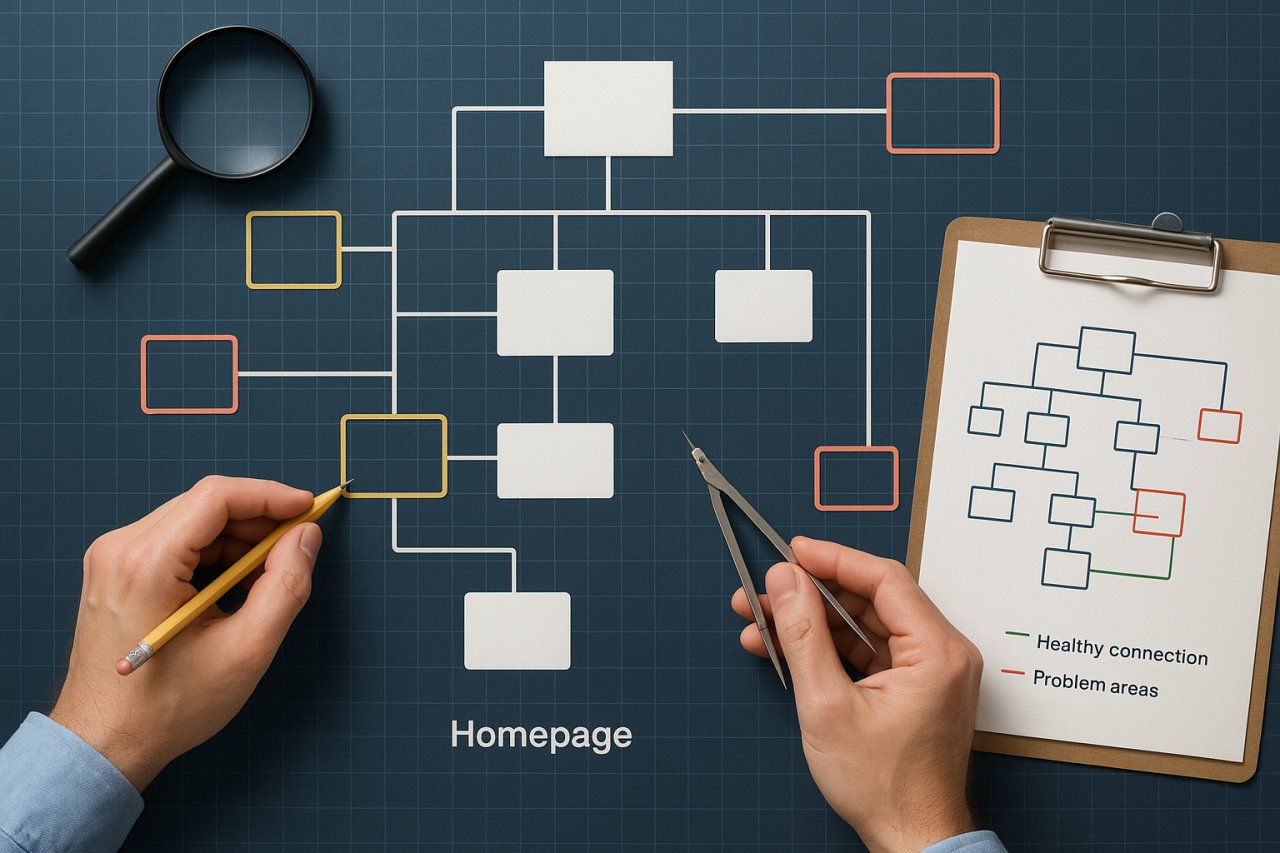
Use Screaming Frog or your preferred crawler to identify pages more than three clicks from your homepage. These are your orphan risks. Google’s treating them as less important than they deserve.
Priority action: Find your top 20 organic landing pages from the past 90 days. Check their link depth. If any sit deeper than three clicks, create a path of contextual links that brings them closer to the homepage.
Identify Your Content Hubs
Every site has 5-10 core topic areas. Your hub pages should be comprehensive guides on these topics, and they should link out to related subtopic articles. Equally important: all those subtopic articles must link back to the hub.
This creates what Google increasingly rewards: topical authority clusters. The February update seems designed to surface sites that demonstrate clear expertise in defined areas, not scattered one-off posts on random topics.
Audit Internal Links for Relevance
Run through your highest-traffic pages. For each internal link, ask: Does this genuinely help readers dive deeper into a related topic? If you’re linking just to link, remove it. If you’re missing an obvious connection, add it.
Google’s algorithm now appears to penalize link spam even when it’s internal. Stuffing 15 links into a 500-word post looks manipulative. Five highly relevant, contextually integrated links look authoritative.
Implement Regular Link Maintenance
This is where most WordPress sites fail. You publish content, it ranks, and you forget about it. But your site is a living organism. Every new article changes the optimal internal link structure.
Create a monthly process: review your last 10 published posts and your top 10 ranking pages. Ask where new connecting links would strengthen topical relationships. Add them. This continuous optimization is what separates sites that recover from those that don’t.
Tools like AI Internal Links can automate this process by analyzing semantic relationships and suggesting relevant connections you might miss manually.
Content Quality Still Matters — But Not How You Think
Let me clear up a misconception: this update didn’t ignore content quality. It just changed how Google measures it.
Depth Over Length
The sites that maintained rankings didn’t necessarily have longer articles. They had more interconnected content systems. A 1,200-word article that links to five related pieces and receives links from eight others signals more expertise than an isolated 3,000-word post.
Google’s trying to identify sites that truly understand their subject matter well enough to map relationships between concepts. Surface-level SEO content with perfect keyword density but zero internal strategy is getting filtered out.
Update Frequency as a Trust Signal
Sites that regularly update older content with new internal links and refreshed information weathered the update better. Google appears to interpret content maintenance as a proxy for site authority.
This doesn’t mean changing publish dates or adding a sentence. It means genuinely improving articles — expanding sections, adding new insights, and most importantly, connecting them to newer related content.
The E-E-A-T Connection
Google’s E-E-A-T framework (Experience, Expertise, Authoritativeness, Trust) feels more enforced than ever. But here’s the twist: internal linking architecture is how Google measures these qualities at scale.
A site with clear topical clusters, consistent cross-referencing, and logical information hierarchies demonstrates expertise. A site with scattered content and weak internal structure doesn’t — regardless of how good individual articles are.
What to Do if You’re Still Dropping After 4 Weeks
Most recovery strategies work within a month. If yours doesn’t, you’re likely dealing with a secondary issue the internal linking fixes can’t resolve alone.
Check for Thin Content Clusters
Google may have flagged your site for content pattern issues. If you have 50 blog posts that all follow the same template, cover similar ground, or feel generated rather than crafted, internal linking won’t save you.
Audit your bottom 20% by traffic. Ask honestly: would you personally recommend these articles? If not, either improve them substantially or noindex them. Quality floor matters more than content volume.
Technical SEO Hygiene
Sometimes the internal linking is fine, but technical issues are blocking recovery:
- Slow page speed killing engagement metrics
- Mobile usability problems creating high bounce rates
- Core Web Vitals failures signaling poor user experience
- Redirect chains breaking link equity flow
Run a full technical audit. The February update didn’t change technical SEO requirements, but it may have lowered Google’s tolerance for sites that meet content standards but fail technical ones.
Consider External Link Profile
If you recently built links from low-quality directories or paid for placements from obvious link farms, the update may have caught you. Google’s link spam detection seems more sophisticated.
Review your backlink profile for suspicious patterns: sudden spikes, exact-match anchor text from unrelated sites, links from networks of similar domains. Disavow if necessary.
Looking Forward: The New Normal for WordPress SEO
The February 2026 Core Update isn’t an anomaly. It’s a signal of where Google’s algorithm is heading: toward rewarding sites that demonstrate clear topical organization and strategic internal information architecture.
For WordPress users, this means fundamentally changing how you think about publishing. You’re not just adding posts to a blog. You’re building a knowledge graph that Google can understand and trust.
Automate What You Can’t Do Manually
Maintaining optimal internal linking across hundreds of posts is humanly impossible without tools. The sites recovering fastest are those implementing systematic approaches — whether through AI-powered plugins, spreadsheet tracking systems, or dedicated content operations teams.
The key is making internal linking a process, not an afterthought. Every published article should trigger a review of where it fits in your existing content ecosystem.
Quality Plus Structure Wins
The February update didn’t kill SEO or reward only giant sites. It raised the bar for what constitutes a well-organized, authoritative site. Small WordPress blogs with tight topical focus and smart internal linking are ranking above massive publications with scattered content.
If you’re still approaching WordPress SEO like it’s 2020 — great content, good metadata, some random internal links — that’s no longer enough. Google’s demanding evidence that you understand the full scope of your subject matter. Internal architecture is how you prove it.
Fix your links. Connect your content. Show Google you’re not just publishing pages — you’re building something coherent.
That’s how you survive the next update too.