
Table of Contents
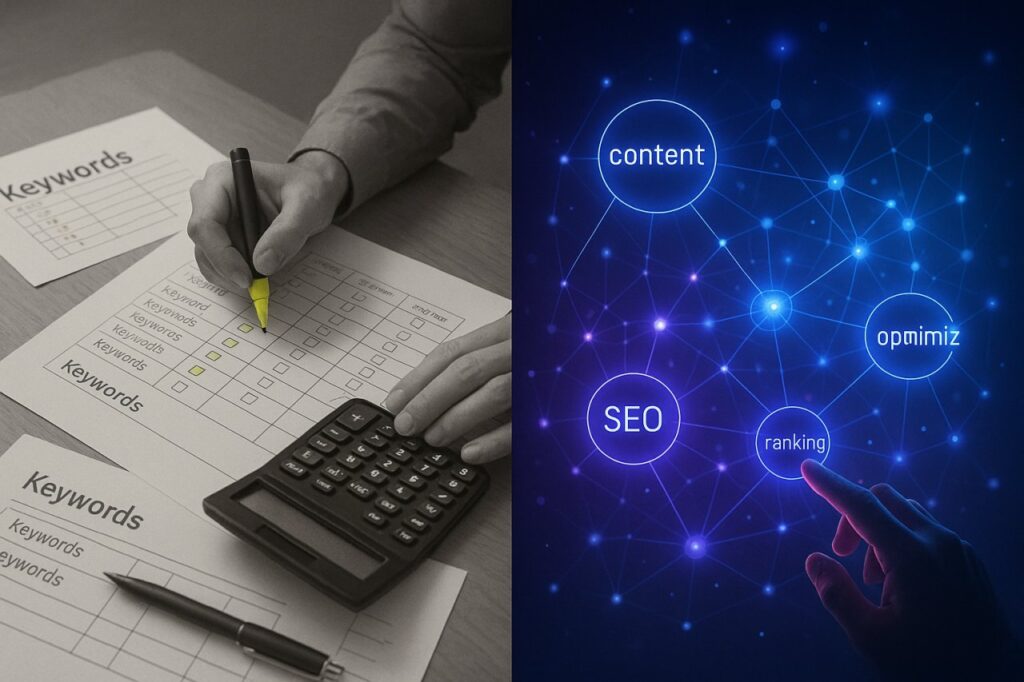
The shift isn’t subtle. Machine learning models now understand content context better than keyword checkers ever could. They map semantic relationships across your entire site, identify linking opportunities humans overlook, and predict which on-page elements will actually move the needle. The gap between manual optimization and AI-driven strategies grows wider every month.
Here’s what separates AI content optimization from the checkbox approach most of us inherited.
Why Traditional On-Page SEO Tools Miss the Mark
Your average SEO plugin tells you to hit a 2% keyword density target and sprinkle your focus keyword in the first paragraph. Then it gives you a green light.
That worked when Google’s algorithms were simpler. Now it’s theatre.
Google’s language models — BERT, MUM, and their successors — don’t count keyword occurrences. They parse meaning. They understand that “affordable running shoes” and “budget-friendly athletic footwear” address the same intent. They recognize when you’re genuinely answering a question versus when you’re stuffing keywords into awkward sentences.
Traditional tools can’t see this. They operate on pattern matching, not comprehension.
The Keyword Density Trap
Here’s a real scenario: You write an article about email marketing automation. Your SEO tool says you need to use “email marketing automation” exactly 12 times to hit the optimal density. So you do.
But you never mention segmentation, drip campaigns, or behavioral triggers — concepts that Google knows are semantically connected to your topic. Your content passes the tool’s check but fails the relevance test that actually matters.
AI-powered optimization flips this. Instead of counting phrases, it maps your content against the semantic space Google expects for your topic.
Manual Link Insertion at Scale Is Impossible
You publish 50 articles. Later, you write a comprehensive guide that should connect to 15 of those older posts. Are you really going back through each one to add contextual links?
Most people don’t. The linking structure fossilizes. New content doesn’t benefit from older authority. Related topics stay disconnected.
This is where human limitation meets AI strength.
How Machine Learning Reads Content Differently
AI content optimization starts with semantic analysis — the ability to understand what your content is about, not just what words it contains.
Modern language models create vector representations of text. Your article becomes a point in multi-dimensional space, positioned relative to every concept, entity, and intent in the model’s training data. Articles about similar topics cluster together. Articles addressing different angles of the same query sit close but distinct.
This isn’t magic. It’s math.
But the practical impact is enormous. An AI can tell you that your article about conversion rate optimization lacks depth on statistical significance — not because you didn’t use that phrase enough, but because the semantic neighborhood your content occupies has a measurable gap where that concept should be.
Entity Recognition and Topic Completeness
Google doesn’t just care about keywords anymore. It cares about entities — people, places, concepts, brands — and how they relate.
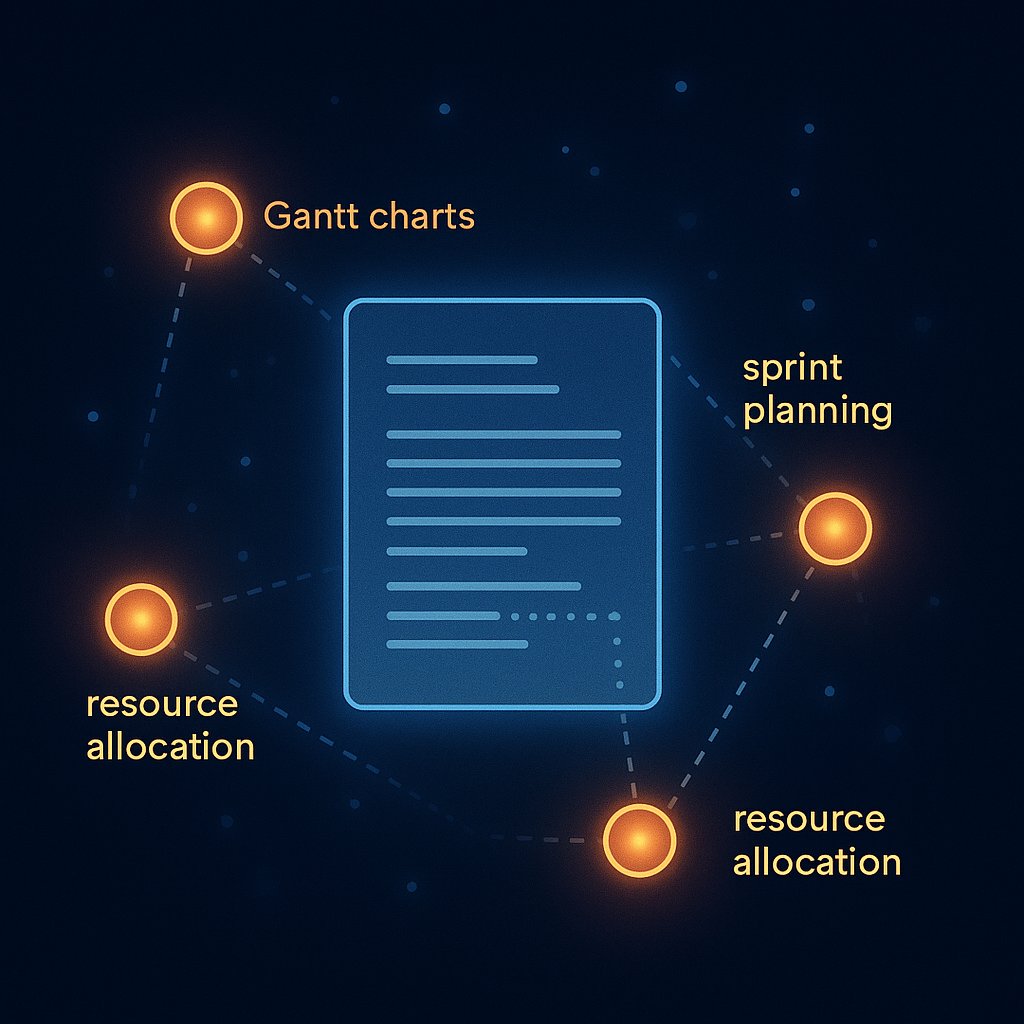
An AI optimization tool scans your content for entity coverage. Writing about project management software? The AI knows you should probably mention Gantt charts, sprint planning, and resource allocation. Not because these are keyword variations, but because they’re entities that complete the topic’s knowledge graph.
Missing them creates a topical gap Google notices.
Readability Beyond Grade Level
Flesch-Kincaid scores tell you if a middle schooler can read your content. They don’t tell you if it’s actually engaging.
AI models trained on engagement metrics can predict which paragraph structures keep readers moving, where attention drops off, and which sentence patterns correlate with higher dwell time. They’ve analyzed millions of pages and learned patterns human editors would never spot.
Some AI tools now flag sentences that statistically correlate with reader bounce — not because they’re hard to read, but because they break the narrative flow in ways that make people leave.
Content Structure Recommendations That Actually Work
Here’s where AI optimization diverges most sharply from the old playbook.
Traditional SEO says: use H2 tags, break up your text, include a list. AI says: your competitors who rank in positions 1-3 all address objection handling in the third quarter of their content, and you don’t.
This is competitive gap analysis powered by machine learning.
Predictive Section Ordering
AI models can analyze thousands of top-ranking pages for your target query and identify structural patterns. They notice that long-form guides about keyword research tend to perform better when they address tool selection before methodology, not after.
They detect that product comparison articles with feature tables in the upper third of the content correlate with better rankings than those with tables at the end.
These aren’t rules. They’re probabilistic patterns. But following them shifts odds in your favor.
Content Depth Calibration
How long should your article be? The old answer was “as long as it needs to be” or “longer than your competitors.”
AI gives you a different answer: based on the query and competition, here’s the optimal depth for each subtopic. You need 400 words on implementation, 200 on pricing considerations, and 150 on use cases. More than that and you risk diluting focus. Less and you leave topical gaps.
This level of precision comes from analyzing what actually ranks, not what a generic content brief template suggests.
Automated Internal Linking Intelligence
This is where AI content optimization becomes genuinely transformative — and where manual approaches simply can’t compete.
Internal linking at scale requires understanding the semantic relationship between every page on your site. A human can manage this for 20 articles. For 200? The task becomes impossible.
AI models map your entire content library as a knowledge graph. They identify which pages are topically adjacent, which cover prerequisite concepts, and which serve as comprehensive pillar resources. Then they suggest links that strengthen these connections.
Contextual Relevance Detection
Not all links are equal. A link is valuable when it appears in context that makes the click genuinely useful to a reader.
AI can scan your content and identify specific sentences where a link to a related article would add value — not just because keywords match, but because the semantic context creates a natural bridge. It’s the difference between “learn more about keyword research” and a link that appears exactly when the reader would benefit from deeper detail.
Tools like AI Internal Links automate this discovery process across your entire WordPress site, finding opportunities that manual review would miss simply because no human can hold the context of hundreds of posts in their head simultaneously.

Link Equity Distribution
AI optimization models can calculate how internal link equity flows through your site architecture. They identify orphaned pages that receive no internal links, authority pages that hoard link equity without distributing it, and bottlenecks where link value gets trapped.
Then they recommend specific links to fix these structural problems.
This turns internal linking from a manual task into a strategic distribution system. Your most important pages get the signals they need. Your newer content gets connected to established authority. The entire site becomes more cohesive in Google’s eyes.
Anchor Text Optimization at Scale
Manual internal linking leads to repetitive anchor text. You link to your pillar page about content marketing 40 times, and 38 of those links say “content marketing.”
AI can vary anchor text naturally while maintaining semantic relevance. It suggests “building a content strategy,” “editorial planning approaches,” and “content creation frameworks” as alternative anchors that preserve relevance while avoiding the robotic repetition that looks manipulative to Google.
Implementation Without Overwhelming Your Workflow
The barrier to AI optimization isn’t technology anymore. Most of these tools integrate with WordPress as easily as traditional SEO plugins.
The barrier is trust. Letting an algorithm make recommendations about your content feels risky.
Here’s the practical approach that works.
Start with Auditing, Not Automation
Use AI tools to audit your existing content first. Let them show you what they see. Run semantic analysis on your best-performing articles. Look at the internal linking suggestions. Compare the content structure recommendations to what you built manually.
This builds confidence in the model’s understanding of your niche.
Implement Suggestions Selectively
You don’t need to accept every recommendation. AI optimization works best as a collaborative process.
The AI identifies a gap in entity coverage? Evaluate whether adding that entity serves your readers. It suggests a link? Check if the context genuinely supports it. The machine provides pattern recognition at scale. You provide editorial judgment.
Over time, you’ll develop intuition for which suggestions align with your content standards.
Measure What Changes
AI optimization gives you testable hypotheses. You implement semantic improvements on 10 articles and leave 10 similar ones unchanged. You add AI-recommended internal links to half your category pages.
Then you measure. Rankings, traffic, engagement metrics, conversion rates. AI optimization should produce measurable improvements within 30-60 days if it’s working.
The Competitive Advantage You Can’t Afford to Ignore
Here’s the uncomfortable truth: your competitors are already using these tools.
The sites outranking you probably aren’t manually optimizing every on-page element anymore. They’re using AI to identify opportunities, automate repetitive tasks, and maintain optimization consistency across hundreds or thousands of pages.
The question isn’t whether AI content optimization works. The question is how long you wait before adopting it.
Every month you delay is a month your competitors strengthen their semantic signals, improve their internal linking architecture, and build content structures that align more closely with how Google’s algorithms actually work.
The tools exist. The technology is proven. The competitive advantage is measurable.
What’s stopping you?