
Table of Contents
- Why Internal Linking Still Breaks at Scale
- What AI Actually Automates (And What It Doesn’t)
- The Three Pillars of Smart Internal Linking Automation
- Real Workflow Changes When You Automate Linking
- Avoiding the Over-Automation Trap
- How AI Internal Linking Fits Into Your Broader SEO Stack
- When to Start Automating Internal Links
You know the drill. You publish a new article. Then you realize you should link it from five older posts. So you search your own site, open five tabs, hunt for relevant paragraphs, insert anchors, check for duplicates. Twenty minutes later, you’re done with one post.
Now multiply that by every article you’ve ever published.
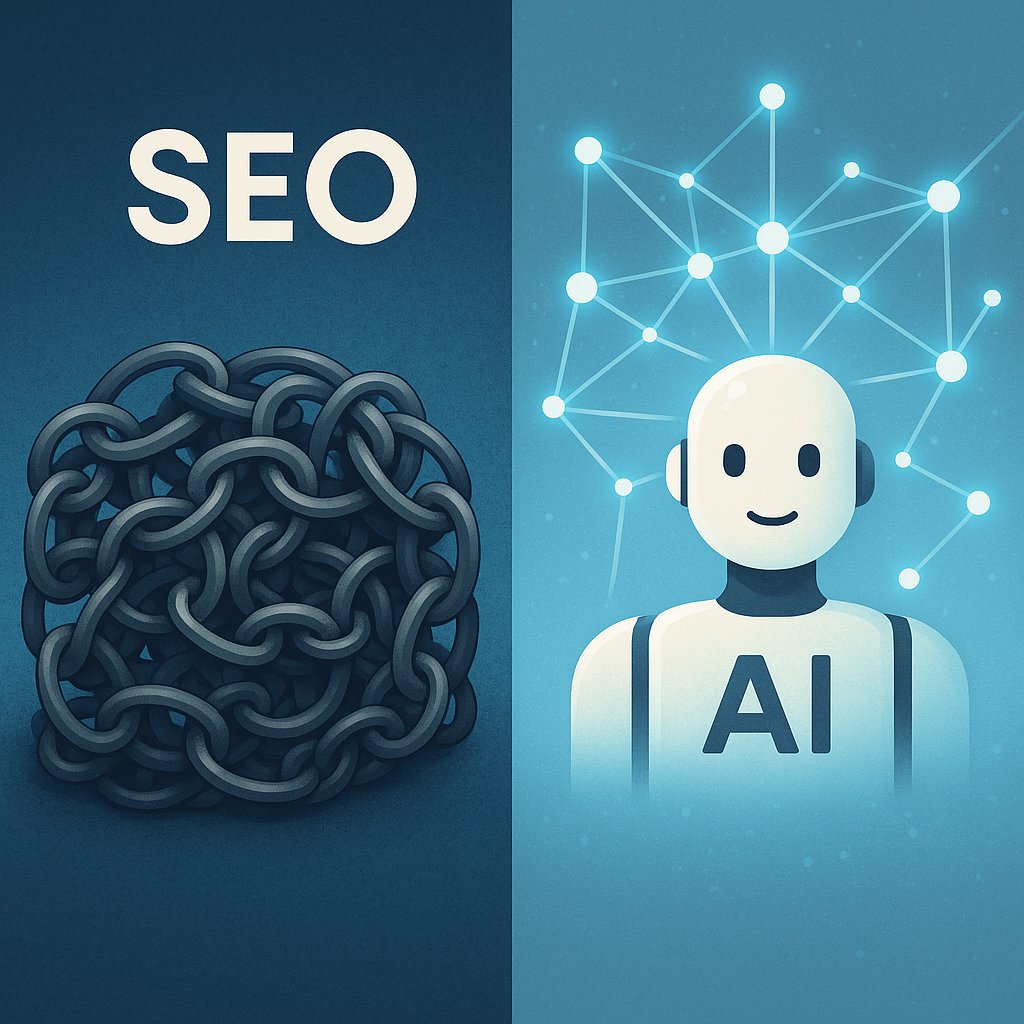
AI SEO automation doesn’t make you lazy — it makes you strategic. When a machine handles repetitive structure work, you get to focus on the decisions that actually move rankings: which content to create, which keywords to target, which pages deserve more authority.
Let’s talk about how AI changes internal linking workflows without turning your site into an over-optimized mess.
Why Internal Linking Still Breaks at Scale
Most WordPress sites have the same problem: their internal linking strategy died around post 50.
Early on, you’re meticulous. You cross-link related articles. You build topic clusters. You even keep a spreadsheet of pillar pages.
Then you hit 100 posts. The mental map collapses. You can’t remember which articles cover overlapping topics. You stop cross-linking because it takes too long to find opportunities. New content gets published as isolated islands.
The result? Orphan pages that Google barely crawls. Authority trapped in old articles that never distribute PageRank to new ones. Users who land on a post and leave because there’s no clear next step.
Manual internal linking doesn’t scale. Not because you lack discipline — because the cognitive load becomes impossible.
What AI Actually Automates (And What It Doesn’t)
Let’s separate the hype from the reality.
AI Can Handle Pattern Recognition
Machines excel at scanning hundreds of articles and spotting semantic connections. If you write about keyword research in one post and search intent analysis in another, AI recognizes the topical relationship instantly.
It can also enforce consistency. If your pillar page on WordPress SEO should link to every cluster article about technical optimization, an AI system ensures that happens — even for posts published six months apart.
AI Cannot Replace Editorial Judgment
Here’s what automation can’t do: decide that a link would feel forced. Recognize when two articles compete for the same keyword and shouldn’t cross-link. Understand that a particular anchor phrase sounds unnatural in context.
The best AI tools work like a smart assistant, not a replacement. They surface opportunities. You approve or reject them.
Think of it like spell check. It flags potential issues. You still decide whether to accept the suggestion.
Speed vs. Quality Isn’t a Trade-Off Anymore
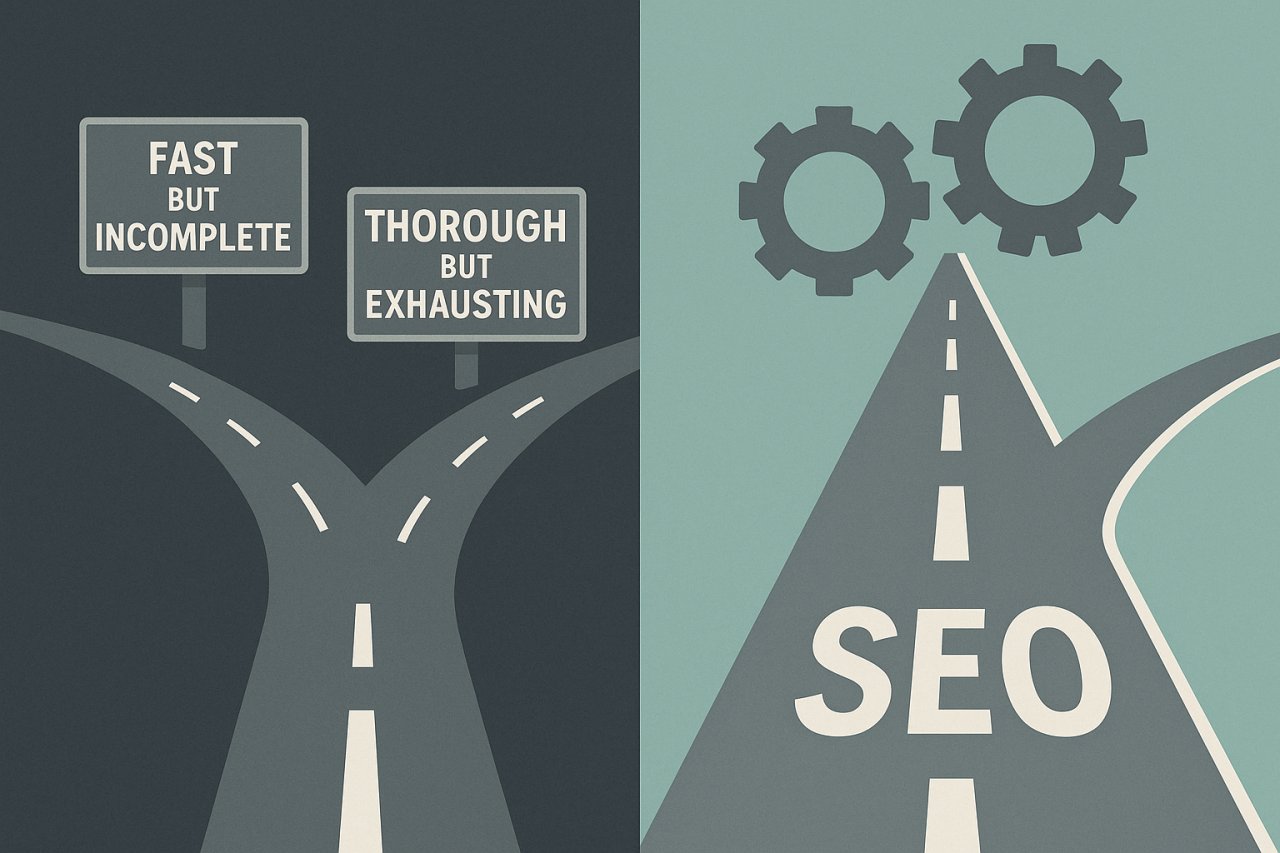
The old assumption: fast = sloppy, careful = slow.
AI breaks that equation. You can process 200 articles in an hour and maintain relevance standards — because the machine handles discovery while you handle judgment.
Manual linking forces you to choose between thorough (but exhausting) or fast (but incomplete). Automation lets you be both.
The Three Pillars of Smart Internal Linking Automation
Not all AI-driven linking is created equal. The difference between a helpful tool and a liability comes down to three principles.
Contextual Relevance Over Keyword Matching
Bad automation: scanning for exact keyword matches and inserting links wherever they appear.
Example: You mention link building in a paragraph about outreach. A dumb tool links it to your internal post about internal linking because both contain the word “link.”
Smart automation: analyzing the surrounding sentences to understand whether the context actually aligns. It recognizes that topical relevance beats keyword overlap.
Google’s algorithm already works this way. Your internal linking should too.
Anchor Text Diversity as a Built-In Feature
Manual linking often creates repetitive patterns. You link to your pillar page about technical SEO using the same phrase — technical SEO — from 15 different articles.
Google notices. Users notice.
AI systems can enforce variety automatically. One link uses “technical SEO basics,” another uses “crawl optimization tactics,” a third uses “site speed and indexation.” Same destination, different angles.
This isn’t just about avoiding over-optimization. Varied anchors look natural because they reflect how real editors actually write.
Respecting Link Limits and Avoiding Spam Signals
Some automation tools treat every article like a link farm. They’ll insert 20 internal links in a 600-word post.
That’s not SEO. That’s sabotage.
Smart automation respects density rules. A typical guideline: one internal link per 100-150 words, adjusted for content length. A 1,500-word article might have 8-10 internal links. A 500-word post should have 3-4.
AI can enforce this ceiling automatically — no risk of turning your content into a hyperlink maze.
Real Workflow Changes When You Automate Linking
Let’s get concrete. What does your publishing process actually look like before and after?
Before Automation
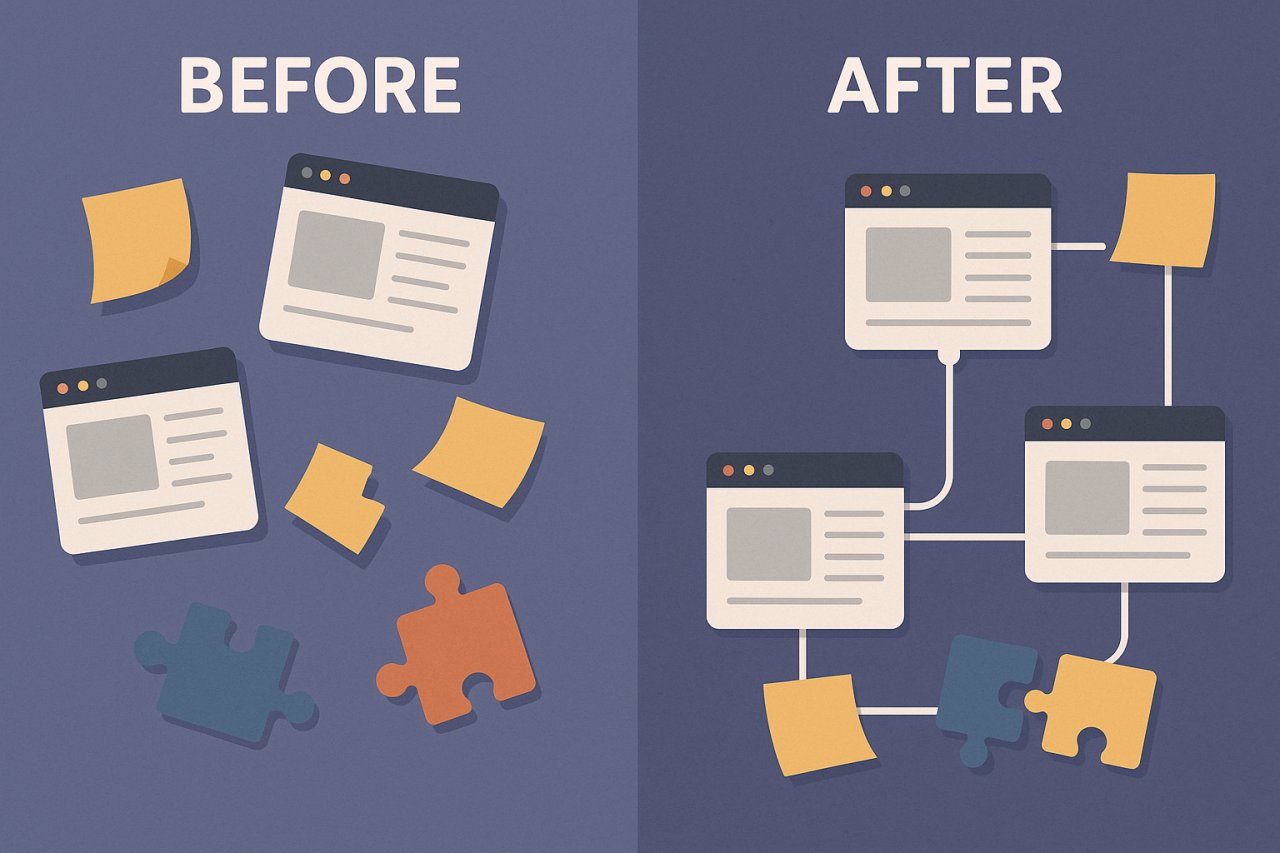
You write a new article. You hit publish. Then you open five older posts manually, search for relevant sentences, add links. You might do this right away. More likely, you forget for three weeks. The new post sits unlinked. Google crawls it once, sees no internal signals, and deprioritizes it.
Meanwhile, your pillar pages slowly lose authority because they’re not linking to fresh content. You have a mental list of “I should go back and update those” — and you never do.
After Automation
You write the same article. You hit publish. Within minutes, the system scans your archive and suggests five older posts where a contextual link would make sense. You review them in under 60 seconds. Approve. Done.
The new post is instantly woven into your site’s link structure. It gets crawled faster. It inherits authority signals. Users who land on related older content now have a clear path to the new material.
Older pillar pages update themselves with fresh links. You didn’t touch them. The system recognized the topical fit and handled it.
Avoiding the Over-Automation Trap
Here’s the risk: you set up automation and walk away. Six months later, you realize every article links to the same three posts. Or worse — links appear in weird places where they don’t make sense.
AI isn’t magic. It’s a tool. Tools require maintenance.
Set Review Intervals
Even with smart automation, audit your internal links quarterly. Look for patterns that feel repetitive. Check if certain pages are getting over-linked while others are ignored.
This takes 20 minutes every three months — far better than spending 20 minutes per post.
Train the System With Feedback
Most AI tools improve when you reject bad suggestions. If the system keeps linking irrelevant pages, mark them as incorrect. Over time, it learns your site’s nuances.
The goal isn’t zero manual input — it’s strategic manual input. You guide. The machine executes.
Keep Editorial Control Where It Matters
Some links are too important to automate. Your most valuable conversion pages, your flagship pillar content, your brand positioning articles — those deserve hand-placed, carefully crafted internal links.
Use automation for the 80% of routine linking. Reserve your energy for the 20% that defines your site’s structure.
How AI Internal Linking Fits Into Your Broader SEO Stack
Internal linking isn’t the only SEO task worth automating. But it’s one of the few where automation improves quality instead of degrading it.
Compare it to AI-generated content. That requires heavy editing to avoid generic phrasing. AI internal linking, when done right, produces output you’d approve manually — just faster.
WordPress users have an advantage here. Tools like AI Internal Links integrate directly with your content workflow, analyzing posts as they’re published and suggesting relevant connections without requiring you to export data or switch platforms.
The key phrase: without requiring you to export data. Friction kills adoption. If an automation tool demands ten steps of setup, you’ll use it once and forget it. The best solutions work invisibly.
When to Start Automating Internal Links
You don’t need 1,000 posts to benefit from automation. The ideal moment is when manual linking starts feeling like a chore.
For some sites, that’s 30 posts. For others, it’s 100. The signal is simple: if you’re publishing new content but skipping the internal linking step because it’s too tedious, automate now.
Waiting doesn’t make it easier. Every post you publish without proper internal links is a missed opportunity. Google’s already crawling your site. The question is whether your link structure is helping or hindering that crawl.
Internal linking isn’t glamorous. But it’s one of the highest-leverage activities in on-page SEO. And unlike backlinks, you control it completely.
When AI handles the repetitive parts — scanning, matching, suggesting — you finally have time to focus on what machines can’t do: creating content worth linking to in the first place.