

Understanding the Internal Linking Landscape in 2026
The debate between manual and automated internal linking has intensified as WordPress sites scale beyond manageable limits. What once worked for a 50-page blog becomes impossible at 500 pages, and utterly unsustainable at 5,000. The question isn’t whether internal linking matters—it does, profoundly—but rather which approach delivers the best results given your specific circumstances.
Internal links remain one of the most powerful on-page SEO tools available. They distribute authority across your site, guide search engine crawlers to important content, establish topical relationships, and create pathways for users to discover related information. Yet the method you choose to implement these links can dramatically affect your SEO outcomes, team productivity, and long-term site maintenance burden.
Why Internal Linking Matters More Than Ever
Search engines have become increasingly sophisticated at understanding content relationships and topical authority. Google’s algorithms now evaluate not just individual pages, but how those pages connect to form a coherent knowledge structure. Sites with strong internal linking architectures signal expertise and comprehensive coverage of topics, earning advantages in search rankings.
The challenge lies in maintaining this structure as your content library grows. Every new article published creates potential linking opportunities with existing content. Every updated article might benefit from fresh internal connections. Without a systematic approach, valuable content becomes isolated, orphaned, or inadequately connected to your broader topical framework.
The Evolution from Manual to Automated Solutions
For years, manual internal linking was the only option. Content creators would remember relevant articles, search through their archives, and insert contextual links during the writing process. This worked adequately for small sites with dedicated editorial teams and limited publishing velocity.
The landscape shifted dramatically as content marketing scaled. Sites began publishing daily or multiple times per day. Archives grew to thousands of articles spanning diverse topics. The mental overhead of remembering every relevant piece became impossible. Manual linking workflows broke down, resulting in inconsistent link distribution, missed opportunities, and orphaned content that search engines struggled to discover.
Automation emerged as a response to these scalability challenges. Early automated solutions used simple keyword matching, often creating awkward or irrelevant links. Modern AI-powered systems employ natural language processing and semantic analysis, understanding context and topical relevance with remarkable accuracy.
Manual Internal Linking: Traditional Approach Deep Dive
Manual internal linking gives content creators direct control over every link placed within their content. Writers identify relevant opportunities as they draft, selecting precise anchor text and target URLs based on their understanding of the content’s context and strategic goals.
How Manual Linking Works in Practice
The manual workflow typically unfolds during content creation or editing. A writer recognizes that a concept being discussed relates to previously published content. They search their site or content management system, locate the relevant article, and insert a contextual link using descriptive anchor text.
Some teams maintain spreadsheets or databases tracking key articles and their target keywords, helping writers identify linking opportunities more systematically. Others rely on institutional knowledge and familiarity with the content archive. The most organized operations establish internal linking guidelines specifying when and how to create connections between related content.
Complete Control Over Link Placement and Context
The primary advantage of manual linking is editorial precision. A skilled writer understands nuance that even sophisticated algorithms might miss. They know when a passing reference deserves a link versus when a detailed discussion warrants multiple connections. They can craft anchor text that flows naturally within sentences while still signaling relevance to search engines.
This control proves especially valuable for strategic priorities. If you’re launching a new service page or trying to boost rankings for a specific article, manual linking allows you to deliberately create supporting connections from high-authority pages. You can execute sophisticated link equity distribution strategies with surgical precision.
Manual linking also ensures brand consistency. Writers can avoid linking to outdated content, competitors, or low-quality pages that automated systems might mistakenly include. They maintain awareness of the user experience, ensuring links enhance rather than disrupt the reading flow.
Time Investment and Resource Requirements
The hidden cost of manual internal linking reveals itself at scale. Research shows that conscientious internal linking can add 15-30 minutes to each article’s creation time. For a site publishing five articles weekly, that’s over 65 hours annually spent on internal linking alone.
This time investment grows exponentially as your archive expands. With 50 articles, remembering relevant content is manageable. With 500 articles spanning multiple topics, it becomes challenging. With 5,000 articles, comprehensive manual linking becomes virtually impossible without dedicated tools and processes.
The opportunity cost extends beyond writing time. When content creators spend significant energy searching for linking opportunities, they have less cognitive bandwidth for crafting compelling narratives, conducting thorough research, or developing unique insights that differentiate your content.
Common Pitfalls of Manual Link Management
Manual approaches suffer from inconsistency. Different writers have different linking philosophies, knowledge levels, and diligence. One writer might add eight internal links per article while another adds two. Some writers remember to revisit old content and add links to new articles; most don’t.
Recency bias creates systematic problems. Writers naturally think of recently published content when identifying linking opportunities, creating clusters of well-linked new articles while older valuable content languishes with few incoming internal links. This pattern wastes the authority and established rankings of older content.
Human error introduces another variable. Writers might link to the wrong URL, use suboptimal anchor text, or create links that make sense in isolation but conflict with broader topical strategies. When internal linking decisions are distributed across multiple team members without centralized oversight, these inconsistencies compound.
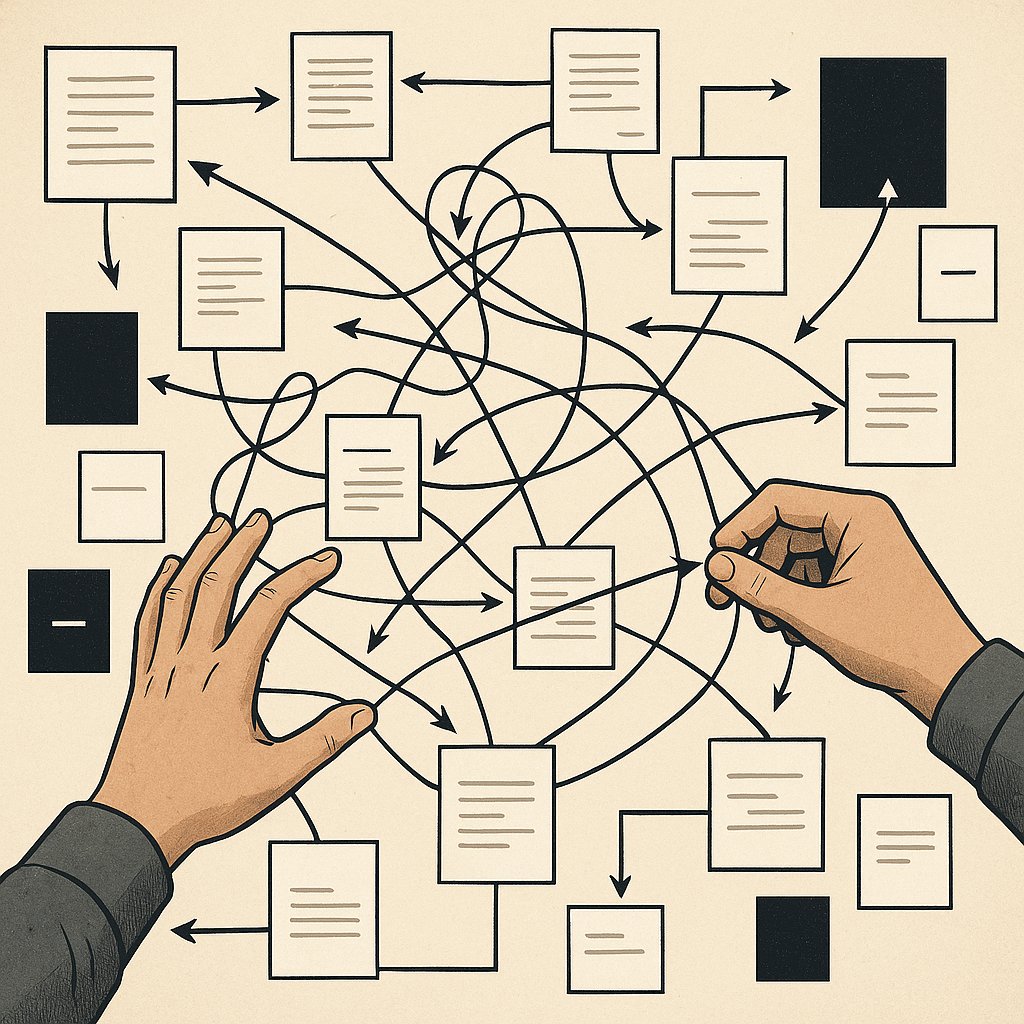
Automated Internal Linking: The Modern Alternative
Automated internal linking systems use algorithms to identify relevant connections between content pieces and insert contextual links without manual intervention. Modern solutions leverage artificial intelligence to understand semantic relationships, matching content based on topical relevance rather than simple keyword matching.
Understanding AI-Powered Link Detection
Advanced automated systems analyze your entire content library to understand topical relationships, keyword usage, and semantic connections. When you publish new content, the system evaluates it against existing articles to identify contextually appropriate linking opportunities.
The technology goes beyond matching keywords. Natural language processing allows systems to understand synonyms, related concepts, and hierarchical relationships between topics. An article about ‘organic traffic growth’ might receive links from content discussing ‘SEO strategy’ or ‘search engine optimization’ even when exact phrase matches don’t exist.
Contextual analysis ensures links appear in relevant passages. Rather than forcing links into the first mention of a keyword, sophisticated systems identify where a link would genuinely benefit readers—typically in sections that discuss the linked topic substantively rather than mentioning it in passing.
Scalability Benefits of Automation
Automation eliminates the scaling problem that plagues manual approaches. Whether you have 100 articles or 10,000, the system evaluates all potential connections and maintains comprehensive internal linking structure without additional human effort.
This scalability extends to maintenance. When you update an existing article or publish fresh content, automated systems can retroactively add links from older articles to new ones, solving the perpetual challenge of ensuring new content receives internal link equity from your established archive.
The time savings become dramatic at scale. What might take a team hours or days to accomplish manually happens automatically, allowing content creators to focus entirely on creating valuable content rather than managing linking infrastructure.
Consistency and Pattern Recognition
Automated systems apply linking logic consistently across all content. Every article receives evaluation according to the same criteria, eliminating the variability introduced by different writers, varying energy levels, or time constraints.
This consistency proves particularly valuable for large editorial teams or organizations using freelance writers. Regardless of who creates content, the internal linking structure maintains the same quality standards and strategic priorities.
Advanced automation can recognize patterns in your content strategy and adapt accordingly. If you’re building topic clusters around pillar content, the system can identify these relationships and create appropriate hub-and-spoke linking structures automatically.
Head-to-Head Comparison: When to Choose Each Method
The choice between manual and automated internal linking depends on multiple factors specific to your situation. Neither approach is universally superior—the optimal strategy aligns with your content volume, team resources, and strategic priorities.
Content Volume and Site Size Considerations
For small sites with fewer than 50 articles and limited publishing frequency, manual internal linking remains entirely practical. The time investment stays manageable, and writers can maintain awareness of the entire content archive.
At medium scale (50-500 articles), manual linking becomes challenging but still feasible with proper processes. However, this is where hybrid approaches begin showing advantages, using automation for baseline linking while reserving manual effort for strategic priorities.
Large sites exceeding 500 articles face practical impossibility with pure manual approaches. The cognitive load of tracking all potential linking opportunities overwhelms human capacity. Automation becomes not just beneficial but necessary to maintain comprehensive internal linking structure.
Quality Control and Editorial Standards
Organizations with strict editorial standards and brand voice requirements might initially hesitate toward automation, fearing loss of control. However, modern systems offer extensive configuration options, allowing you to set parameters for anchor text style, link density, and topical relevance thresholds.
Manual linking provides maximum quality control but depends entirely on individual writer skill and diligence. Inconsistency across team members can actually reduce overall quality compared to well-configured automation that applies consistent standards.
The reality is that most manual linking scenarios involve tradeoffs. Writers under deadline pressure skip opportunities or insert quick links without careful consideration. Thoughtful automation often produces more consistent quality than hurried manual efforts.
SEO Strategy Complexity Factors
Sophisticated SEO strategies involving deliberate link equity distribution, topic cluster architecture, or strategic boosting of priority pages can benefit from manual control. However, implementing these strategies across hundreds or thousands of articles manually is impractical.
Automated systems increasingly offer strategic capabilities, allowing you to designate priority pages, establish topic hierarchies, and configure link patterns that align with advanced SEO objectives. Tools like AI Internal Links can automate this process while respecting strategic priorities you establish.
The question becomes whether your team has the capacity and discipline to execute sophisticated strategies manually at scale. In most cases, automation configured to follow strategic rules outperforms inconsistent manual implementation.
Resource Availability and Team Structure
Team size and composition significantly influence the optimal approach. A small team of expert SEO writers might effectively manage manual internal linking for a moderately sized site. A large distributed team of generalist writers almost certainly needs automation to maintain consistency.
Budget considerations extend beyond software costs. Calculate the time your team spends on internal linking and compare it to automation investment. For most organizations publishing regularly, automation pays for itself quickly through time savings and improved link structure.
Technical comfort levels matter too. Teams accustomed to working with WordPress plugins and comfortable configuring automation tools will find the transition straightforward. Those preferring minimal technical complexity might lean toward manual processes, though this preference often creates long-term scaling constraints.
Hybrid Approaches: Combining Manual and Automated Strategies
The most sophisticated organizations recognize that manual versus automated internal linking isn’t a binary choice. Hybrid strategies leverage automation for scale and consistency while preserving manual control for strategic priorities and special circumstances.
Strategic Manual Linking for Priority Content
Reserve manual linking effort for your highest-priority content: key landing pages, cornerstone content, and strategic articles targeting competitive keywords. These pages deserve the precision and strategic thought that skilled writers provide.
When launching new products, services, or content initiatives, manual linking allows you to deliberately craft supporting structures that amplify visibility and authority. You can create carefully planned connection networks that automated systems might not recognize as priorities.
This targeted manual approach delivers maximum impact per hour invested. Rather than spreading manual effort across all content, you concentrate it where strategic precision creates the greatest SEO advantage.
Automation for Scale and Maintenance
Let automation handle the baseline internal linking structure across your content library. Automated systems excel at maintaining comprehensive connections, ensuring no content becomes orphaned, and creating contextually relevant links throughout your archive.
This baseline structure ensures solid SEO fundamentals regardless of individual writer attention or effort. Even content that doesn’t receive manual linking treatment still benefits from systematic internal connections that support crawlability and topical authority.
Automation also solves the perpetual maintenance challenge. As your archive grows, automated systems can retroactively add links from older content to new articles, creating bidirectional connection networks that manual approaches struggle to maintain.
Building a Sustainable Long-Term Strategy
Successful hybrid strategies establish clear protocols defining when manual linking is required versus when automation suffices. Some teams designate article tiers, with tier-one content receiving manual review while automation handles tier-two and tier-three articles.
Others implement automation first, then conduct periodic manual audits to add strategic links, refine anchor text, or address special circumstances that automation missed. This approach combines automation’s comprehensive coverage with human editorial judgment where it matters most.
The key is recognizing that your internal linking strategy should evolve with your site. What works at 100 articles may not work at 1,000. Building in automation capacity early creates flexibility to scale without overhauling your entire content operations.
Making Your Decision: Framework for Choosing the Right Approach
Deciding between manual and automated internal linking requires honest assessment of your current situation and realistic projection of future needs. Start by auditing your existing internal linking quality using tools like Screaming Frog or Semrush to identify gaps and inconsistencies.
Assessing Your Current Internal Linking Performance
Examine metrics like average internal links per page, orphan page count, and link distribution across your content library. Sites with highly uneven distribution—some articles with many internal links, others with few or none—reveal manual linking inconsistencies that automation could solve.
Analyze how much time your team currently spends on internal linking. If writers report that linking significantly slows content production, or if you notice that internal linking quality decreases during busy periods, automation can relieve this bottleneck.
Consider your content velocity and growth trajectory. If you’re publishing infrequently with no plans to scale, manual linking might remain practical. If you’re expanding content operations or struggling to keep pace with publication demands, automation investment makes strategic sense.
Calculating the True Cost of Each Approach
Manual internal linking costs extend beyond obvious time investment. Factor in opportunity costs—what else could your team accomplish with reclaimed time? Consider inconsistency costs from variable linking quality across writers and time periods.
Automation involves upfront investment in tools and configuration time, plus ongoing subscription costs. However, these expenses typically prove modest compared to the cumulative time savings and SEO benefits from comprehensive, consistent internal linking structure.
Run the calculation honestly. Most organizations publishing more than weekly find that automation pays for itself within months through time savings alone, before accounting for SEO improvements from better internal linking coverage.
Planning for Future Growth and Scaling
Your internal linking strategy should accommodate where you’re heading, not just where you are today. If growth plans include expanding content production, entering new topic areas, or scaling from dozens to hundreds of articles, build in automation capacity now rather than facing disruptive transitions later.
Consider team turnover and knowledge transfer. Manual internal linking depends heavily on writers maintaining familiarity with your entire content archive. When experienced team members leave, that institutional knowledge disappears. Automation preserves consistent linking structure regardless of team changes.
The most successful SEO strategies balance current needs with future flexibility. Even if manual linking works today, evaluate whether it will work at 2x or 5x your current content volume. Making strategic tool investments before they become urgent typically produces better outcomes than reactive scrambling when manual processes break down.
Ultimately, the choice between manual and automated internal linking reflects your site’s maturity, team capabilities, and strategic priorities. Small operations with tight editorial control can thrive with manual approaches. Larger organizations publishing at scale need automation to maintain SEO-effective internal linking structures. Most find that hybrid strategies combining both approaches deliver optimal results, using each method where it provides the greatest advantage.