

Table of Contents
- Why Traditional SEO Tactics Are Breaking Down
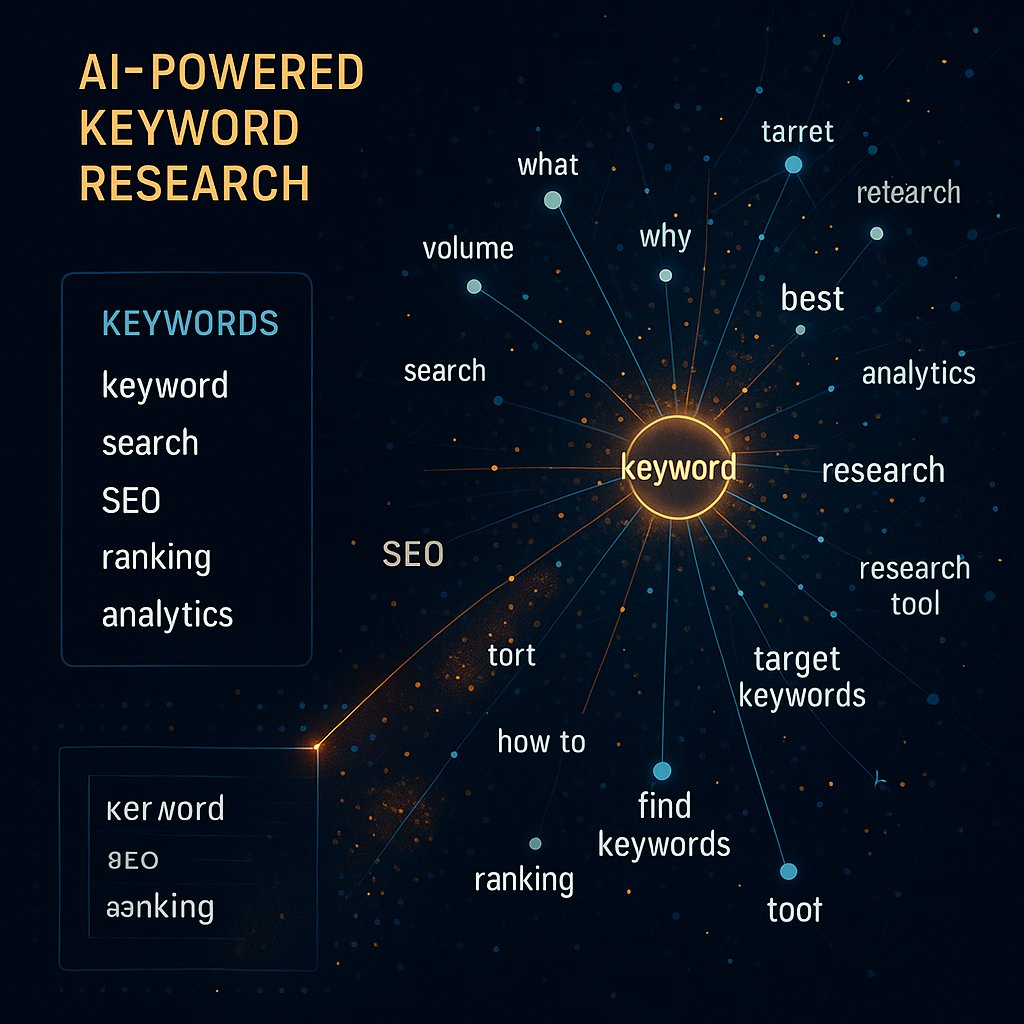
- How AI is Rewriting Keyword Research
- AI-Powered Content Creation: Useful or Dangerous?
- Automated Link Building: Smarter Internal Linking
- AI in Technical SEO: Faster Audits, Better Fixes
- What Google’s AI Updates Mean for Your Strategy
- Future-Proofing Your SEO Strategy
The SEO playbook from five years ago is dead. Manual keyword stuffing, cookie-cutter content calendars, link schemes — they all crumble under the weight of Google’s increasingly sophisticated AI. But here’s the twist: the same technology killing old tactics is creating better ones.
AI isn’t just changing SEO. It’s splitting the industry into two camps: those who adapt and those who fade into page three of search results.
Why Traditional SEO Tactics Are Breaking Down
Remember when you could rank for “best running shoes” by repeating that phrase 47 times in a 500-word article? Google’s RankBrain and BERT updates murdered that approach years ago. Now, the algorithm reads context like a human — sometimes better than a human.
Google’s AI understands intent, not just keywords. When someone searches “how to fix a leaky faucet,” the algorithm knows they want a step-by-step guide, not a 2,000-word history of plumbing. It rewards content that delivers immediately.
Here’s what changed: Google stopped matching words and started matching meaning. Your competitor might rank #1 without using your target keyword once, because their content answers the question better. That’s RankBrain at work.
The old playbook assumed Google was dumb. The new reality? It’s smarter than most SEO strategies.
How AI is Rewriting Keyword Research
Semantic Clustering Replaces Single Keywords
Forget targeting one keyword per page. AI tools now group semantically related terms into clusters, showing you how Google actually thinks about topics.
Tools like Surfer SEO and Clearscope analyze the top 20 results for your target keyword, then extract every related term, question, and subtopic Google expects to see. You’re not guessing anymore — you’re reverse-engineering the algorithm’s preferences.
For example: targeting “email marketing” used to mean repeating that phrase. Now AI shows you need to cover “automation workflows,” “subscriber segmentation,” “A/B testing,” and “deliverability rates” in the same piece. Miss those, and you won’t crack page one.
Search Intent Prediction Gets Eerily Accurate
AI models can now predict whether a keyword triggers informational, commercial, transactional, or navigational intent with 90%+ accuracy. This matters because ranking for the wrong intent is worse than not ranking at all.
Say you’re targeting “WordPress hosting.” Is the searcher comparing options (commercial intent) or trying to set up hosting they already bought (informational)? Get it wrong, and your bounce rate tanks your rankings. Get it right, and you own that keyword.
SEMrush and Ahrefs now flag intent automatically. No more guessing whether to write a comparison post or a tutorial.
Long-Tail Discovery Happens in Seconds
Manual long-tail research used to take hours of scrolling through Google autocomplete and competitor analysis. AI tools like AnswerThePublic and AlsoAsked generate hundreds of question-based keywords instantly.
But here’s where it gets interesting: GPT-based tools can now generate hyper-specific long-tail variations based on your niche, audience, and content gaps. Feed it your existing content, and it’ll suggest keywords you’d never think to target manually.
AI-Powered Content Creation: Useful or Dangerous?
The Quality Problem Everyone Ignores
Let’s be honest: most AI-generated content is mediocre. Not terrible, not great — just aggressively average. And Google knows.
The algorithm doesn’t penalize AI content directly. It penalizes shallow, repetitive, unhelpful content — which is exactly what most AI tools produce when used lazily. If you’re using ChatGPT to churn out 50 blog posts a week without editing, you’re building a content graveyard.
But here’s the nuance: AI is brilliant for first drafts and research. Use it to outline complex topics, generate FAQs, or draft meta descriptions. Then rewrite with your own voice, insights, and examples.
The best AI-assisted content doesn’t read like AI wrote it. It reads like a human who had an AI research assistant.
Where AI Content Actually Works
AI shines in three specific areas: product descriptions, FAQ sections, and meta tags. These aren’t places where creativity matters — accuracy and consistency do.
E-commerce sites with thousands of SKUs can’t hire writers for every product page. AI fills that gap. Same with FAQ schema markup — feed the tool your top customer questions, and it generates structured answers in minutes.
Just don’t use it for thought leadership or brand storytelling. Those still need a human brain.
Automated Link Building: Smarter Internal Linking
Why Internal Linking is Google’s Favorite Signal
External backlinks get all the hype, but internal links are the foundation Google crawls first. They tell the algorithm which pages matter, how topics connect, and where authority flows.
Most sites treat internal linking like an afterthought. They link randomly, or not at all. Then they wonder why their best content sits on page three while competitors with worse content rank higher.
Here’s the truth: a strong internal linking structure can outrank better content with weak link architecture. Google prioritizes pages it can understand and navigate easily.
How AI is Solving the Manual Linking Problem
Manual internal linking doesn’t scale. On a 50-page site, it’s manageable. On a 500-page site, it’s a nightmare. You forget which pages exist, miss obvious connections, and orphan important content.
AI changes this by analyzing semantic relationships between pages automatically. It reads your content, identifies topical overlaps, and suggests contextual links in real time.
Tools like AI Internal Links handle this at scale — scanning your entire WordPress site, finding relevant anchor opportunities, and inserting links based on keyword relevance and user intent. No manual audits. No spreadsheets tracking every page.
The result? Every new post gets connected to your existing content instantly, and older posts get refreshed with links to newer, related articles. Your site architecture stays clean as it grows.
The Compounding Effect of Smart Internal Links
Here’s what most people miss: internal links compound over time. Every new article you publish becomes a node that strengthens your entire topic cluster.
Let’s say you write 10 articles about email marketing. Without internal links, they’re isolated islands. With AI-driven contextual linking, they become a content fortress where link equity flows strategically, and Google sees you as an authority on the entire topic — not just individual keywords.
And unlike backlinks, you control this entirely. No outreach. No rejections. Just smart architecture.

AI in Technical SEO: Faster Audits, Better Fixes
Crawl Analysis That Doesn’t Take Days
Traditional site audits involve running Screaming Frog, exporting 47 CSV files, and spending hours hunting for broken links and redirect chains. AI-powered tools like Sitebulb and OnCrawl now do this in minutes — and flag issues by priority automatically.
They’ll tell you which broken links actually hurt rankings (the ones on high-authority pages) versus which ones don’t matter (buried in your footer). That’s a game-changer for prioritization.
Schema Markup Gets Stupid Simple
Schema markup used to require a developer or a plugin that breaks on every WordPress update. Now, AI tools generate structured data automatically based on your content type.
Write a product review? The tool suggests Product schema. Publish a recipe? It writes Recipe schema. You copy-paste, and Google starts showing rich snippets within days.
What Google’s AI Updates Mean for Your Strategy
Helpful Content Update: Quality Over Quantity
Google’s Helpful Content Update in 2023 was a clear message: stop writing for algorithms, write for humans. Sites stuffed with thin, keyword-focused content saw massive drops.
The algorithm now measures engagement signals — time on page, scroll depth, return visits — to determine if content is genuinely helpful. AI can help you research and structure, but it can’t fake usefulness.
E-E-A-T and the Expertise Problem
Google’s emphasis on Experience, Expertise, Authoritativeness, and Trust means AI content without human oversight fails. The algorithm looks for author bios, citations, and brand mentions — signals that a real person with real knowledge wrote the content.
Use AI for efficiency, not replacement. The winning formula? AI does the heavy lifting, humans add the credibility.
Future-Proofing Your SEO Strategy
Here’s the uncomfortable truth: Google’s AI will keep getting smarter faster than you can keep up. The only defense is to use AI yourself.
But not as a shortcut. As a force multiplier.
The SEOs who thrive in the next five years will combine AI-powered efficiency with human insight. They’ll use tools to automate grunt work — keyword research, link insertion, technical audits — so they can focus on strategy, storytelling, and user experience.
They won’t fear AI replacing them. They’ll fear competitors who adopt it faster.
Start small. Pick one AI tool that solves your biggest SEO bottleneck — whether that’s content research, internal linking, or technical audits. Master it. Then add another.
The algorithm won’t wait for you to catch up. Neither will your competition.