
Table of Contents
- Google Doesn’t Care That You Used AI — But It Notices Everything Else
- AI Content Without Internal Links Is Just Expensive Orphan Pages
- Building Topic Clusters That Actually Work with AI Content
- The AI Content Integration Workflow That Works
- E-E-A-T Isn’t Dead — It Just Evolved
- What This Means for Your AI Content Strategy
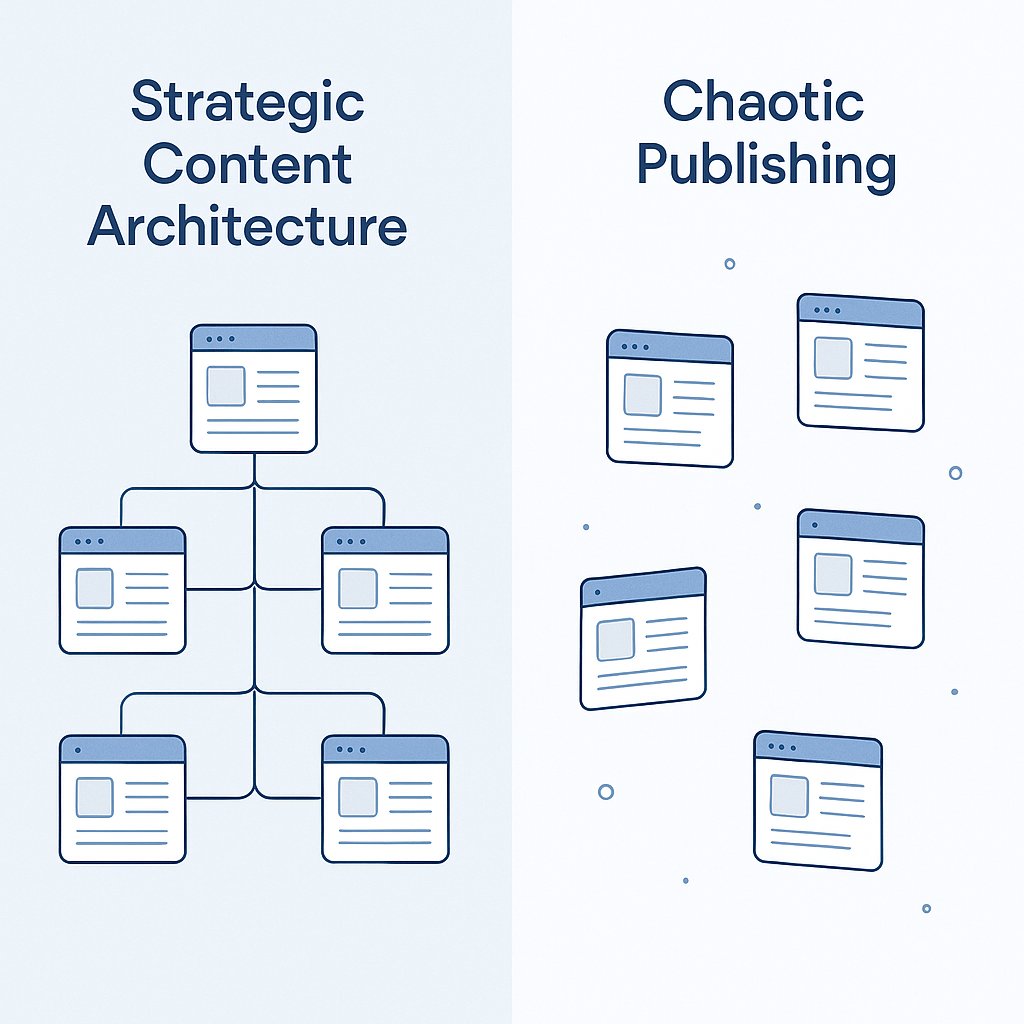
Here’s what most people missed. The algorithm didn’t learn to detect ChatGPT’s writing style. It learned to spot structural patterns that signal low-effort publishing. Hundreds of articles with zero connections to existing content. Topic clusters that exist only in spreadsheets. Orphan pages floating in the void.
If you’re scaling content with AI in 2026, you need to obsess over two things: topical structure and internal link strategy. Everything else is noise.
Google Doesn’t Care That You Used AI — But It Notices Everything Else
Let’s kill this myth right now. Google’s spam policies say helpful content is what matters, regardless of how it’s produced. John Mueller said it outright in 2023. The algorithm doesn’t run a “this was written by AI” detector.
But it absolutely notices when your site structure screams “content farm.”
The Real Problem with Most AI Content
The issue isn’t the prose. It’s that AI makes it too easy to publish without thinking about where a piece fits. Teams churn out 50 articles in a week, upload them with basic on-page SEO, and wonder why traffic doesn’t move.
Each new post lands as an island. No inbound links from older content. No outbound links to related deep dives. No clear parent-child relationships. Google crawls it, sure — but it has no idea what this page contributes to your site’s expertise.
Why Structure Became the New Quality Signal
When everyone has access to the same AI tools, differentiation happens at the architecture level. Two sites publish identical articles about “best CRM software.” One has that article linked from a pillar page, connected to three comparison posts, and referenced in a case study. The other? It’s just… there.
Guess which one ranks.
Internal linking isn’t just about PageRank flow anymore. It’s how you demonstrate topical authority and editorial intent. It tells Google: “This article isn’t random. It’s part of a knowledge system we’ve built deliberately.”
AI Content Without Internal Links Is Just Expensive Orphan Pages
Orphan pages are the silent killer of AI content strategies. You’re paying for content that Google barely looks at because nothing on your site points to it.
The Orphan Page Crisis in 2026
Run a crawl on any site publishing AI content at scale. You’ll find dozens — sometimes hundreds — of pages with zero internal links. They show up in sitemaps. They’re technically indexable. But they’re functionally invisible.
Why? Because teams focus on production speed, not integration. The editorial calendar is a conveyor belt. Publish Monday, publish Wednesday, publish Friday. Nobody goes back to last month’s content to add contextual links.
How Links Signal Context to Crawlers
Googlebot doesn’t read your site like a human. It follows links. When a new page about “email marketing automation” has links from your marketing hub, your email guide, and your automation glossary — the bot understands context instantly.
No links? The bot has to infer everything from on-page signals alone. And when you’re publishing AI content that follows similar patterns to a thousand other sites, context is everything.
A page with three strategic internal links outperforms a page with zero links and 2,000 perfect words. Structure beats volume.
Building Topic Clusters That Actually Work with AI Content
Topic clusters sound great in theory. A pillar page surrounded by supporting articles, all interlinked. Simple, right?
Not when you’re adding 20 new AI-generated posts a month.
The Hub-and-Spoke Model Done Right
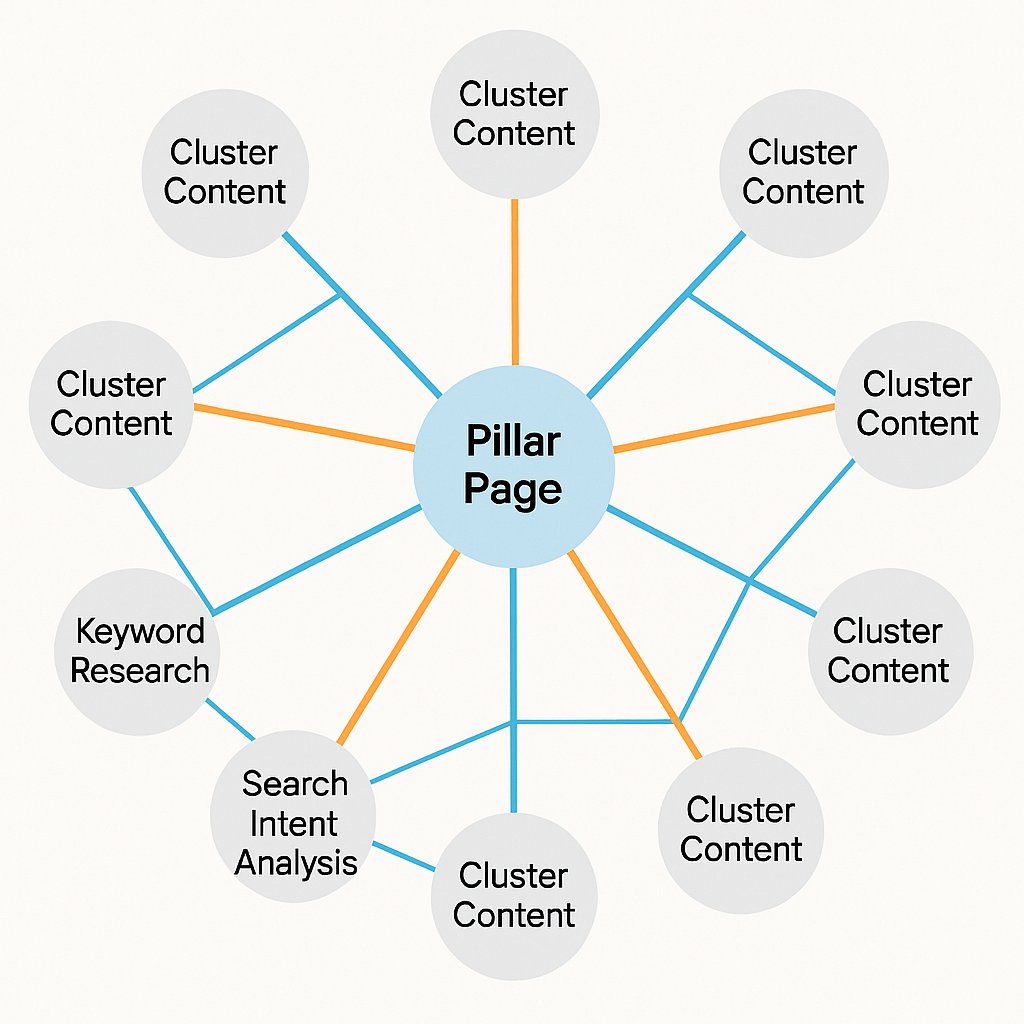
Here’s what works. Start with a pillar page — a comprehensive guide that covers a topic at 10,000 feet. “Complete Guide to SEO” or “Everything About Paid Ads.” Then build cluster content — specific, narrow articles that go deep on subtopics.
The critical part: every cluster post links back to the pillar. The pillar links out to all clusters. And cluster posts link to each other when contextually relevant.
With AI content, you can generate the clusters fast. But if you don’t map the link structure before you publish, you end up with 30 articles about SEO and a pillar page that links to… five of them.
Layering Semantic Relationships Through Links
Here’s where it gets interesting. Topic clusters aren’t just about hierarchy. They’re about semantic relationships. An article about “keyword research” should link to “search intent analysis” and “competitor gap analysis” — not because they’re all in the same folder, but because they’re conceptually connected.
AI content generation tools don’t think this way. They produce articles in isolation. You need a system — manual or automated — that identifies those relationships after content is created and builds the links accordingly.
Most teams do this manually. They keep spreadsheets of topics, assign someone to audit monthly, and add links in bulk. It works. But it doesn’t scale past 100 posts.
The AI Content Integration Workflow That Works
If you’re serious about scaling AI content without tanking your site’s structure, you need a workflow that treats internal linking as part of publishing — not an afterthought.
Step One: Generate with Intent
Before you generate a single article, ask: Where does this fit? Is it a cluster post supporting an existing pillar? Is it bridging two topics? Is it the start of a new hub?
If you can’t answer that question, don’t publish it yet. AI content without strategic placement is just blog spam with better grammar.
Step Two: Map Before You Publish
Once the draft exists, map its connections. What three pages should link to it? What three pages should it link from? Use a simple checklist:
- One link from the relevant pillar page
- Two links from related cluster content
- Three outbound links to deeper subtopics
This isn’t optional. Every new post needs inbound links on day one. Otherwise, you’re counting on Google to discover it through your sitemap alone. That’s not a strategy.
Step Three: Automate the Connections
This is where most teams hit a wall. Manual linking works when you’re publishing five posts a month. At 20+ posts? You need automation.
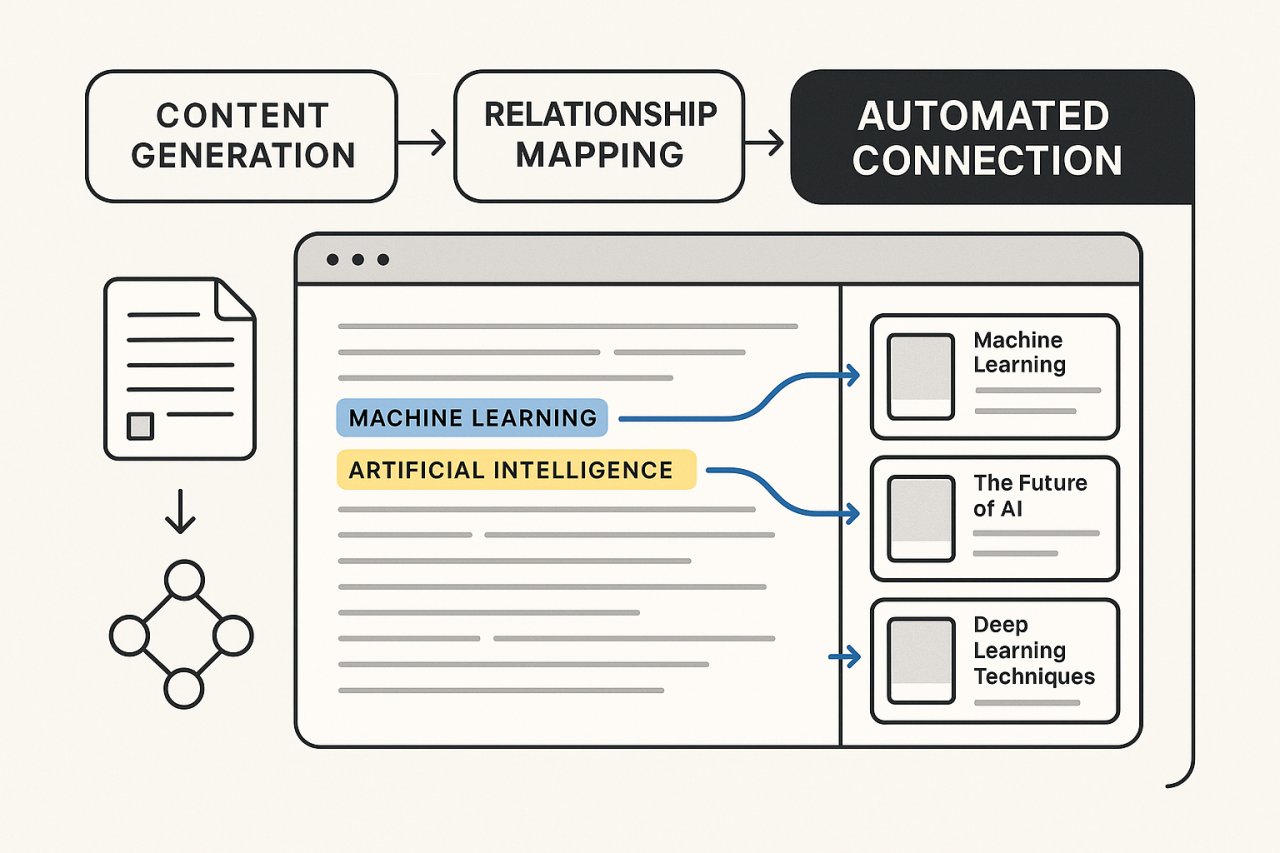
Tools like AI Internal Links analyze your existing content, identify semantic relationships, and suggest or insert contextual links automatically. The AI reads both the new article and your archive, then connects them based on topic relevance — not just keyword matching.
The result: every new post gets integrated into your site’s knowledge graph without a human spending two hours digging through old content.
E-E-A-T Isn’t Dead — It Just Evolved
Google’s E-E-A-T framework (Experience, Expertise, Authoritativeness, Trustworthiness) didn’t disappear when AI content exploded. It adapted.
Why AI Content Needs More Internal Support
Here’s the paradox. AI-generated articles need stronger internal linking than human-written ones. Why? Because they often lack the byline credibility, the personal anecdotes, the unique voice that signals expertise.
Your internal link structure becomes a proxy for editorial judgment. When you link a new AI article from five high-authority pages on your site, you’re vouching for it. You’re saying: “This isn’t random filler. This fits our expertise.”
Authority Through Association
Think about academic citations. A research paper gains authority when credible sources reference it. Same principle here. An AI article about robots.txt gains authority when your cornerstone technical SEO guide links to it with descriptive anchor text.
This is why anchor text diversity matters more now. Don’t just link with exact-match keywords. Use natural, contextual phrases: “learn how to configure your robots.txt file properly” beats “robots.txt guide” every time.
Google’s algorithm looks at how you link, not just that you link. Thoughtful anchor text signals editorial oversight. Generic anchor text signals automation without strategy.
What This Means for Your AI Content Strategy
If you’re scaling content with AI in 2026, your competitive edge isn’t the tool you use to generate articles. Everyone has access to GPT-4 or Claude. Your edge is how you integrate that content into a cohesive, crawlable, authoritative site structure.
Start treating internal linking as a publishing requirement, not a monthly cleanup task. Map your topic clusters before you generate content, not after. And if you’re publishing more than ten posts a month, invest in automation that maintains structure at scale.
Because Google isn’t going to penalize you for using AI. But it will absolutely bury you for publishing like you don’t care where anything goes.