

Table of Contents
- Google Doesn’t Hate AI Content — It Hates Bad Content
- How to Use AI Content Without Destroying Your SEO
- EEAT Signals: Where Human Judgment Is Non-Negotiable
- Topical Authority: How AI Can Actually Help Your SEO
- Quality Signals Google Actually Tracks
- The AI Content SEO Checklist
- What Actually Works Right Now
Google Doesn’t Hate AI Content — It Hates Bad Content
Let’s clear this up immediately: Google has explicitly stated that AI-generated content isn’t against their guidelines. The search engine doesn’t care how your content was produced. It cares about three things: is it helpful, is it original, and does it demonstrate expertise?
The problem is that most AI content fails on all three counts.
When you prompt ChatGPT to write an article about “best project management tools,” you get the same generic list everyone else does. Same structure. Same surface-level insights. Same forgettable advice that reads like it was assembled from the top ten search results.
Which, of course, it was.
The Real Risk With AI Content
The danger isn’t detection. It’s commoditization.
If fifty sites publish nearly identical AI-generated articles about the same topic, Google has to pick which ones rank. And it won’t be the ones that feel like they came from a content mill — even if no human can prove they’re AI-written.
Google’s algorithms have gotten exceptionally good at identifying content that lacks a distinct point of view. Content that restates common knowledge without adding insight. Content that could’ve been written by anyone, about anything.
That’s what kills your rankings.
Where AI Content Actually Fails SEO
Three specific problems show up repeatedly:
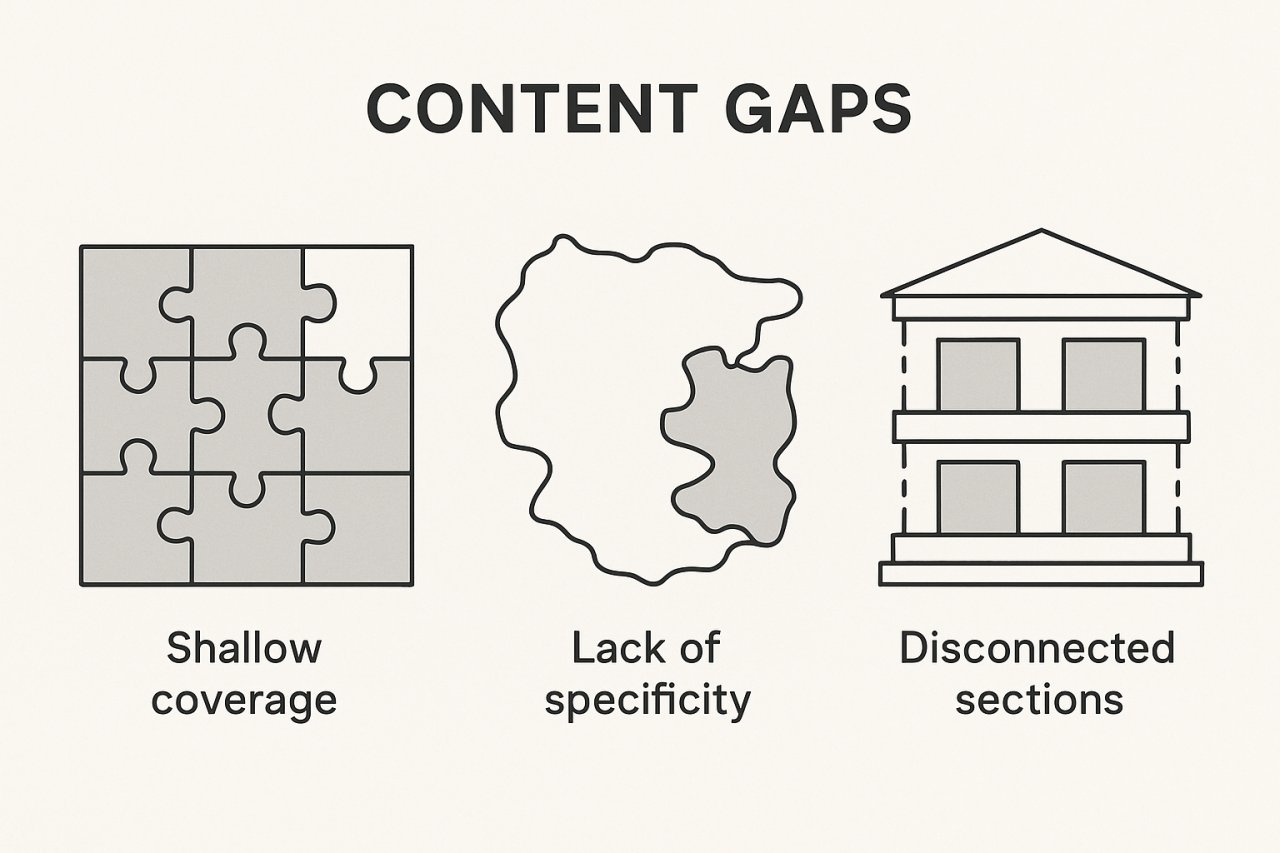
Thin semantic coverage. AI models tend to hit the obvious points and stop. They don’t dig into edge cases, counterarguments, or nuanced scenarios that separate good content from great content.
Generic examples. AI loves abstract explanations. It rarely provides concrete, specific examples unless you force it to. And Google increasingly rewards content that shows real-world application.
No internal narrative. AI writes sections, not articles. Each paragraph might be fine on its own, but there’s no throughline. No building tension. No payoff.
These aren’t bugs in the technology. They’re limitations of how language models work.
How to Use AI Content Without Destroying Your SEO
The solution isn’t to avoid AI. It’s to use AI as a starting point, not an endpoint.
Think of AI as a research assistant who drafts the outline and pulls together basic information. Then you — the human with actual expertise and editorial judgment — turn that draft into something worth reading.
The Practical AI Content Workflow
Here’s what works:
1. Use AI to research and structure. Have it pull together facts, statistics, common questions, and competing viewpoints. Let it organize these into a logical outline. This saves hours of research time.
2. Write the critical sections yourself. The intro, the main arguments, and any sections where you’re taking a stance — write these from scratch. Your voice and expertise need to come through clearly.
3. Let AI fill in the supporting details. Definitions, process steps, technical explanations — these are fine to draft with AI, then edit heavily.
4. Rewrite everything in your voice. Read each paragraph out loud. If it sounds like generic internet content, rewrite it. Add specifics. Share opinions. Use contractions.
The goal is to end up with content that couldn’t have been written by someone without your specific knowledge. That’s the bar.
Semantic SEO and AI: A Natural Fit
One area where AI genuinely helps: semantic coverage.
Google doesn’t just look at keywords anymore. It evaluates whether your content comprehensively covers a topic by checking for related concepts, entities, and questions.
AI is excellent at identifying these semantic gaps. Prompt it to list related subtopics, common questions, and adjacent concepts. Then make sure your content addresses the important ones.
Just don’t let AI write those sections verbatim.
EEAT Signals: Where Human Judgment Is Non-Negotiable
Google’s EEAT framework — Experience, Expertise, Authoritativeness, Trust — is where AI content hits a hard wall.
You can’t fake experience. You can’t automate expertise. And Google is getting better at detecting the difference between content written by someone who’s done the work versus someone who’s read about it.
Demonstrating Real Expertise
Specific tactics that signal expertise:
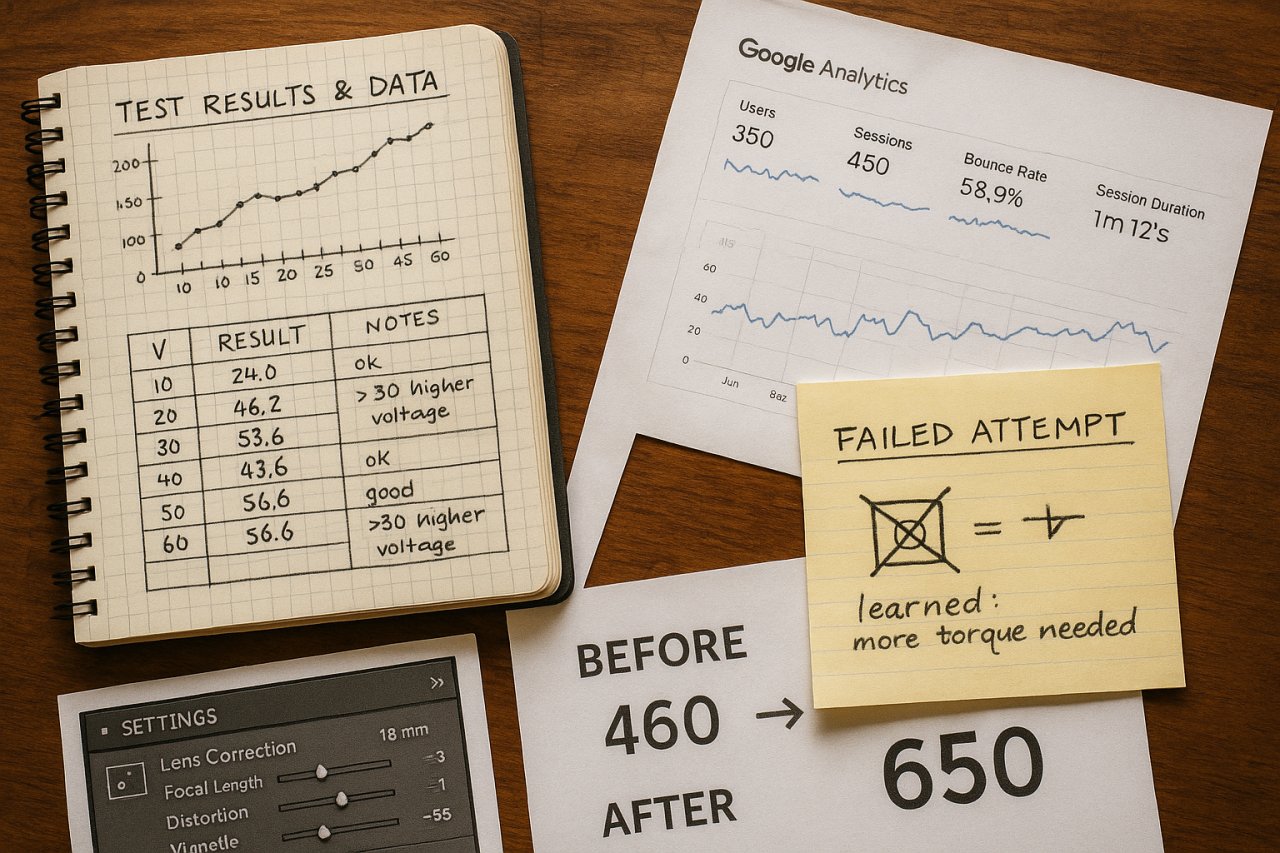
- First-hand examples: Share what you’ve actually done, tested, or observed. “We ran this experiment on 47 client sites” beats “studies show” every time.
- Contrarian takes: Challenge common advice when you have reason to. “Most sites get internal linking wrong” is stronger than “internal linking is important.”
- Specific tools and numbers: Name the exact tools you use. Share real metrics. “Our open rate jumped from 18% to 31%” is credible. “Email marketing increases engagement” is not.
- Mistakes and lessons: Explain what didn’t work and why. Only someone with actual experience can do this authentically.
AI can’t do any of this. Only you can.
The Author Bio Strategy
Google looks at who’s writing the content. A detailed author bio with credentials, links to past work, and social proof matters more now than ever.
If you’re using AI to scale content production, make sure real experts are reviewing and claiming authorship. Don’t publish AI content under generic staff accounts or fake personas.
That’s a trust signal Google absolutely tracks.
Topical Authority: How AI Can Actually Help Your SEO
Here’s where AI content becomes genuinely useful: building topical coverage at scale.
Topical authority means Google sees your site as a comprehensive resource on a subject. To establish this, you need depth — dozens of articles covering every angle of your core topic.
Producing that much content manually is slow. AI speeds it up, if you maintain quality standards.
The Hub-and-Spoke Model
Start with pillar content — comprehensive guides on your main topics, written primarily by humans. These are your hub pages.
Then use AI to draft supporting articles that dive into specific subtopics. These spoke articles should:
- Target long-tail keywords
- Answer specific questions in depth
- Link back to relevant hub pages
- Connect to related spoke articles
The key is internal linking strategy. Google needs to see how all these pieces fit together.
Where AI Internal Links Becomes Critical
When you’re publishing twenty or fifty or a hundred articles using AI assistance, manually adding relevant internal links becomes impossible. You’ll miss connections. You’ll create orphan pages. You’ll fail to reinforce your topical clusters.
This is where automation makes sense. Tools like AI Internal Links analyze your content semantically and suggest contextually relevant internal links. As your content library grows, this ensures new articles automatically connect to existing ones — strengthening your overall topical authority signal.
The plugin doesn’t write your content. It ensures your content works together as a coherent knowledge base, which is exactly what Google wants to see.
Quality Signals Google Actually Tracks
Let’s talk about measurable signals. Google’s algorithms look at behavioral data to determine if content is genuinely helpful.
Dwell Time and Engagement
If users land on your page and immediately bounce back to search results, that’s a quality problem. AI content often suffers here because it’s boring.
To fix this:
Use concrete examples instead of abstract explanations. Show, don’t tell.
Vary your content format. Mix text with lists, tables, blockquotes, and subheadings. AI tends to write monotonous paragraphs.
Answer the question fast. Don’t bury your main point. Give readers value immediately, then add detail.
Content that keeps users on-page for 3+ minutes consistently outranks content that loses them in 30 seconds — regardless of how it was written.
Link Signals Still Matter
AI content rarely earns backlinks naturally. Why would someone link to generic advice?
But you can engineer link-worthiness:
- Original research: Use AI to help analyze data, but present unique findings
- Comprehensive resources: Create the definitive guide to something specific
- Contrarian arguments: Take a stance and back it with evidence
The AI helps with the scaffolding. You add the elements that make content linkable.
The AI Content SEO Checklist
Before you publish AI-assisted content, run through this:
Does it have a distinct point of view? If you removed all brand references, would this article be indistinguishable from ten others? If yes, rewrite.
Are there specific, concrete examples? Named tools, real numbers, actual scenarios. Generalities don’t rank.
Is the intro compelling? Does it hook the reader with something surprising, challenging, or immediately useful? Or does it sound like every other intro about this topic?
Does it demonstrate expertise? Can readers tell this was written by someone with actual knowledge, or does it read like a Wikipedia summary?
Is it internally linked? Does this article connect to related content on your site in a way that makes sense?
Would you share it? Seriously. Would you post this on LinkedIn under your name? If not, it’s not good enough.
The Long Game
AI content works for SEO when it’s part of a broader strategy — not a replacement for editorial judgment.
Use AI to scale production. Use humans to ensure quality, inject expertise, and maintain standards. Use internal linking automation to make sure everything connects properly.
That’s how you win with AI content.
What Actually Works Right Now
Here’s the truth: sites using AI thoughtfully are seeing results. Sites pumping out unedited AI slop are tanking.
The difference is simple. The winning approach treats AI as a tool that amplifies human expertise, not replaces it. The losing approach treats AI as a content vending machine.
Google’s algorithms are remarkably good at distinguishing between the two.
So use AI to draft, research, and structure. Use your brain to rewrite, refine, and add the insights that matter. Use automation to connect everything together.
That’s the playbook. The rest is execution.