
Table of Contents
- Why Most Internal Linking Fails Before It Starts
- What Topic Clusters Actually Look Like in Practice
- How to Map Your Topic Clusters Before You Build a Single Link
- Turning Maps Into Links: The Manual Grind vs. Smarter Approaches
- Anchor Text Optimization: The Detail That Separates Good From Great
- Orphan Pages: The Silent Rankings Killer
- Link Equity Distribution: Architecting Authority Flow
- Maintenance Is Where Strategy Becomes Reality
- Topic Clusters Start Ranking When Everything Clicks
Here’s the uncomfortable truth: your content quality means less if your internal link architecture tells Google you don’t know which pages matter most.
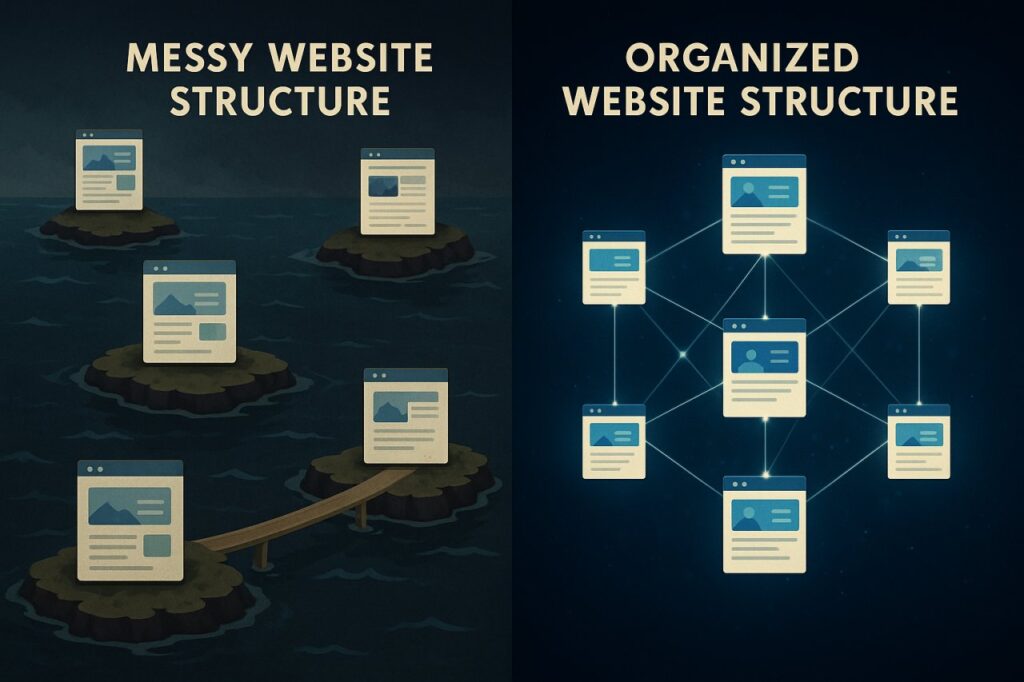
A smart internal linking strategy isn’t about randomly adding a few related posts at the end of articles. It’s about building deliberate pathways that guide both users and search crawlers through your expertise. When done right, it transforms scattered content into a cohesive knowledge hub that earns authority.
Why Most Internal Linking Fails Before It Starts
The average WordPress site approaches internal links like an afterthought. Writer publishes post, maybe adds two or three manual links to vaguely related content, calls it done.
This reactive approach creates three fatal problems:
Orphan pages multiply. New content gets published with no incoming internal links. Google might find it eventually through your sitemap, but why make the crawler work harder than necessary?
Link equity gets wasted. Your homepage and main navigation send authority to the same five pages over and over, while your best deep content starves for link juice.
Topic relevance stays fuzzy. When you don’t cluster related content together with deliberate internal links, Google has to guess how your pages connect. You’re betting on algorithms to infer relationships you should be spelling out.
The fix isn’t more links. It’s strategic links organized around topic clusters.
What Topic Clusters Actually Look Like in Practice
Topic clusters aren’t some mystical SEO concept. They’re just organized groups of content with a clear hierarchy.
The Pillar Page Foundation
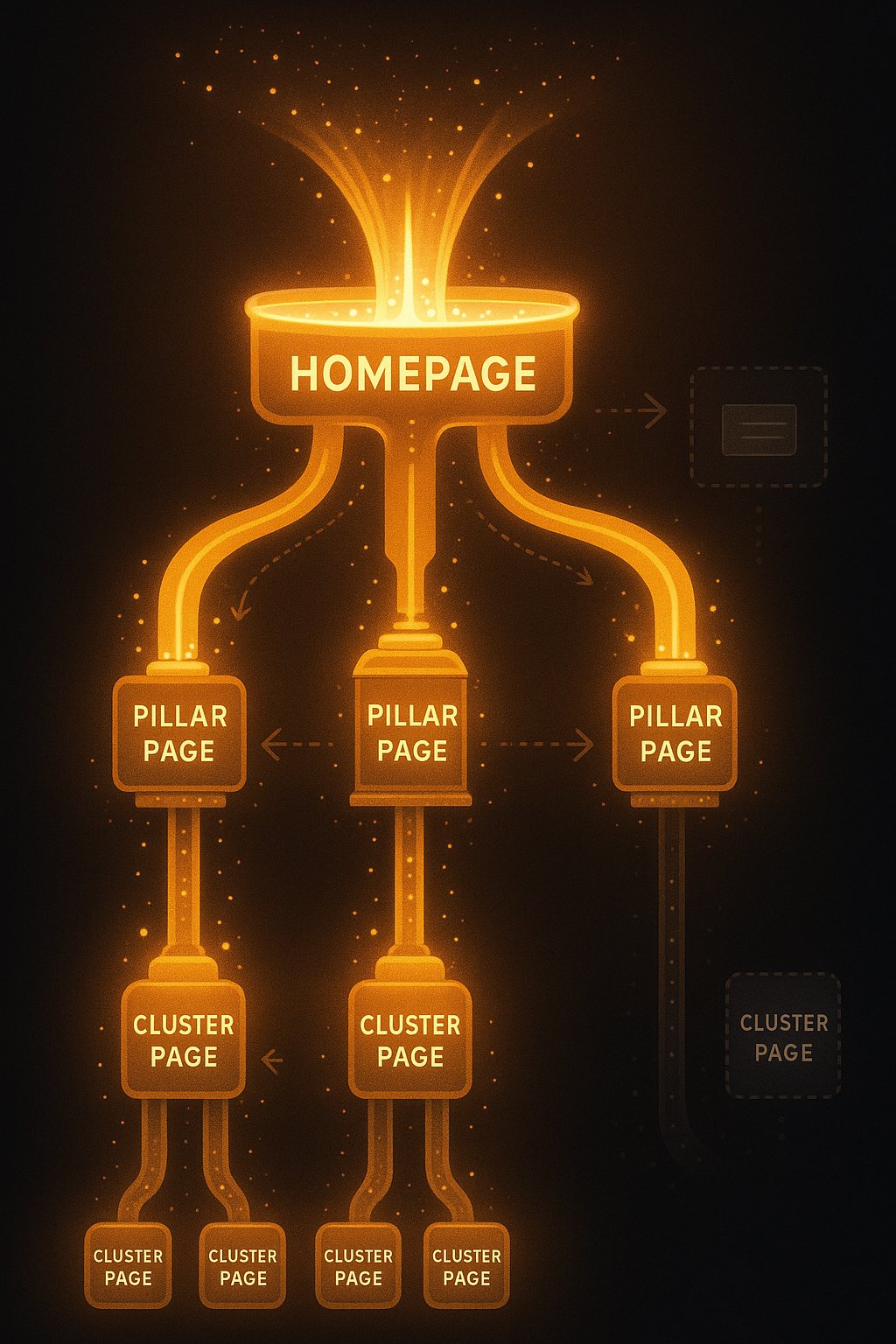
Every cluster needs one comprehensive pillar page. This is your 2,000+ word guide that covers a broad topic at high level. Think of it as the textbook chapter overview.
For an SEO site, that might be The Complete Guide to Technical SEO. For an e-commerce store selling coffee equipment, it could be How to Brew Better Coffee at Home.
The pillar page shouldn’t go deep on any single subtopic. That’s what the cluster pages are for.
Cluster Pages Do the Deep Work
Each cluster page tackles one specific angle of the broader pillar topic. These are your 800-1,500 word articles that go narrow and deep.
For that technical SEO pillar, your cluster pages might include:
- How to Fix Crawl Budget Issues on Large Sites
- XML Sitemap Best Practices for WordPress
- Core Web Vitals Optimization: What Actually Moves the Needle
- Canonical Tags Explained (Without the Confusion)
Each cluster page links back to the pillar. The pillar links out to every cluster page. This creates a tight semantic web Google can’t miss.
The Semantic SEO Connection
Topic clusters work because they align with how Google actually understands content now. Modern search isn’t about isolated keyword matches. It’s about semantic relationships.
When you cluster content around a core topic and link it all together with relevant anchor text, you’re sending clear signals: This site has depth here. This site is an authority on this subject.
That matters more than ever as Google gets better at entity recognition and topical analysis.
How to Map Your Topic Clusters Before You Build a Single Link
Strategy before execution. Always.
Start With a Content Audit
Open a spreadsheet. List every piece of content on your site. Not fun, but necessary.
For each URL, note:
- Main topic or category
- Current keyword focus
- How many internal links point to it
- How many internal links it sends out
You’ll spot patterns immediately. Three articles about email marketing that don’t link to each other. A pillar-quality guide buried three clicks deep. Pages with zero incoming internal links.
These gaps are your roadmap.
Identify Natural Pillar Candidates
Look for topics where you already have 4+ related articles. That’s a cluster waiting to happen.
Maybe you’ve written about link building from different angles: guest posting, broken link building, skyscraper technique, digital PR outreach. Bundle those under a pillar titled something like Complete Link Building Strategies That Still Work.
If you don’t have a pillar page yet, write it. It’s the lynchpin.
Map the Cluster Relationships
For each topic cluster, draw the connections on paper or in a tool like MindMeister. Not because you need fancy diagrams, but because visualizing the hub-and-spoke structure reveals gaps.
Your pillar sits in the middle. Cluster pages radiate out. But cluster pages should also link to each other when relevant — not just back to the pillar.
If your Guest Posting Guide cluster page mentions outreach email templates, it should link to your Digital PR Outreach cluster page that covers email tactics in depth. These cross-cluster connections strengthen the entire topic authority signal.
Turning Maps Into Links: The Manual Grind vs. Smarter Approaches
You’ve mapped your clusters. Now comes the part most people hate: actually inserting the links.
The Manual Method and Why It Doesn’t Scale
Option one is to open every article in your WordPress editor and manually add contextual links. Find a relevant sentence, highlight a phrase, insert the link.
This works fine if you have 20 articles. It’s soul-crushing if you have 200. And it’s impossible to maintain as you publish more content.
Worst part? You’ll miss connections. No human can remember every single page on a growing site and where each one could naturally link to another.
The Spreadsheet + Find-Replace Hack
Some SEOs maintain a master spreadsheet of target pages and ideal anchor text variations. Then they use find-replace in their content to insert links.
Better than random, but still manual. And it requires discipline most teams don’t have.
Why Automated Internal Linking Changes the Game
Here’s where WordPress gets interesting. Tools like AI Internal Links analyze your entire content library and automatically suggest or insert contextual links based on semantic relevance.
The difference isn’t just speed. It’s consistency. Every new article you publish gets linked from relevant existing content. Every old article automatically gains links when you publish something new that fits.
You’re maintaining link equity distribution and topic cluster integrity without manually touching hundreds of posts.
[placeholder_image]
Anchor Text Optimization: The Detail That Separates Good From Great
You can have perfect cluster architecture and still underperform if your anchor text is lazy.
Exact Match Has Its Place
Internal links aren’t the same as backlinks. You won’t get penalized for using exact-match anchor text pointing to your own pages. In fact, descriptive exact-match anchors help.
If you’re linking to your pillar page about technical SEO from a cluster page, anchoring it with technical SEO guide or complete technical SEO checklist is smart. It reinforces the topic signal.
But Variation Still Matters
Don’t use identical anchor text from 15 different pages. Mix it up with semantic variations:
- technical SEO fundamentals
- core technical optimization strategies
- how to improve technical SEO
- technical SEO best practices
Google understands these are related. Variety makes the link profile look natural and catches different semantic angles.
Context Beats Anchor Every Time
The text surrounding your link matters as much as the anchor itself. A link with the anchor learn more means nothing in isolation. But if it appears in a paragraph discussing Core Web Vitals optimization and points to a page about LCP improvements, Google gets it.
Always link from relevant context. Never force a link into an unrelated paragraph just to boost a page’s internal link count.
Orphan Pages: The Silent Rankings Killer
Every site has them. Pages with zero incoming internal links.
They might be in your sitemap. They might rank for longtail keywords. But they’re isolated from your link equity flow and topic authority signals.
How Orphan Content Happens
Usually by accident. A writer publishes a post but forgets to add it to the cluster. An old page gets removed from navigation but stays live. A category gets retired but individual posts within it never get relinked.
Google can find these through sitemaps or external links, but you’re making the crawler work harder. And you’re signaling that the page isn’t important enough to connect to anything.
Finding and Fixing Orphans
Crawl your site with Screaming Frog or use Google Search Console to identify pages with no internal links. Then find natural homes for them within your topic clusters.
Sometimes an orphan is actually a cluster page you forgot to connect to its pillar. Sometimes it’s standalone content that belongs in a completely different cluster. Occasionally it’s thin content you should just delete.
But never leave valuable content orphaned. Every page should be reachable through internal navigation within three clicks from your homepage.
Link Equity Distribution: Architecting Authority Flow
Internal links don’t just help users navigate. They pass PageRank between pages.
The Homepage Authority Trap
Your homepage has the most external backlinks and the highest authority. But if it only links to category pages and your about page, that authority stays locked up.
Link deeper. Your homepage should link to top-tier pillar pages, not just generic category archives. Those pillar pages then distribute authority to their cluster pages.
Pillar Pages Are Authority Hubs
Think of pillar pages as transformers. They receive link equity from your homepage and high-authority pages, then distribute it across their cluster.
This is why pillar pages need to be comprehensive with substantial content. They’re doing double duty: ranking for broad keywords AND serving as link equity distribution hubs.
Don’t Hoard All the Juice
Some SEOs obsess over keeping internal links minimal to preserve PageRank on important pages. This is outdated thinking.
Internal links are renewable resources. Link generously to helpful related content. The boost to user experience and topical authority far outweighs theoretical PageRank dilution.
Maintenance Is Where Strategy Becomes Reality
You can’t build topic clusters once and forget them. Content evolves. New pages get published. Old pages get updated.
A static internal linking structure is a decaying structure.
Review Clusters Quarterly
Every three months, audit your main topic clusters:
- Are there new cluster pages that should connect to the pillar?
- Did you update the pillar but forget to link to new sections from cluster pages?
- Are cross-cluster links still relevant or are some pages now outdated?
This doesn’t take long if you stay on top of it. Let it slide for two years and you’ll face a nightmare cleanup.
Automated Tools Reduce Maintenance Burden
This is the real value of automated internal linking. It’s not just the initial setup — it’s the ongoing maintenance that happens in the background.
New post about JavaScript SEO? An AI-driven tool instantly recognizes it should link from your technical SEO pillar and your Core Web Vitals cluster page. No spreadsheet updates. No manual edits.
The system maintains cluster integrity as your content library grows.
Topic Clusters Start Ranking When Everything Clicks
This isn’t a quick win tactic. You won’t implement topic clusters and see rankings jump overnight.
But compound effects are real. A well-structured internal linking strategy amplifies every other SEO effort. Your content gets found faster by crawlers. Your topical authority signals strengthen. Your best pages accumulate link equity from across your site instead of staying isolated.
Google rewards sites that demonstrate clear expertise and logical information architecture. Topic clusters with strategic internal linking deliver both.
Stop treating internal links like an afterthought. Start treating them like the ranking infrastructure they actually are.