
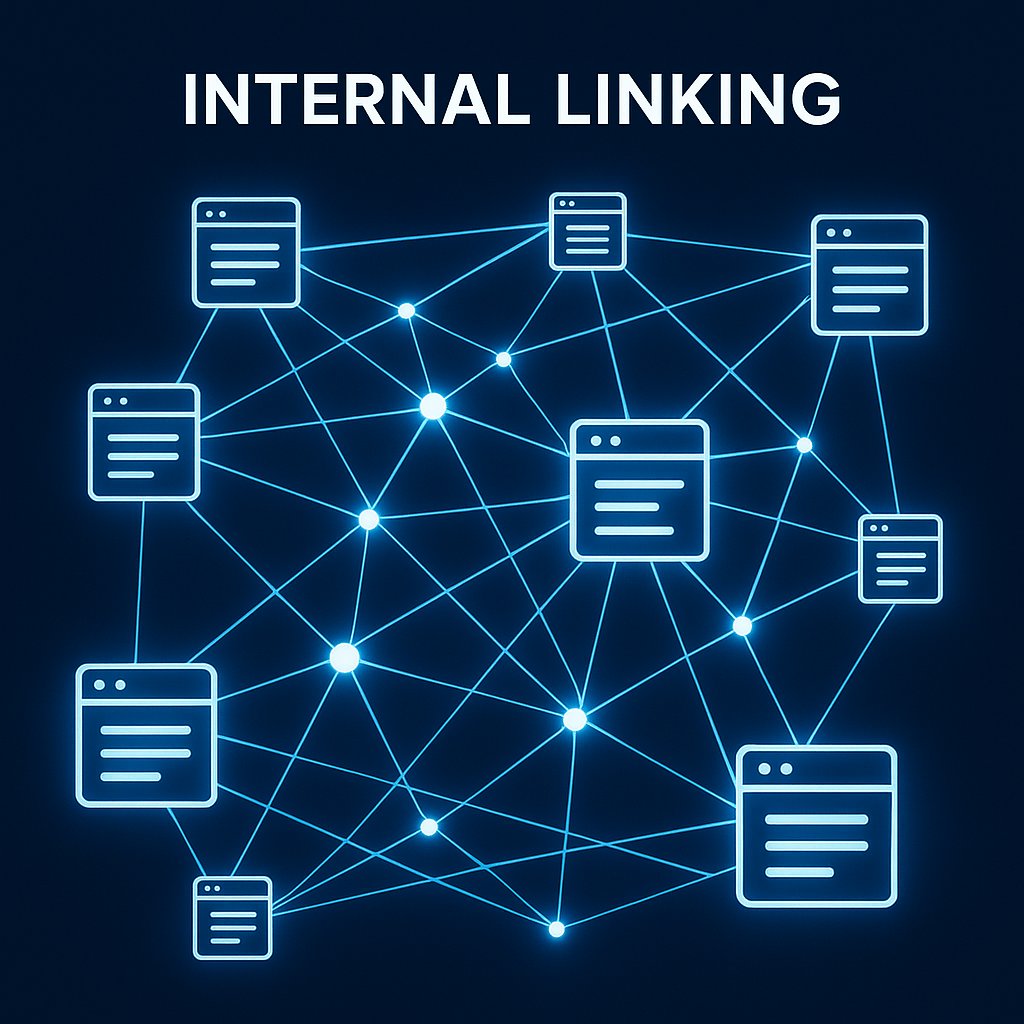
The challenge isn’t creating internal links—it’s building a strategic framework that distributes link equity effectively, guides users through content journeys, and signals topical authority to search engines. This comprehensive guide explores advanced internal linking strategies backed by data and real-world results.
Understanding Link Equity Distribution in Modern SEO
Link equity, commonly known as PageRank, flows through your website’s internal link structure. Every page on your site has a finite amount of link value to pass, and strategic internal linking determines where that value goes. Google’s algorithm uses this distribution pattern to understand which pages are most important on your site.
Research from Ahrefs analyzing 920 million web pages revealed that pages with higher internal link counts rank significantly better in search results. Specifically, pages with 10 or more internal links pointing to them had a 25% higher chance of ranking in the top 10 positions compared to pages with fewer internal links.
The Hub and Spoke Architecture
The most effective internal linking model follows a hub and spoke pattern, where pillar pages act as central hubs connecting to related cluster content. This structure accomplishes two critical objectives: it consolidates topical authority and creates clear content hierarchies that search engines can easily parse.
A practical implementation involves identifying your 5-10 primary topic areas, creating comprehensive pillar pages for each, and building 8-12 supporting articles that link back to the pillar while also interconnecting with each other. This creates a semantic web of related content that demonstrates expertise across the entire topic.
Calculating Optimal Link Density
While there’s no magic number, analysis of top-performing content reveals patterns. Articles ranking in positions 1-3 typically contain 1 internal link per 100-150 words. However, link placement matters more than quantity—links embedded naturally within contextual paragraphs perform better than those clustered in lists or sidebars.
Monitor your link density by dividing total internal links by word count. For a 1,500-word article, aim for 10-15 strategically placed internal links. Exceeding 20 links risks appearing manipulative, while fewer than 8 represents missed opportunities for content discovery and link equity distribution.
Strategic Anchor Text Optimization
Anchor text serves as a relevance signal to search engines, indicating what the linked page is about. However, over-optimization with exact-match keywords can trigger algorithmic penalties. The key is maintaining a natural diversity that mirrors how humans would organically link content.
The Anchor Text Distribution Formula
Analysis of penalty-free websites with strong rankings shows a consistent anchor text distribution pattern:
- 40-50% branded or URL anchors (“Company Name,” “this article,” “click here”)
- 30-40% partial match anchors containing target keywords with modifiers (“guide to keyword research” instead of just “keyword research”)
- 10-20% exact match anchors using precise target keywords
- 10-15% naked URLs and miscellaneous (“https://example.com/page”)
This distribution appears natural to algorithms while still providing relevance signals. Websites maintaining this ratio experience fewer manual actions and steadier ranking improvements compared to those using predominantly exact-match anchors.
Context-Driven Anchor Selection
The surrounding text matters as much as the anchor itself. Search engines analyze the 50-100 words surrounding a link to understand its context. When linking to a page about “email marketing automation,” the anchor “automation tools” gains relevance if surrounded by email marketing terminology.
Create anchor text that feels natural when read aloud. If the sentence structure would sound awkward in conversation, revise it. For example, “Our comprehensive keyword research strategies guide” reads unnaturally, while “Our guide to keyword research strategies” flows better and serves the same SEO purpose.

Automated Internal Linking Solutions
Manually maintaining internal links across hundreds or thousands of pages becomes impossible at scale. Modern websites require systematic approaches to ensure consistent linking as content libraries grow.
Plugin-Based Automation
Tools like AI Internal Links revolutionize internal linking by automatically identifying relevant connection opportunities across your content library. These systems analyze semantic relationships between articles and suggest contextually appropriate links, reducing the manual effort from hours to minutes.
The plugin approach works by scanning existing content for relevant keywords and matching them with target pages in your site structure. It then generates natural anchor text variations and inserts links at optimal positions within articles. This automation ensures new content immediately integrates into your linking architecture without requiring manual updates to older articles.
Dynamic Linking Based on Performance Data
Advanced implementations combine automation with analytics to create performance-driven linking strategies. By tracking which internal links generate the most clicks and engagement, systems can prioritize similar linking patterns across other content.
Websites implementing this approach report 23-35% increases in pages per session and corresponding decreases in bounce rates. The algorithm learns which content relationships resonate with users and emphasizes those connections while reducing less effective links.
Fixing Common Internal Linking Mistakes
Even SEO-savvy websites make critical internal linking errors that undermine their organic performance. Identifying and correcting these issues often yields immediate ranking improvements.
Orphaned Pages and Dead Ends
Orphaned pages—content with zero internal links pointing to them—are virtually invisible to search engines. Crawl data shows that pages without internal links receive 68% less crawl frequency than well-linked pages, leading to delayed indexing and poor rankings.
Use tools like Screaming Frog or Sitebulb to identify orphaned content. Every page should receive at least 3-5 internal links from related articles. High-value pages warrant 10-15 links from various sections of your site to signal their importance.
Dead-end pages that don’t link out to other content create poor user experiences and trap link equity. Every article should contain minimum 5-8 internal links to related content, creating pathways for both users and search engine crawlers.
Broken Internal Links
Broken internal links damage user trust and waste link equity. Studies indicate that websites with 10+ broken links experience 15% lower conversion rates compared to those with clean linking structures. Even worse, broken links to important pages represent lost opportunities for PageRank distribution.
Implement monthly audits using tools like Ahrefs Site Audit or Google Search Console to identify and fix broken internal links. When updating URLs, always implement 301 redirects and update internal links to point directly to the new URL rather than relying on redirect chains.
Internal Linking for Different Content Types
Different content formats require tailored internal linking approaches to maximize their effectiveness within your overall site architecture.
Blog Posts and Articles
Blog content serves as your primary linking ecosystem, offering the most flexibility for strategic link placement. Each blog post should follow this framework:
- 1-2 links to pillar pages early in the content to establish topical context
- 3-5 links to related blog posts scattered throughout to encourage deeper engagement
- 1-2 links to conversion pages (product pages, service pages) where naturally relevant
- 2-3 links to newer content to help fresh articles gain crawl priority and visibility
This distribution creates a balanced ecosystem where authority flows upward to pillar content while also spreading laterally across related topics and downward to conversion-focused pages.
Pillar Pages and Resource Guides
Pillar pages serve as authoritative hubs, so their internal linking strategy differs significantly. These comprehensive resources should link to 15-25 supporting articles within your content cluster, providing readers with pathways to explore specific subtopics in depth.
Structure pillar page links with clear sectional organization. Group related links together under descriptive headings rather than scattering them randomly. This improves user experience while reinforcing topical relationships for search engines.
Product and Service Pages
Commercial pages require careful linking balance. Link too aggressively to sales pages, and you appear manipulative. Link too conservatively, and you miss conversion opportunities.
Implement this approach: 2-3 contextual links from each related blog post to relevant product pages, using soft-sell anchor text like “see solutions” or “explore options” rather than hard commercial terms. Support each product page with 5-8 educational articles that address customer questions and naturally reference your offerings.
Measuring Internal Linking Success
Internal linking strategies require continuous monitoring and optimization based on performance data. Generic linking patterns rarely achieve optimal results—success comes from testing and refinement.
Key Performance Metrics
Track these metrics to evaluate internal linking effectiveness:
- Pages per session increase: Well-structured internal links should drive 15-25% increases in pages viewed per visit
- Average session duration: Effective linking pathways typically add 30-60 seconds to average session length
- Bounce rate by entry page: Strategic internal links reduce bounce rates by 10-20% on high-traffic pages
- Internal link click-through rate: Monitor which links generate clicks using Google Analytics event tracking
- Ranking improvements for linked pages: Track keyword positions for pages receiving new internal links
Websites implementing data-driven internal linking optimizations see measurable ranking improvements within 4-8 weeks as search engines re-crawl and re-evaluate page importance based on updated link structures.
A/B Testing Link Placement
Test different internal linking approaches to identify what works best for your specific audience. Create two versions of high-traffic articles—one with links in the introduction, another with links mid-article—and measure which generates higher click-through rates.
Data from these tests often reveals surprising patterns. Some audiences engage more with sidebar links, while others respond better to contextual in-content links. Testing removes guesswork and builds linking strategies based on actual user behavior.
Future-Proofing Your Internal Linking Strategy
As search algorithms evolve toward understanding semantic relationships and user intent, internal linking strategies must adapt accordingly.
Entity-Based Linking
Google’s shift toward entity recognition means internal links should connect content about related entities rather than just matching keywords. Link pages about “content marketing” to articles about “social media strategy” and “email marketing” because they represent interconnected entities within the digital marketing ecosystem.
This approach builds topical authority graphs that demonstrate comprehensive expertise across subject areas. Search engines recognize these entity relationships and reward sites that establish clear connections between related concepts.
User Journey Optimization
Modern internal linking transcends SEO—it must support complete user journeys from awareness to conversion. Map typical user paths through your content and ensure internal links facilitate these natural progressions.
For example, someone reading “What is SEO?” likely needs links to “SEO basics for beginners” and “First steps in SEO,” not advanced technical guides. Journey-based linking improves both user satisfaction and conversion rates by presenting the right content at the right stage of the customer journey.
Implementing these advanced internal linking strategies requires initial effort but delivers compounding returns. As your content library grows, a strong internal linking foundation ensures every new piece of content integrates seamlessly into your broader site architecture, maintaining and enhancing your organic visibility for years to come.