
Table of Contents
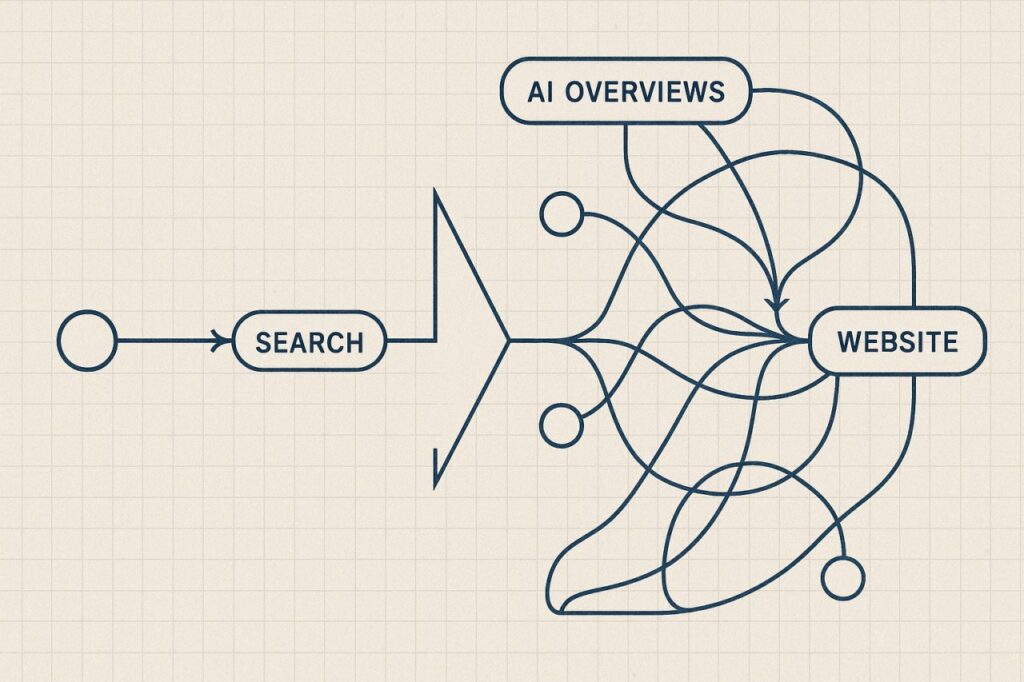
The traditional publisher playbook assumed a clear journey: user searches, clicks your article, discovers related content through internal links, consumes more pages. AI Overviews compress that journey into a single screen, cherry-picking fragments from your site alongside competitors. The click you earned? It’s now conditional on whether the AI snippet left something unresolved.
This isn’t about gaming AI or chasing featured snippets. It’s about recognizing that when users do click through from an AI Overview, their intent and behavior patterns look different. Your internal linking strategy needs to reflect that reality.
How AI Overviews Reshape Content Discovery Patterns
When a user clicks through from an AI Overview, they’re not starting cold. They’ve already consumed a synthesized answer, seen multiple perspectives, and decided your specific page offers something the AI summary couldn’t deliver. That’s a warmer, more intentional visitor than someone clicking a traditional blue link.
But here’s the friction: they landed mid-journey. The AI already introduced the topic, cited the basics, maybe even quoted your competitor. If your internal links assume a beginner reader who needs foundational context, you’re creating redundancy. If they assume an expert who wants advanced tactics, you might be skipping the bridge content that converts browsers into loyal readers.
Publishers who treat every landing page as a potential mid-funnel entry point win here. That means your internal links can’t just connect related topics—they need to anticipate what the AI Overview already covered and what gaps remain.
Think about a user researching “how to prune tomato plants.” The AI Overview gives them the basic steps. They click your article because the snippet mentioned “determinate vs indeterminate varieties” without explaining it. Your internal link to a varietal guide becomes exponentially more valuable than a link to “Tomato Growing Basics 101” that retreads ground the AI already covered.
Why Traditional Internal Linking Assumptions Break Down
Most publisher site architectures are built like pyramids: pillar pages at the top, cluster content radiating outward, internal links flowing in neat hierarchical patterns. The assumption is that users enter at the pillar, then explore clusters. Google crawls the structure, understands the relationships, everyone’s happy.
AI Overviews disrupt this because they flatten topical hierarchies. A user might land on a narrow cluster article first, having already absorbed pillar-level concepts from the AI snippet. Or they might land on the pillar page but only because they want tactical depth the AI couldn’t provide—not because they need the 101 intro.
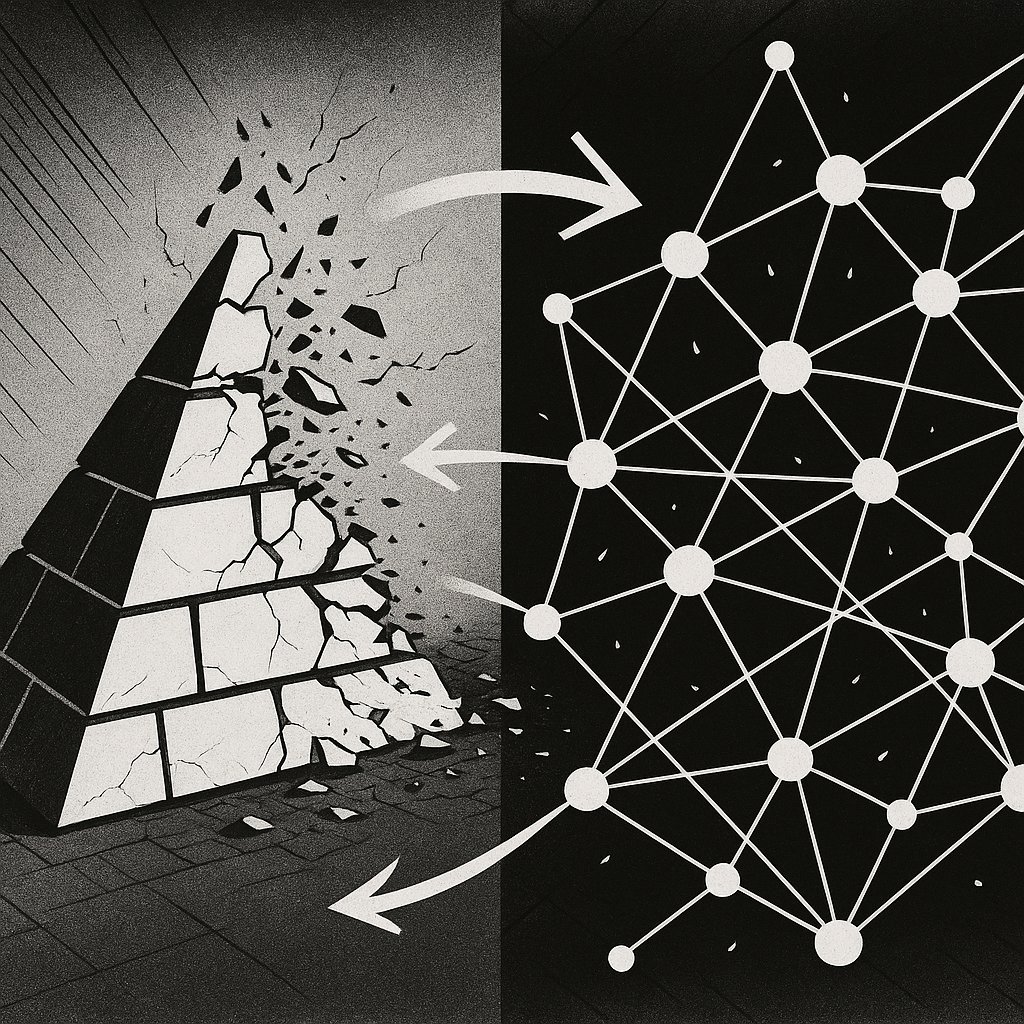
The pyramid model also assumes internal links primarily serve crawlers, helping Google understand topic relationships. That’s still true, but AI Overviews add a new priority: internal links now need to serve users who are navigating nonlinearly, jumping between related concepts based on what the AI did or didn’t explain.
This means you can’t just link to your “comprehensive guide” and assume that’s enough. You need granular, contextual pathways that let users self-select their next click based on which aspect of the topic the AI Overview left underserved.
The Death of the “Start Here” Mentality
Publishers love the “Start Here” page—a curated onboarding experience. But when half your traffic enters through AI-mediated searches, there’s no single starting point anymore. Every page is potentially the start.
Your internal linking strategy needs to be omni-directional: links that move users forward, backward, and sideways through topic clusters, depending on where they are in their understanding. A user who landed on an advanced tutorial via AI Overview might need a link back to foundational concepts, not just forward to even more advanced tactics.
Building Topical Pathways That Survive AI Mediation
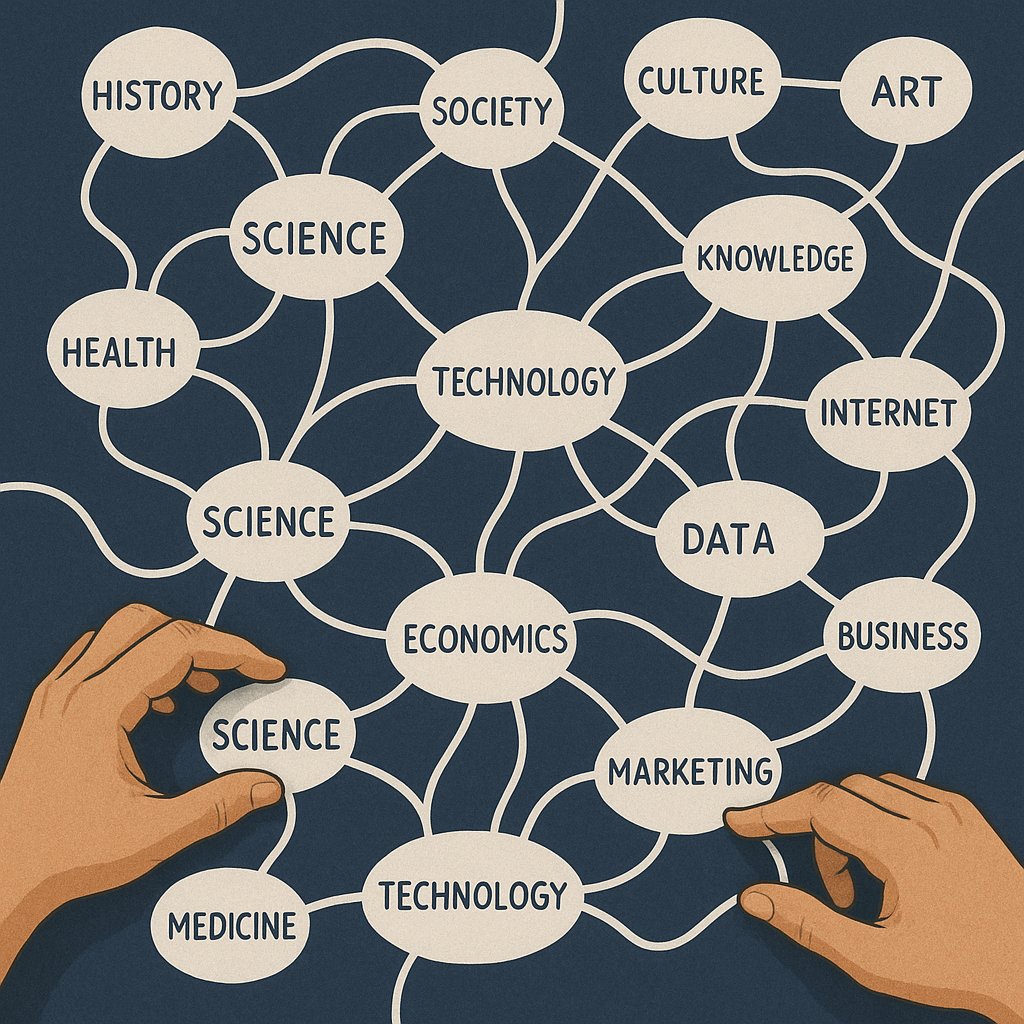
The publishers who’ll thrive in an AI Overview-dominated landscape are those who shift from hierarchical linking to topical pathway thinking. Instead of asking “What’s the parent page for this article?” ask “What are the three most likely knowledge gaps a user landing here from an AI Overview will have?”
This requires mapping your content not by site structure, but by conceptual adjacency. If you publish recipes, don’t just link every chicken dish to your “Chicken Recipes Hub.” Link grilled chicken to a guide on brining, to an article on wood chip flavors, to a troubleshooting post on avoiding dry meat. Build a web of practical next steps, not a rigid hierarchy.
Google’s algorithm increasingly values topical authority—the perception that your site comprehensively covers a subject area. AI Overviews amplify this because they pull from multiple sources. If your internal links demonstrate deep, interconnected coverage of a niche, you’re signaling authority even when users enter mid-topic.
One practical tactic: audit your top-performing pages that appear in AI Overviews (you can spot these in Google Search Console by filtering for queries where you rank but have lower CTR than expected). For each, identify what the AI Overview likely covers, then ensure your internal links point to content that goes deeper or broader than that baseline.
Practical Tactics to Strengthen Internal Navigation Signals
First, contextualize every internal link. Generic anchor text like “click here” or “learn more” doesn’t help a user decide if that link fills the gap the AI Overview left. Descriptive anchors like “how to calibrate soil pH for acidic-loving plants” signal exactly what the next click delivers.
Second, increase link density in the upper portion of your articles. Users arriving from AI Overviews often scan quickly to confirm you offer what the snippet promised. If all your internal links are buried in the conclusion, they’ll bounce before discovering related content. Place your most relevant internal links within the first three sections, where engaged readers will actually see them.
Third, leverage related content modules intelligently. Automated “You Might Also Like” widgets often surface content by recency or popularity, not topical relevance. For articles that frequently appear in AI Overviews, hand-curate those modules to address the specific knowledge gaps users are likely exploring.
Fourth, create bridge content explicitly designed to connect concepts the AI Overview might mention in passing. If your niche has common prerequisite knowledge that AI summaries skip, write short explainer articles and link to them liberally from advanced content. These become high-value internal link targets for users entering mid-journey.
For publishers managing hundreds or thousands of articles, manually optimizing internal links at this level isn’t realistic. Tools like AI Internal Links can analyze your content and automate contextual linking based on topical relationships, letting you operationalize pathway-building at scale without manual overhead.
Monitoring What AI Overviews Actually Show
You can’t optimize for AI Overviews without knowing when you’re cited in them. Regularly search your primary keywords in Google and note when AI Overviews appear, which sources they cite, and what they leave unaddressed. If you’re cited but not linked, that’s a signal your content is authoritative but perhaps not differentiated enough. If competitors are cited, analyze what angle they took that yours missed.
Use this intelligence to inform both content creation and internal linking. If the AI Overview for “best running shoes for flat feet” mentions cushioning and stability but not durability, your article on long-term shoe care becomes a high-value internal link target from your footwear recommendation guides.
Adapt or Watch Traffic Erode
AI Overviews aren’t going away. Google’s entire search evolution is moving toward answering questions directly, with clicks becoming the exception rather than the rule. Publishers who cling to old internal linking models—rigid hierarchies, entry-point assumptions, crawler-first thinking—will see engagement metrics decline even if they maintain rankings.
The shift required isn’t radical. It’s about making internal links serve user intent at the point of entry, not just site architecture. It’s about building topical webs dense enough that however a user lands, they find a clear next step. Start by auditing your top ten pages most likely to appear in AI Overviews, map the knowledge gaps those snippets create, and ensure your internal links bridge those gaps. That’s the pathway strategy that survives algorithmic upheaval.