

Table of Contents
Why Programmatic SEO Fails at the Linking Layer
Programmatic SEO works brilliantly in theory. Generate templated pages from a database — cities, products, features, comparisons — and let Google index thousands of variations. Zillow does it. Yelp does it. Tripadvisor built an empire on it.
But here’s what most guides skip: programmatic content without programmatic linking architecture is just spam at scale. You’re not giving Google context. You’re giving it a maze.
Every template you spawn carries the same internal link structure. Your Best CRM for Austin page links to the same 10 generic hub pages as your Best CRM for Seattle page. Google sees 500 pages with near-identical signals pointing in the same directions. No hierarchy. No differentiation. No reason to rank one over the other.
The Cannibalization Problem No One Talks About
When you scale to hundreds of similar pages, you’re creating a keyword cannibalization minefield. If 50 city pages all target variations of best CRM software, and they all link back to your main CRM hub with identical anchor text, you’ve taught Google that these pages compete — not complement.
The result? Google picks a random winner (usually not the one you want), and the rest fade into supplemental results or get filtered entirely.
This isn’t a content quality problem. It’s a link topology problem.
Thin Clusters Kill Crawl Budget
Programmatic pages often sit 4-5 clicks deep from the homepage. If your internal linking doesn’t actively surface them, Googlebot might never find half of them before the crawl budget runs out.
Worse: if every page in a 500-page cluster links only upward to category hubs and never horizontally to related pages, you’ve built a series of dead-ends. No flow. No discovery path. Google treats them like low-priority inventory.
How to Architect Internal Links for Programmatic Content
Scaling programmatic SEO isn’t about generating more pages — it’s about structuring the connections between them so Google understands which pages deserve authority and which pages support them.
Here’s the framework that works.
Start With a Three-Tier Linking Hierarchy
Tier 1: Pillar pages — Your main topic hub. Example: /best-crm-software/. This page should pull internal link equity from dozens of tier-2 pages.
Tier 2: Category or feature pages — Broader segments. Example: /best-crm-for-small-business/ or /crm-with-email-integration/. These pages link up to tier 1 and down to tier 3.
Tier 3: Long-tail programmatic pages — Your /best-crm-austin-texas/, /best-crm-seattle-washington/ pages. These link up to tier 2, sideways to related tier 3 pages, and occasionally to tier 1 for anchor diversity.
Without this structure, all your programmatic pages compete for the same ranking slot instead of reinforcing a hierarchy.
Use Conditional Anchor Text Logic
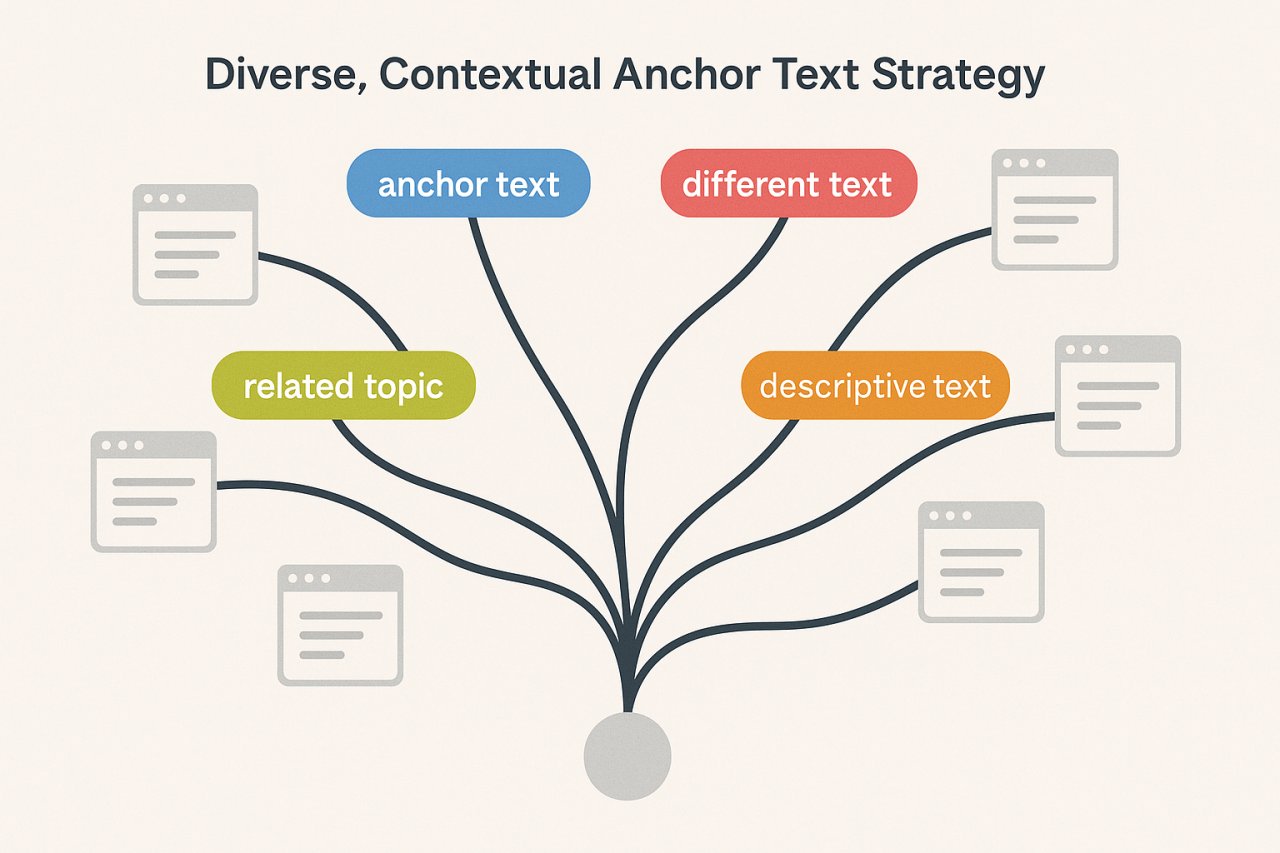
One of the biggest mistakes in programmatic SEO: every page uses the same anchor text to link back to parent pages.
Don’t do this:
– Austin page → best CRM software
– Seattle page → best CRM software
– Denver page → best CRM software
Instead, vary the anchor text programmatically based on the page context:
– Austin page → compare CRM tools by city
– Seattle page → CRM solutions for growing teams
– Denver page → top-rated CRM platforms
This prevents anchor text over-optimization and gives Google more semantic context about what the parent page covers.
Link Horizontally, Not Just Vertically
Most programmatic sites only link upward to category pages. That’s a missed opportunity.
Horizontal linking between related programmatic pages creates internal PageRank flow and helps Google understand thematic relationships. Your Austin CRM page should link to Houston, Dallas, and San Antonio pages — not just back to the state-level hub.
But here’s the catch: you can’t manually link 500 pages to each other. That’s where algorithmic linking logic comes in.
The best programmatic SEO strategies don’t just generate pages — they generate intelligent link graphs that adapt as the site grows.
Avoiding the Thin Content Trap at Scale
Programmatic content gets labeled as thin not because the word count is low, but because Google sees no reason to index 500 near-identical pages. Internal linking can change that perception.
Differentiate Pages Through Unique Link Profiles
Each programmatic page should have a unique set of internal links pointing to it and from it. If every city page has the same 10 inbound links and the same 8 outbound links, Google sees them as interchangeable.
Create variance:
– Link Austin to Houston, Dallas, San Antonio (geographic proximity)
– Link Seattle to Portland, San Francisco (regional cluster)
– Link Miami to Orlando, Tampa (state-based grouping)
This creates link fingerprints that help Google differentiate pages that would otherwise look like duplicates.
Control Crawl Depth With Strategic Link Placement
Programmatic pages buried five clicks from the homepage rarely rank, even if the content is solid. You need to artificially boost their crawl priority through internal links.
Place contextual links from high-authority pages (your blog, your main service pages) directly to a subset of your programmatic pages. Rotate which pages get featured monthly. This ensures fresh crawl signals and prevents the entire cluster from stagnating.
Use Rel=Canonical Strategically
If you’re generating dozens of pages that are genuinely too similar to justify separate indexing, don’t rely on noindex. Use rel=canonical to consolidate signals into a primary version while keeping all pages live for user experience.
Example: Your /best-crm-austin-downtown/ and /best-crm-austin-suburbs/ pages might canonical back to /best-crm-austin-texas/, but still exist as landing pages for hyper-local PPC campaigns.
Automating Internal Linking for Programmatic Content
Here’s the reality: you cannot manually manage internal links at programmatic scale. If you’re publishing 100+ pages per month, you need an algorithmic approach.
Define Link Rules in Your CMS
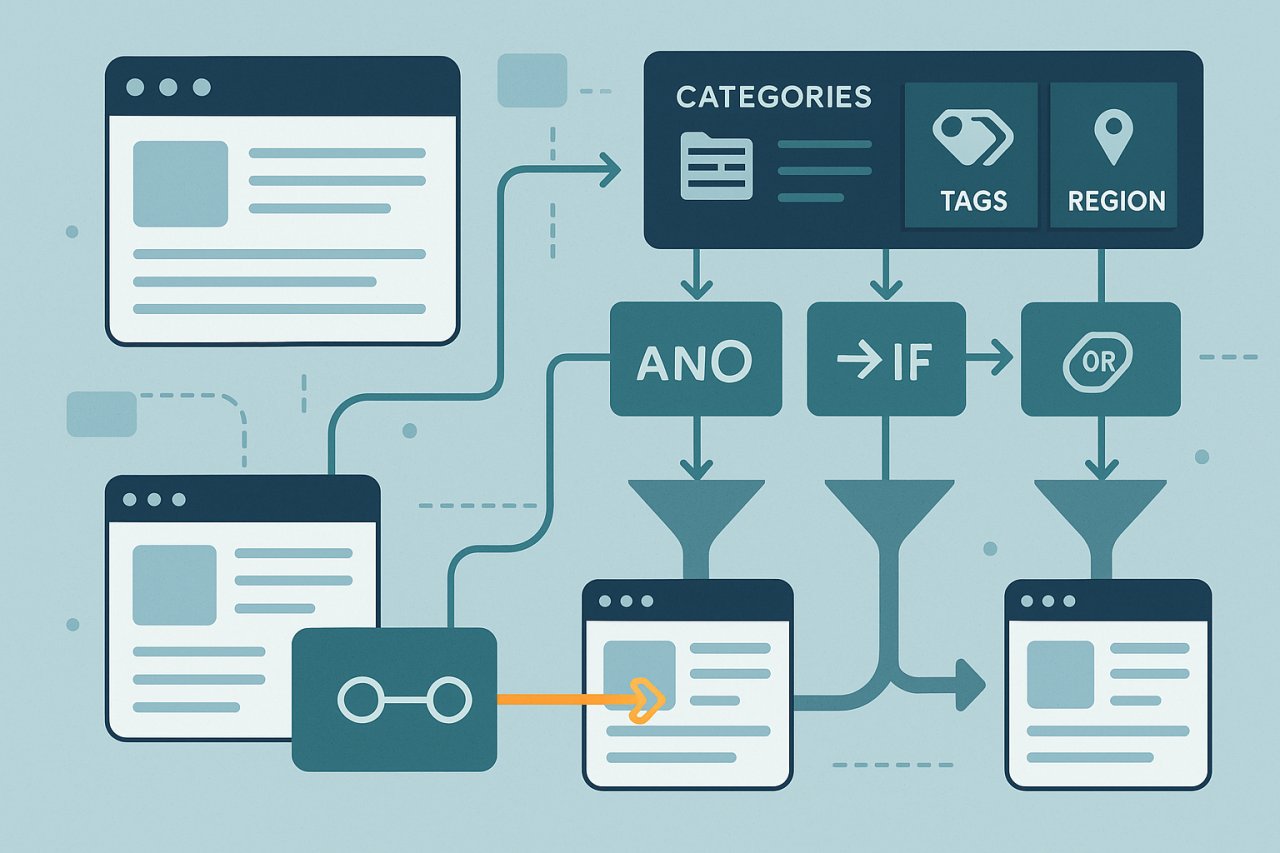
In WordPress, you can set up custom fields or taxonomies that trigger automatic internal links based on page attributes. For example:
– If page category = CRM City Pages → link to parent state page + 3 nearby city pages
– If page tag = Email Integration → link to feature comparison page
– If page is in Southwest Region taxonomy → link to regional hub
This requires custom development or a plugin that understands relational linking logic.
Leverage AI to Identify Contextual Link Opportunities
Manual rules work for structured data, but they miss contextual opportunities. An AI-driven approach can analyze page content and suggest links based on semantic similarity, keyword overlap, and topic clustering — without hardcoding every rule.
For WordPress sites scaling programmatic content, tools like AI Internal Links can automatically map relationships between hundreds of pages and insert contextual links that adapt as you publish new content. Instead of manually updating 50 city pages every time you add a new feature page, the system learns which connections make sense and inserts them programmatically.
Monitor Link Distribution With Crawl Simulation
Use Screaming Frog or Sitebulb to crawl your site as Googlebot would. Look for:
– Pages with 0 internal links (orphans)
– Pages with 100+ outbound links (link bloat)
– Pages only receiving links from other low-authority pages (isolated clusters)
Fix these patterns before Google penalizes the entire cluster for poor architecture.
The Long Game: Maintaining Programmatic SEO Over Time
Programmatic SEO isn’t a one-time launch. It’s a system that needs continuous optimization.
Audit and Prune Dead Pages Quarterly
Not every programmatic page will perform. Some cities don’t have search volume. Some product combinations don’t resonate. Kill them. Redirect to the nearest relevant page and reclaim the crawl budget.
A lean 300-page cluster with strong internal linking will outperform a bloated 1,000-page cluster with weak signals.
Refresh Link Graphs as Content Evolves
When you publish new pillar content or update a category page, your internal linking needs to reflect that shift. If you promoted a new CRM feature page to tier-1 status, it should start receiving links from tier-2 and tier-3 pages that previously ignored it.
Manual updates don’t scale. Automated link refresh does.
Track Rankings at the Cluster Level
Don’t obsess over individual page rankings. Track the cluster’s aggregate performance. If your 50-page city cluster is pulling 10,000 monthly visits total, that’s the metric that matters — not whether Austin ranks #3 or #7.
Internal linking should optimize for cluster visibility, not individual page heroics.
The Bottom Line
Programmatic SEO content is a competitive advantage if you treat internal linking as a core architectural decision, not an afterthought. Template your content, sure — but template your link logic too.
Build hierarchy. Differentiate link profiles. Automate the connections. And don’t scale until your linking system can scale with you.
Because the moment you publish page 501 without a plan for how it connects to the other 500, you’ve just turned your asset into a liability.