
Table of Contents
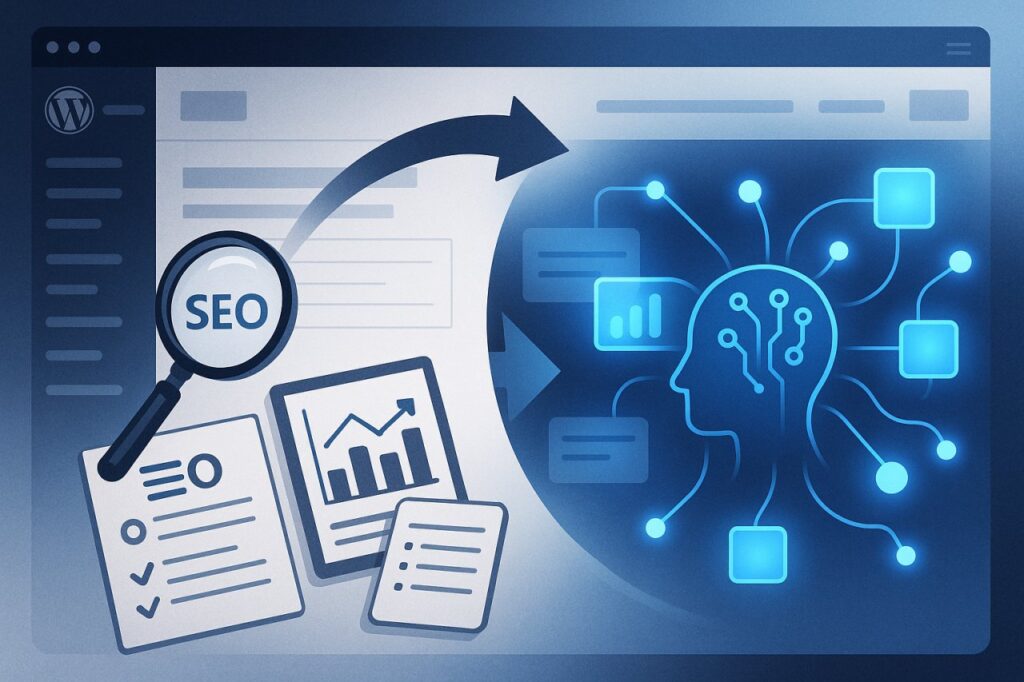
The SEO playbook you learned three years ago is already outdated. Generative AI isn’t just writing content anymore — it’s restructuring how search engines understand topical authority, how users discover information, and how WordPress sites need to architect their content to stay visible.
Most WordPress owners are still manually checking meta descriptions while AI tools quietly reshape the entire search landscape. Let’s fix that gap.
Why Traditional SEO Tactics Are Losing Ground
Here’s what changed: search engines don’t just read your content word-by-word anymore. They understand semantic relationships between topics across your entire site. A page about “email marketing automation” now needs to connect intelligently to your pages on “lead nurturing” and “customer segmentation” — not just through keyword matching, but through conceptual relationships.
Your old approach probably looked like this: write content, add a focus keyword, maybe link to a few related posts if you remember. That works until you have 200+ published articles and zero visibility into which pages should connect to each other.
AI SEO tools solve the pattern recognition problem humans can’t scale. They map your entire content ecosystem in seconds and identify gaps you’d never spot manually.
The Generative Engine Optimization Shift
GEO (Generative Engine Optimization) is what happens when AI search tools like ChatGPT, Perplexity, and Google’s AI Overviews become primary discovery channels. These platforms don’t show ten blue links — they synthesize answers from multiple sources.
If your WordPress site isn’t structured to be citation-worthy, you’re invisible in this new paradigm. AI engines prefer sites with clear topical authority — demonstrated through interconnected content clusters, not isolated blog posts.
Think about how Perplexity cites sources. It doesn’t just grab the page with the exact keyword match. It pulls from sites where the content architecture clearly signals: “This site knows this topic deeply, and here’s the proof.”
IndexNow Changes the Crawling Game
IndexNow is Microsoft and Yandex’s protocol that lets you notify search engines instantly when content changes. Instead of waiting for Googlebot to eventually recrawl your site, you push updates directly.
For WordPress sites publishing frequently, this matters. Your fresh content gets indexed in minutes, not days. Several WordPress plugins now support IndexNow automatically — RankMath and IndexNow Plugin being the most reliable options.
The strategic shift: you can update internal linking structures and see impact almost immediately. That feedback loop was impossible when you had to wait 48-72 hours for recrawls.
How AI Tools Are Rewriting WordPress SEO Workflows
Let’s get specific about what actually works right now.
Semantic Internal Linking Automation
Manual internal linking dies at scale. You can’t remember every relevant post when you’ve published 300 articles. You definitely can’t maintain link equity distribution as your site grows.
AI-powered internal linking tools analyze semantic similarity between your content and suggest connections based on topical relevance, not just keyword matching. They understand that an article about “WordPress caching strategies” should link to “Core Web Vitals optimization” even if those exact phrases never appear together.
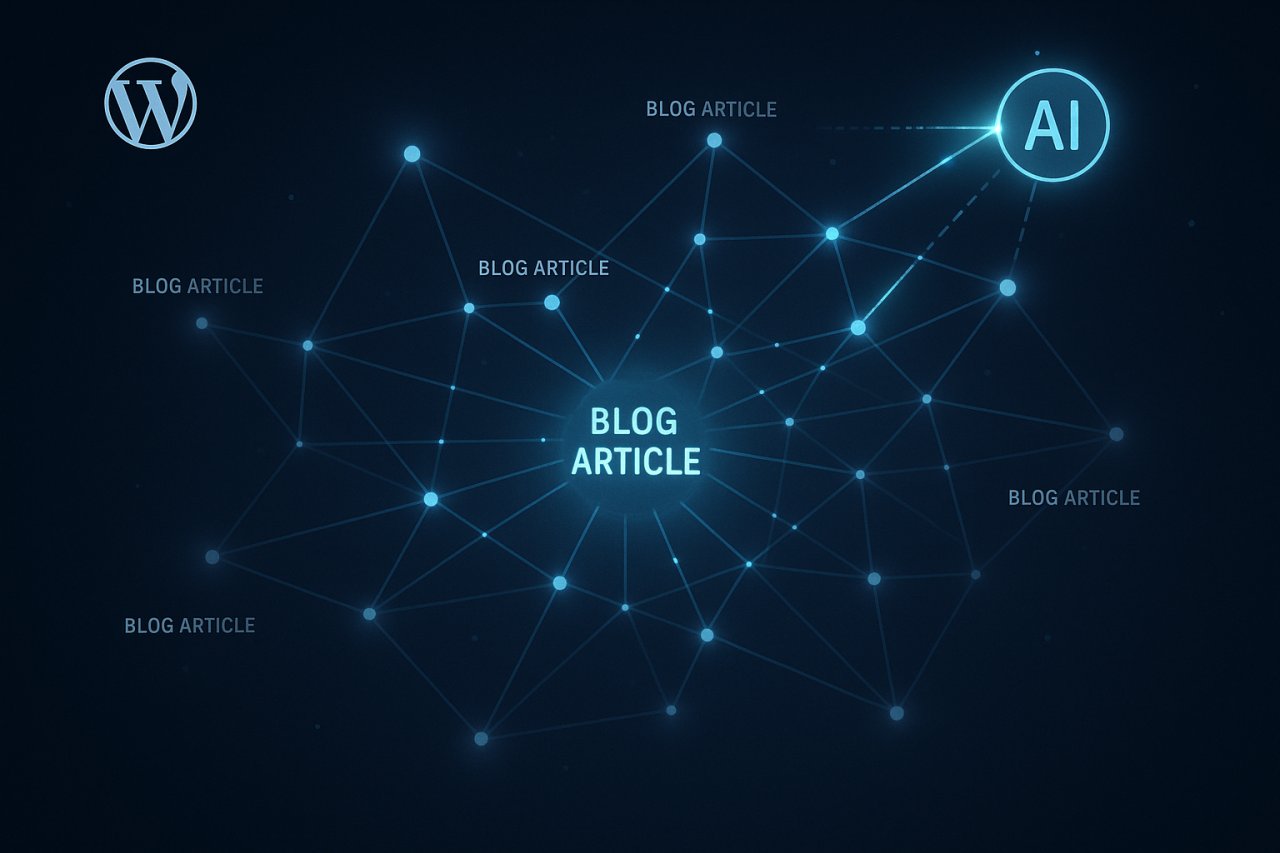
The real value: these tools prevent orphan content. That brilliant guide you published six months ago that gets zero traffic? It’s probably not ranking because no other page on your site signals to Google that it matters. AI tools map these gaps automatically.
Tools like AI Internal Links can automate this entire process, analyzing your content relationships and implementing links that strengthen topical clusters without you touching the WordPress editor.
AI Content Gap Analysis
Content gap tools used to compare your keywords against competitors. New AI versions do something smarter: they identify conceptual gaps in your topical coverage.
Example: you’ve written about email marketing, automation tools, and campaign analytics. But you’ve never covered “email deliverability” or “spam score optimization” — critical subtopics that complete the authority picture. AI tools surface these blind spots by mapping the semantic field around your existing content.
Clearscope and Surfer SEO both offer AI-driven gap analysis, though they’re priced for agencies, not solo site owners. Frase AI provides similar functionality at a more accessible price point.
Automated Schema Markup Generation
Schema markup tells search engines exactly what your content represents. Article? Recipe? Product review? FAQ?
Manually writing JSON-LD schema is tedious and error-prone. AI schema generators analyze your content and suggest appropriate markup automatically. Schema Pro for WordPress does this reasonably well, though RankMath’s built-in schema options cover most use cases without an extra plugin.
The strategic win: proper schema makes you eligible for rich results — featured snippets, FAQ boxes, how-to carousels. That’s the difference between 2% CTR and 8% CTR on identical rankings.
What AI Can’t Do (Yet) — And Why That Matters
AI SEO tools are powerful, but they’re not magic. Understanding the limits keeps you from wasting time.
AI Doesn’t Understand Your Audience’s Intent
An AI tool can tell you that “WordPress security” gets 12,000 monthly searches. It can’t tell you that your specific audience — freelance developers building client sites — actually cares more about “WordPress security for client handoff” because they’re worried about support tickets, not abstract security concepts.
You still need to interpret search intent based on who you’re serving. AI gives you the data. You provide the strategic lens.
AI-Generated Content Still Needs Human Oversight
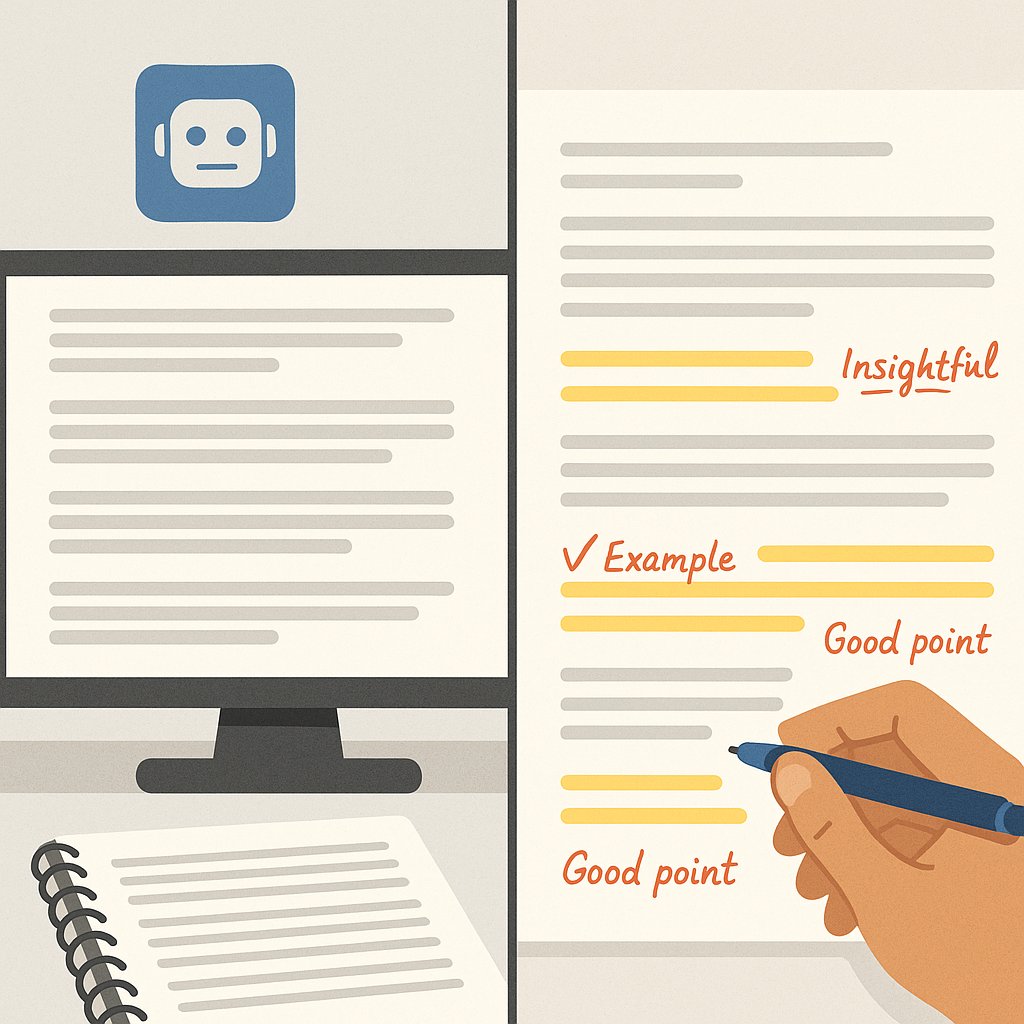
Every AI writing tool produces technically correct but generically bland content by default. It knows what words typically appear together in articles about “WordPress speed optimization” but it doesn’t know the counterintuitive insights that make content worth reading.
The pattern I see working: AI for first drafts and structural organization, humans for perspective and nuance. ChatGPT can outline a comprehensive guide to image optimization in 30 seconds. You need to add the insight that most people obsess over compression ratios when lazy loading is 10x more impactful.
Link Building Still Requires Relationships
AI can’t send outreach emails that don’t sound like template spam. It can’t build genuine relationships with other site owners in your niche. It can’t negotiate guest post placements or podcast appearances.
Backlink acquisition is still fundamentally a relationship-building exercise. AI might draft your outreach copy or identify link prospects through scraping, but the human connection part doesn’t automate well.
Building an AI-Enhanced WordPress SEO Stack
Here’s a practical toolkit that balances automation with strategic control.
Foundation Layer: Core SEO Plugin
RankMath or Yoast SEO. Pick one, doesn’t matter which. Both handle technical SEO basics — sitemaps, meta tags, breadcrumbs, schema. RankMath edges ahead slightly because it includes more features in the free version, including local SEO support and redirects.
Don’t overthink this choice. The real SEO work happens in content strategy and site architecture, not in which plugin generates your XML sitemap.
Content Optimization: AI Writing Assistants
If budget allows, Clearscope or Surfer SEO for content briefs and optimization. They analyze top-ranking pages for your target keyword and identify semantic terms and content structure patterns.
Budget-friendly alternative: Frase.io covers similar ground at $45/month. Use it to outline comprehensive content that naturally covers subtopics Google expects.
Internal Linking: Automation Tools
Manual internal linking doesn’t scale past 50-75 posts. Beyond that, you need automation or you’ll leave massive gaps in your link structure.
Link Whisper is the legacy option — visual interface showing linking suggestions as you write. It works, though it’s purely keyword-based matching.
AI-driven alternatives like AI Internal Links go deeper, using semantic analysis to connect conceptually related content even when exact keywords differ. This matters for topical authority — Google wants to see your site comprehensively covering a subject area, not just repeating the same keywords.
Performance Monitoring: AI-Enhanced Analytics
Google Search Console remains essential for raw data. But interpreting 6,000 rows of keyword data manually is impossible.
Tools like SEOTesting.com or SearchPilot apply statistical modeling to isolate which SEO changes actually moved the needle versus normal traffic fluctuation. This is crucial — most SEO tests fail because people can’t separate signal from noise.
For WordPress-specific performance, Jetpack Stats now includes AI-powered traffic insights that identify trending content and anomaly detection. Not revolutionary, but useful for catching sudden drops before they compound.
Future-Proofing Your WordPress SEO Strategy
Search is moving toward AI-mediated discovery. Here’s how to stay ahead.
Build Content Clusters, Not Isolated Posts
Every piece of content should belong to a thematic cluster. A pillar page covering “WordPress Security” comprehensively, supported by 8-12 detailed articles on specific aspects — two-factor authentication, plugin vulnerabilities, database hardening, etc.
AI search engines reward sites with clear topical depth. They can see when you’ve covered a subject thoroughly versus when you’ve written one shallow overview.
Your internal linking structure should make these clusters obvious. Every cluster article should link back to the pillar. Every pillar should link to all cluster articles. AI internal linking tools make this systematic instead of haphazard.
Optimize for AI-Generated Summaries
When ChatGPT or Perplexity summarize information about your topic, you want to be the cited source. That means:
- Clear, definitive statements that AI can extract and attribute
- Structured content with descriptive headings
- Factual information over vague generalizations
- Unique data points or perspectives that differentiate your content
Generic content gets summarized without attribution. Distinctive insights get cited.
Embrace Structured Data Aggressively
Schema markup is how you communicate with AI crawlers in their language. Every article should have Article schema at minimum. FAQs should have FAQPage schema. How-to guides should have HowTo schema.
This isn’t optional anymore. AI engines rely heavily on structured data to understand content type and extract key information. Sites without schema are harder to parse and less likely to surface in AI-generated answers.
The Real Competitive Advantage
Here’s what most WordPress site owners miss: AI SEO tools don’t replace strategy. They amplify it.
The sites winning in 2026 aren’t necessarily using the most advanced AI tools. They’re using AI to execute fundamentals at scale — comprehensive internal linking, systematic content clusters, consistent schema markup — that were always important but manually impractical.
Your competitive advantage is in how you direct the AI, not in the AI itself. Everyone has access to the same tools. Not everyone has a clear topical strategy or understands how to structure a site for semantic authority.
Start with strategy: What topics does your site own? What’s your content cluster architecture? Where are the gaps in your topical coverage? Then use AI tools to implement that strategy faster and more thoroughly than manual processes ever could.
The WordPress sites that dominate search in 2026 won’t be the ones with the longest content or the most backlinks. They’ll be the ones where every piece of content fits into a clear strategic framework, supported by AI-enhanced execution that maintains quality at scale.
That’s the shift. Don’t fight it — use it.