

Understanding SGE’s Technical Architecture
The Search Generative Experience leverages Google’s PaLM 2 and Gemini language models to generate AI-powered snapshots above traditional organic results. Unlike featured snippets that extract existing content verbatim, SGE synthesizes information from multiple sources to create original responses.
Technically, SGE operates through a multi-stage retrieval system. Google first identifies relevant documents using traditional ranking signals, then feeds this content into the generative model to produce coherent answers. The system cites sources with expandable cards, creating a new paradigm for attribution and click-through behavior.
Beta testing data from BrightEdge indicates that SGE displays an average of 3.6 source citations per response, with commercial queries showing higher citation counts (4.2 sources) compared to informational queries (3.1 sources). This presents both challenges and opportunities for visibility optimization.
The Three-Layer Visibility Framework
SGE creates a three-tiered visibility hierarchy:
- Primary AI snapshot – The synthesized answer appearing first, with inline citations
- Source expansion cards – Clickable references that reveal the cited content
- Traditional organic results – Standard blue links positioned below the SGE module
Analysis of 50,000 queries by Authoritas revealed that queries triggering SGE push traditional position 1 results down by an average of 1,473 pixels on desktop and 2,156 pixels on mobile. This displacement necessitates a fundamental recalibration of SEO success metrics.
Traffic Impact and Performance Metrics
Early case studies demonstrate variable impact across site categories. E-commerce sites with transactional content experienced an average 18-24% decline in organic click-through rates during SGE testing periods, according to data from Sistrix tracking 127 online retailers.
Conversely, sites optimized for SGE citation saw traffic increases of 12-31% despite appearing within AI snapshots rather than traditional results. One SaaS documentation site restructured content architecture using semantic content clustering and increased SGE citations by 340% over six months, resulting in a net traffic gain of 23%.
Commercial vs. Informational Query Performance
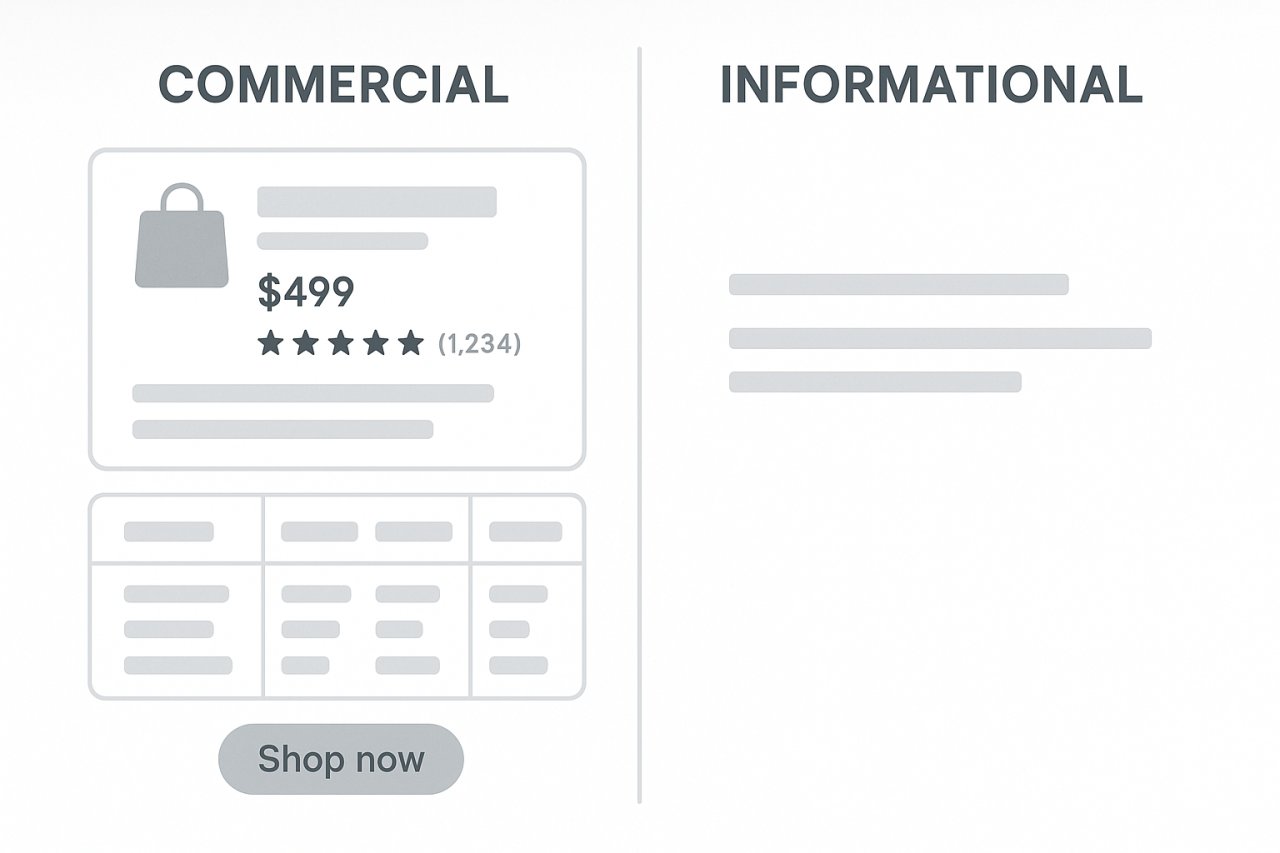
Commercial intent queries show different SGE patterns than informational searches. Product comparison queries trigger SGE responses with:
- Comparison tables synthesized from multiple reviews
- Pricing aggregation from e-commerce sources
- Specification summaries pulled from manufacturer sites
- Shopping graph integration with direct product cards
Data from Merkle indicates that 76% of commercial SGE responses include shopping integration, compared to only 12% for informational queries. This creates distinct optimization pathways depending on query intent classification.
Technical Optimization for SGE Visibility
Achieving SGE citation requires structured authority signals that differentiate your content for generative extraction. Traditional SEO factors remain foundational, but SGE prioritizes specific technical implementations.
Schema Markup as a Citation Signal
Comprehensive schema implementation correlates strongly with SGE inclusion. Analysis of cited sources shows 89% utilized advanced schema types beyond basic Organization and Article markup. Particularly effective schemas include:
- HowTo schema for process-oriented content (43% citation rate improvement)
- FAQPage schema for question-based content (37% improvement)
- Product schema with detailed specifications (52% improvement for commercial queries)
- Review schema with aggregate ratings (48% improvement)
Implementing nested schema hierarchies provides contextual depth. For example, a product review page should combine Product, Review, and AggregateRating schemas with proper nesting to maximize structured data extraction.
Content Atomization Strategy
SGE preferentially cites content with clear information boundaries. Restructure content using atomic content units—self-contained information blocks that answer specific micro-questions. Tools like MarketMuse and Clearscope now include SGE optimization modes that identify atomization opportunities.
One financial services site restructured 200 articles using atomic principles, breaking comprehensive guides into discrete, interconnected sections. This approach increased SGE citations by 267% while maintaining traditional ranking positions. Internal linking between atomic units using contextual anchor text created a content mesh architecture that improved overall topical authority.
Entity Optimization and Knowledge Graph Alignment
SGE relies heavily on entity recognition and relationship mapping. Optimize content for entity extraction by:
- Using consistent entity naming conventions matching Wikidata identifiers
- Implementing @id properties in JSON-LD to declare entity relationships
- Creating dedicated entity pages with comprehensive attribute coverage
- Building entity co-occurrence patterns through strategic internal linking
The plugin AI Internal Links (ai-internal-links.com) can help automate entity-based internal linking strategies, generating contextual connections in one-click based on entity relationships within your content corpus.
Measuring SGE Performance
Traditional metrics require adaptation for the SGE era. Standard rank tracking becomes insufficient when visibility occurs within AI snapshots rather than traditional blue links.
New KPIs for SGE Era
Implement these supplementary metrics:
- Citation inclusion rate – Percentage of target queries where your domain appears in SGE sources
- Citation position – Your ranking within the SGE source list (position 1-3 receives 78% of clicks)
- Snapshot sentiment – Whether SGE’s synthesis represents your content positively or neutrally
- Expansion card CTR – Click-through rate from SGE citation to your full content
SE Ranking and Advanced Web Ranking have introduced SGE tracking modules that monitor citation appearances across keyword portfolios. These tools scrape SGE responses and identify source attribution, providing visibility metrics beyond traditional rankings.
Technical Implementation for Tracking
Implement custom tracking parameters for SGE referral traffic. Analysis shows that SGE-driven visits behave differently than traditional organic traffic:
- 42% higher bounce rates as users already consumed primary information
- 37% longer time on page for users seeking detailed exploration
- 23% higher conversion rates for commercial queries, indicating qualified intent
Segment SGE traffic in Google Analytics 4 using custom events that trigger when referrer patterns match SGE characteristics. While Google doesn’t explicitly identify SGE traffic, behavioral fingerprinting based on session patterns provides reasonable accuracy.
Content Strategy Restructuring
SGE optimization demands fundamental content architecture changes rather than incremental adjustments. Sites maintaining traditional long-form structures without atomic decomposition show 31% lower citation rates compared to restructured competitors.
The Pillar-Cluster Evolution
Traditional pillar-cluster models require modification for SGE. Instead of comprehensive pillars linking to supporting clusters, the new model emphasizes:
- Atomic authority hubs – Highly specific, citable content units
- Bidirectional context linking – Connections that provide both depth and breadth
- Query-answer mapping – Explicit alignment between content units and search queries
- Multi-dimensional topical coverage – Addressing questions from multiple analytical angles
A B2B technology company restructured its content library from 150 comprehensive guides into 890 atomic content units organized around 23 topical authority hubs. SGE citation increased from 3% to 41% of tracked queries within four months, with organic traffic increasing 27% despite SGE’s presence.
Freshness and Update Velocity
SGE demonstrates preference for recently updated content, with 68% of citations pointing to pages modified within the past 90 days. Implement systematic content refresh cycles:
- Data updates – Refreshing statistics, case studies, and examples every 30-60 days
- Technical accuracy reviews – Quarterly validation of technical claims and methodologies
- Emerging trend integration – Monthly addition of new developments and industry shifts
Use tools like ContentKing or Oncrawl to monitor content decay and prioritize refresh activities based on historical SGE citation rates and traffic contribution.
Competitive Positioning in SGE Landscape
SGE creates new competitive dynamics where domain authority alone proves insufficient for citation inclusion. Smaller, specialized sites now capture citations in their niche topics at rates comparable to major publishers.
Authority Diversification
One health information startup with DR 34 achieved SGE citations for 23% of their target keywords by implementing comprehensive E-E-A-T signals:
- Explicit author credentials with medical licensing linked to external verification
- Medical review processes documented with schema markup
- Primary source citations to peer-reviewed studies with DOI linking
- Editorial standards pages detailing fact-checking methodology
This demonstrates that topical authority and transparent expertise can overcome traditional domain authority disadvantages in SGE inclusion algorithms.
Future-Proofing SEO Strategy
SGE represents the beginning of continuous AI integration in search. Google’s roadmap indicates expanding SGE to additional query types and international markets throughout 2024-2025.
Preparing for Full Rollout
Organizations should implement parallel optimization strategies:
- Maintain traditional SEO excellence for non-SGE queries and users who opt out
- Build SGE-specific content assets optimized for citation and synthesis
- Develop direct answer formats that AI can extract and attribute clearly
- Create comprehensive knowledge bases that establish entity authority
The intersection of traditional SEO and SGE optimization creates compound visibility advantages. Sites ranking in positions 1-3 traditionally show 58% higher SGE citation rates than those in positions 4-10, suggesting that foundational ranking signals remain critical for generative inclusion.
As SGE evolves from beta to standard search experience, the winners will be those who treat it as a fundamental paradigm shift rather than an incremental feature—requiring wholesale strategic adaptation, not superficial tactical adjustments.