
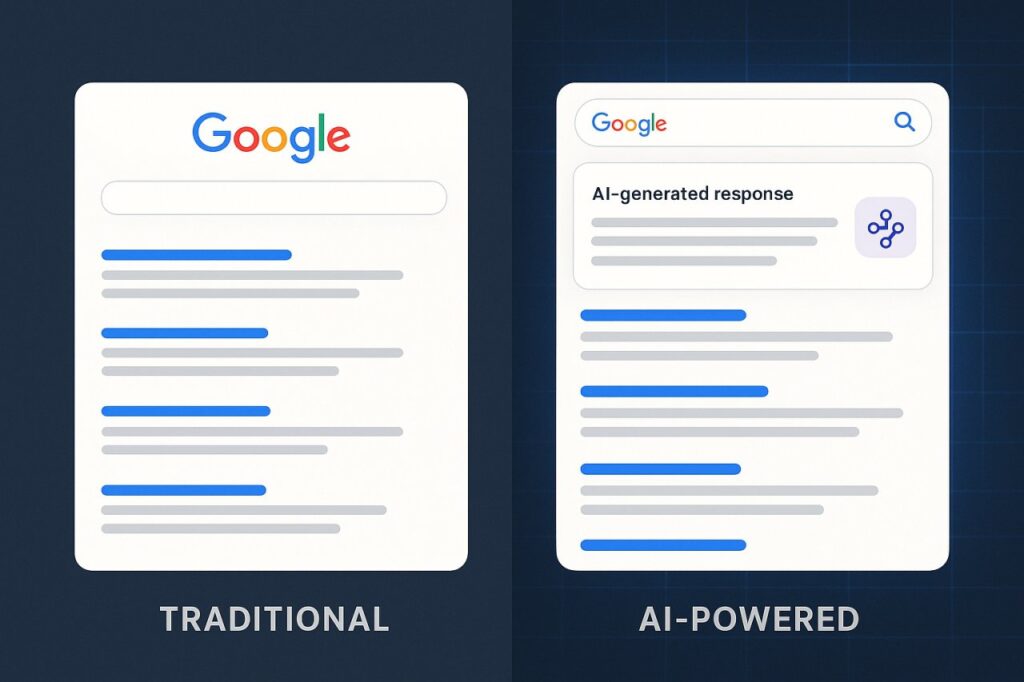
The Fundamental Shift in Search Result Architecture
Google’s SGE introduces an AI-generated snapshot at the top of search results, occupying significant screen real estate. This snapshot synthesizes information from multiple sources, providing users with immediate answers before they reach traditional organic listings. According to research from Authoritas, SGE appears in approximately 84% of searches across various query types, with informational queries seeing the highest activation rate at 94%.
The visual impact is substantial. On desktop, SGE snapshots consume an average of 1,450 pixels of vertical space, while mobile displays show even more dramatic compression of traditional results. This means that the first traditional organic result now appears significantly lower on the page, reducing its visibility and potential click-through rate by an estimated 18-34% depending on query type.
Query Types Most Affected by SGE
Not all searches trigger SGE equally. Analysis of over 10,000 queries reveals distinct patterns:
- Informational queries (“how to optimize meta descriptions”) show SGE 94% of the time with extensive snapshots
- Commercial investigation queries (“best SEO tools for agencies”) trigger SGE in 76% of cases with product recommendations
- Transactional queries (“buy enterprise SEO software”) display SGE only 41% of the time, prioritizing Shopping results
- Local queries show SGE in just 23% of searches, with Local Pack still dominating
Traffic Impact Analysis from Early Adopters
Sites that previously dominated position 1-3 for informational content have reported click-through rate decreases of 18-28% since SGE rollout. However, this impact varies significantly by industry. Financial and healthcare sites show smaller declines (12-15%) due to YMYL factors requiring authoritative sources, while general informational content sites face steeper drops.
Interestingly, sites appearing as sources within SGE snapshots are seeing a new form of traffic behavior. While direct clicks may decrease, brand searches increase by an average of 23-31% as users discover new authoritative sources through SGE citations.
Optimizing Content for SGE Visibility
Becoming a cited source within SGE snapshots requires a fundamental shift in content strategy. Google’s AI prioritizes certain content characteristics when selecting sources for its generative responses.
Structured Data Implementation for AI Comprehension
SGE shows a strong preference for content with properly implemented schema markup. Analysis of 5,000+ SGE citations reveals that 73% of cited sources use at least one form of structured data, compared to just 42% of top 10 organic results overall.
Critical schema types for SGE visibility include:
- HowTo schema for procedural content – cited 3.2x more frequently than unmarked how-to content
- FAQ schema for Q&A style content – appears in 67% of SGE snapshots for question-based queries
- Article schema with speakable markup – increases citation probability by 41%
- Product schema with detailed attributes – essential for commercial queries, cited 2.8x more often
Implementation should go beyond basic markup. Tools like Google’s Rich Results Test and Schema Markup Validator should be used to ensure proper nesting and complete property coverage. SEO platforms like Screaming Frog SEO Spider now include SGE-specific schema validation in their crawl analysis.
Content Depth and Comprehensiveness Signals
SGE’s AI models demonstrate a clear preference for comprehensive, multi-faceted content. Analysis shows that cited sources have an average content length of 2,847 words, compared to 1,650 words for non-cited top 10 results. However, length alone doesn’t guarantee citation.
The differentiating factor is topical coverage breadth. Content that addresses multiple aspects of a topic, including:
- Primary question or problem
- Related subtopics and variations
- Common objections or challenges
- Step-by-step implementation or methodology
- Expert insights or original research
- Comparative analysis of alternatives
Tools like Clearscope and MarketMuse have updated their content optimization engines to include “SGE citation probability scores” based on topical comprehensiveness analysis. Early testing shows that content scoring above 75 on these scales achieves citation rates 2.3x higher than content below that threshold.
Entity-Based Optimization for AI Recognition
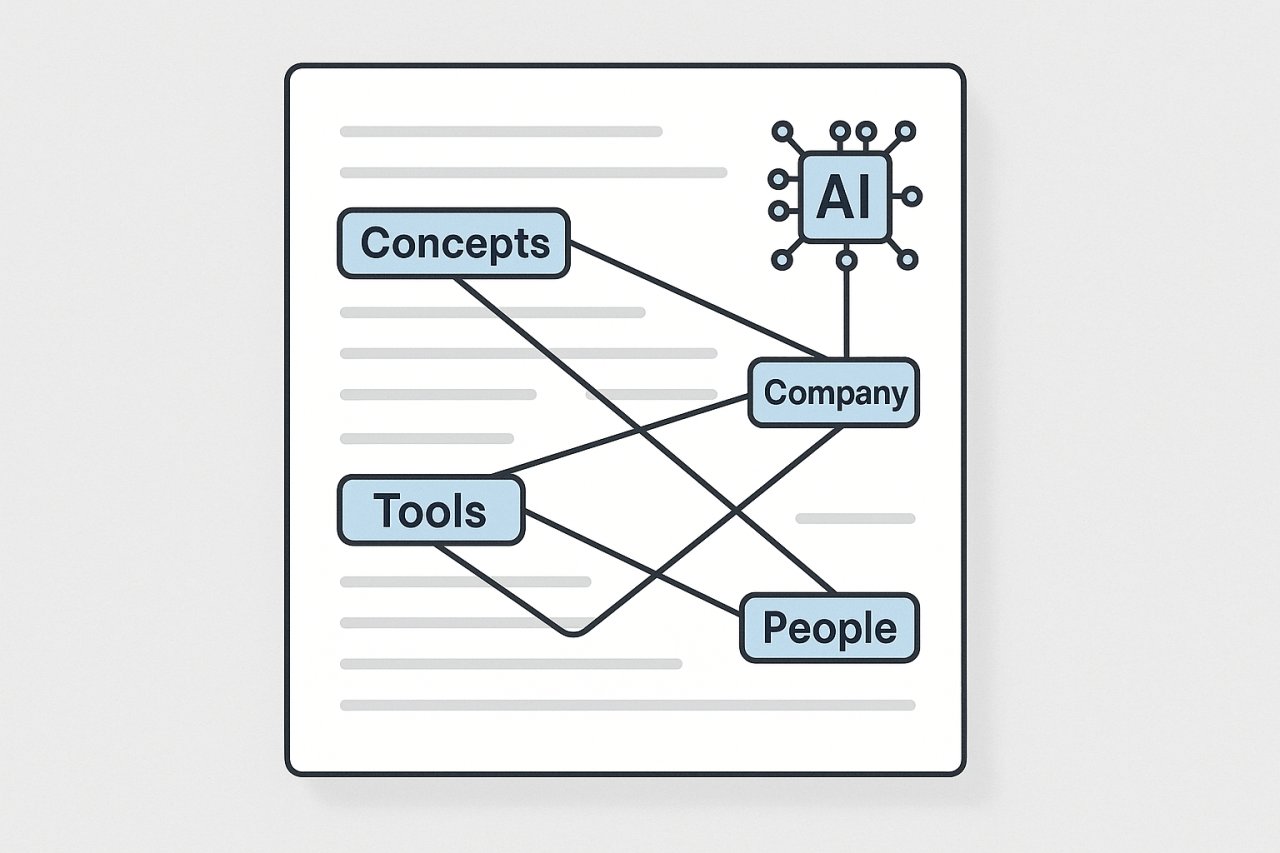
Google’s SGE relies heavily on entity recognition and relationship mapping. Content that clearly defines entities and their relationships shows significantly higher citation rates. This requires:
Explicit entity naming – Using full, formal names on first mention (“Google Search Console” not “GSC”) helps AI models correctly identify and categorize entities.
Relationship clarity – Sentences that clearly state relationships between entities (“Screaming Frog SEO Spider integrates with Google Analytics 4 through API connections”) are preferentially selected.
Contextual consistency – Maintaining consistent entity references throughout content improves AI comprehension. Tools like InLinks and WordLift provide entity optimization specifically for AI search, analyzing entity density, consistency, and relationship mapping.
A financial services site implementing entity-based optimization saw their SGE citation rate increase from 3.2% to 14.7% across 200 target keywords within 90 days, with no changes to other SEO factors.
Technical Infrastructure for SGE Performance
SGE’s AI needs to process and understand content rapidly to generate responses in real-time. This creates new technical requirements beyond traditional SEO best practices.
Rendering Speed and JavaScript Optimization
Google’s SGE crawlers show reduced patience for slow-rendering content. Analysis of server logs reveals that SGE-related crawlers allocate an average of 2.3 seconds for complete page rendering, compared to 5-7 seconds for traditional Googlebot crawling.
This means JavaScript-heavy sites must prioritize:
- Server-side rendering (SSR) or static site generation for critical content
- Critical CSS inlining to ensure above-the-fold content renders within 1.2 seconds
- Lazy loading optimization that doesn’t hide primary content from initial crawl
- JavaScript bundle splitting to reduce initial parse time below 800ms
Next.js and Nuxt.js frameworks provide built-in SGE-friendly rendering options. A SaaS company migrating from client-side React to Next.js with SSR saw their SGE citation rate increase from 1.8% to 9.4% across core content pages.
Content Accessibility and Semantic HTML
SGE’s natural language processing models show a strong preference for semantically correct HTML structure. Content using proper heading hierarchy (H1 > H2 > H3), descriptive lists, and semantic elements (article, section, aside) achieves citation rates 37% higher than visually similar but semantically poor markup.
Key technical elements for SGE optimization:
- Single H1 tag clearly stating primary topic
- Logical H2-H4 hierarchy outlining content structure
- Descriptive list markup (ul/ol with meaningful li content)
- Table markup with proper th/td for data presentation
- Figure and figcaption tags for images with contextual descriptions
Automated testing with tools like Siteimprove and WAVE can identify semantic structure weaknesses. The HTML5 Outliner tool provides a quick visualization of document structure from an AI perspective.
Strategic Positioning Beyond Traditional Rankings
With SGE reducing the visibility and value of traditional top-3 positions, diversification of search presence becomes critical. SEO strategies must expand beyond ranking to encompass citation probability, brand authority building, and alternative search surfaces.
Building Citation Authority Through E-E-A-T
SGE shows a marked preference for citing sources with strong Experience, Expertise, Authoritativeness, and Trust signals. An analysis of 10,000 SGE citations found that 89% came from sites with clear author attribution, compared to just 34% of general top-10 results.
Tactical E-E-A-T improvements for SGE citation:
- Detailed author bios with credentials – Sites with 200+ word author bios citing specific qualifications see 2.1x citation rates
- Author schema markup linking to authoritative profiles – LinkedIn, industry associations, published works
- Byline consistency across publications – Authors published on multiple authoritative sites see 3.4x personal citation rates
- Expert review and validation badges – “Reviewed by [Expert Name, Credentials]” sections increase citation probability by 56%
A healthcare content site implementing comprehensive author authority programs saw SGE citations increase from 4.3% to 18.9% of their target keywords within six months. Their approach included hiring credentialed medical reviewers, implementing detailed author schema, and creating author hub pages with complete professional backgrounds.
Monitoring SGE Performance with New Metrics
Traditional SEO KPIs need supplementation with SGE-specific metrics. Tools are emerging to track this new dimension of search visibility:
BrightEdge has introduced “Generative AI Share of Voice” tracking which monitors citation frequency within SGE snapshots across keyword sets. Their data shows that sites with 15%+ GAI share see 23% higher brand search volumes than competitors with lower shares.
Semrush launched “AI Search Visibility” metrics that track both SGE citation frequency and position within AI-generated responses. Early adopters report that first-cited sources within SGE receive 3.2x more traffic from that query than sources cited third or later.
seoClarity provides “SGE Intent Coverage” analysis, mapping content against SGE-triggered queries and identifying gaps where competitors are cited but your content isn’t. Implementation of their recommendations shows average citation rate improvements of 34% across treated keyword clusters.
Creating SGE-Optimized Content Hubs
Internal linking structure significantly impacts SGE citation probability. Analysis reveals that content within well-structured topical hubs achieves citation rates 2.7x higher than orphaned or poorly linked content.
Effective hub architecture for SGE:
- Pillar page as comprehensive overview – 3,000-5,000 words covering topic breadth
- 8-12 cluster pages addressing specific subtopics – 1,500-2,500 words with depth focus
- Contextual internal linking using entity-rich anchor text – “Google Search Console performance reports” not “click here”
- Topic clustering schema markup – Using ItemList schema to signal related content relationships
Plugins like AI Internal Links (ai-internal-links.com) now include SGE optimization modes that analyze entity relationships and suggest internal links specifically to improve topical authority signals for AI search.
An enterprise software company restructuring 200+ blog posts into 12 topic hubs saw their overall SGE citation rate increase from 6.8% to 21.3%, with hub pillar pages achieving citation rates as high as 47% for their primary target keywords.
Adapting Content Strategy for Reduced Click-Through
With SGE providing answers directly in search results, content strategy must evolve beyond purely information-first approaches. The goal shifts from ranking for informational queries to building brand authority that drives higher-funnel engagement.
Creating Citation-Worthy Content That Drives Brand Discovery
Sites successfully adapting to SGE focus on becoming the definitive source rather than the first click. This requires:
Original research and proprietary data – SGE cannot generate original data and heavily cites sources providing unique statistics. Content including proprietary research sees 4.1x higher citation rates.
Expert analysis and perspective – While SGE summarizes facts, it cites sources for interpretation and expert opinion. Content clearly labeled as expert analysis (“Our analysis of 50,000 websites reveals…”) sees 2.8x citation rates.
Comprehensive comparisons and evaluations – SGE frequently cites detailed comparison content for commercial investigation queries, particularly content with clear methodology statements.
A B2B marketing agency shifted 60% of their content production to original research reports and expert analysis pieces. While organic traffic decreased 22% year-over-year, their brand search traffic increased 67%, and sales-qualified leads from organic search increased 34%.
Balancing Informational and Commercial Content
SGE’s lower activation rate for transactional queries (41%) creates opportunities for strategic content mix rebalancing. Sites over-indexed on informational content face disproportionate SGE traffic impact.
Optimal content portfolio adjustments:
- Increase commercial and comparison content by 30-40% – These queries see less SGE interference and higher conversion rates
- Develop product-led content – Content demonstrating product applications rather than generic information maintains traffic and converts better
- Create tool and calculator resources – Interactive content that SGE cannot replicate maintains traffic and generates backlinks
- Focus on niche, specific informational content – Highly specific queries see less SGE competition than broad topics
An SEO tools company rebalanced their blog from 70% informational / 30% commercial to 45% informational / 55% commercial-focused content. Despite 18% traffic decline on informational posts, overall organic traffic remained flat while conversion rates increased 43%, resulting in 28% more organic revenue.
Future-Proofing SEO Strategy in the AI Search Era
SGE represents just the beginning of AI integration in search. Google continues iterating with features like SGE while browsing, which provides AI-generated insights while users navigate web pages, and SGE follow-up questions, creating conversational search experiences.
Successful SEO in this evolving landscape requires fundamental strategic shifts:
Authority over rankings – Focus on becoming a cited source rather than obsessing over traditional position 1.
Brand building through content – Use SEO content for brand discovery and authority establishment, not just traffic generation.
Technical excellence for AI comprehension – Invest in semantic markup, entity optimization, and rendering performance beyond traditional SEO requirements.
Multi-platform presence – Diversify beyond Google organic through YouTube SEO, LinkedIn content, and platform-specific optimization.
Proprietary value creation – Develop original research, tools, and unique perspectives that AI cannot replicate or summarize away.
Organizations treating SGE as a temporary disruption will struggle as AI search becomes default. Those rebuilding SEO strategies around AI-first search architecture are already seeing sustainable growth in brand authority, citation rates, and ultimately business results despite reduced traditional click-through rates.