

Recent studies from Ahrefs analyzing over 900 million web pages revealed that websites with robust internal linking structures rank significantly higher than those with sparse connections. Sites in the top 10 search results typically have 3-4 times more internal links pointing to their ranking pages compared to sites ranking 11-20. This data underscores a critical truth: how you connect your content internally matters just as much as the quality of individual pages.
The Foundation of Effective Internal Linking Architecture
Building a strong internal linking structure starts with understanding your site hierarchy and content relationships. The most successful websites organize content in logical clusters where pillar pages serve as comprehensive resources on broad topics, supported by cluster content covering specific subtopics in depth.
Your homepage typically holds the highest PageRank authority on your site. From there, link equity flows through your main navigation to category pages, then cascades down to individual articles and posts. This hierarchical flow means strategic internal links can push authority toward pages you want to rank most.
Identifying Your Pillar Content
Start by auditing your existing content to identify or create pillar pages. These comprehensive guides should target high-volume keywords and provide extensive coverage of core topics in your niche. For an ecommerce site selling outdoor gear, pillar pages might cover “Complete Guide to Hiking Gear” or “Camping Equipment Essentials.” Each pillar then connects to dozens of supporting articles about specific products, techniques, or considerations.
Use tools like Screaming Frog to crawl your site and identify pages with high existing link equity but poor internal linking. These pages represent opportunities—they already have authority but aren’t distributing it effectively. Similarly, identify important pages with low internal link counts that deserve more visibility.
Creating Content Clusters That Search Engines Understand
Google’s algorithm increasingly focuses on topical authority and semantic relationships between content. Organizing your site into clear topic clusters signals expertise in specific areas. A content cluster consists of one pillar page linking to 10-20 cluster pages, with all cluster pages linking back to the pillar and occasionally to each other when relevant.
This structure creates a semantic cocoon that helps search engines understand the depth of your coverage. When HubSpot implemented this strategy across their blog, they saw organic traffic increase by over 40% within six months, with many cluster pages breaking into top 5 positions for competitive terms.
Strategic Link Placement for Maximum Impact
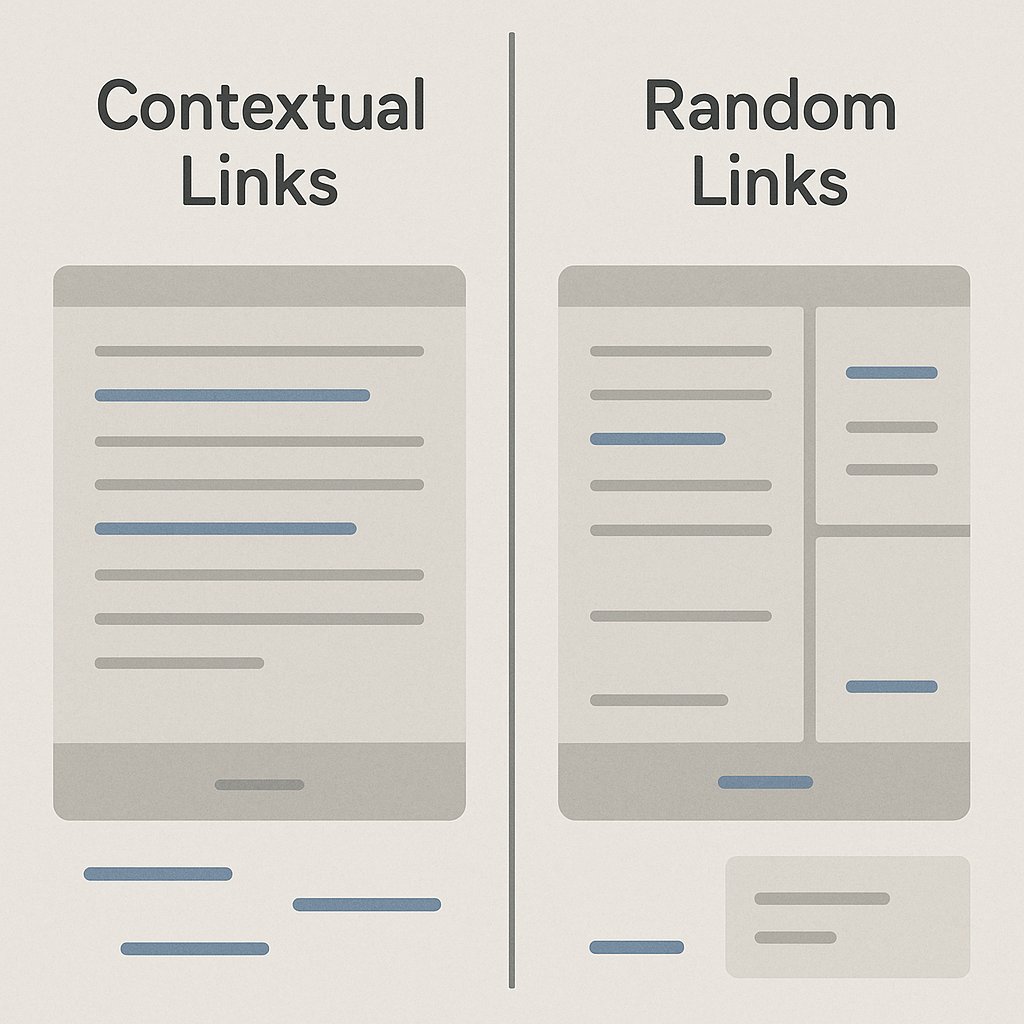
Not all internal links carry equal weight. Contextual links within content pass significantly more value than footer links or sidebar widgets. Research from Moz indicates that links appearing in the main content area, particularly in the first 1000 words, carry the strongest signals for both users and search engines.
The ideal internal linking strategy balances three objectives: distributing PageRank, guiding user journeys, and establishing topical relationships. Every internal link should serve at least one of these purposes, preferably all three.
The Power of Contextual Relevance
Google’s patents on “reasonable surfer model” suggest that search engines evaluate not just that a link exists, but whether users are likely to click it. Links that make logical sense within content context carry more weight than randomly inserted links. When writing about “keyword research tools,” linking to your guide on “long-tail keyword strategies” is naturally relevant, while linking to “social media marketing tips” feels forced.
Aim to include 2-5 contextual internal links in every piece of content you publish. These should point to related articles that provide additional depth, supporting evidence, or complementary perspectives. The links should enhance reader understanding rather than distract from the current topic.
Avoiding Common Link Placement Mistakes
Many websites make critical errors in where they place internal links. Dumping dozens of links in a “Related Posts” widget at the bottom of articles provides minimal value because few users scroll that far, and the contextual relevance is weak. Similarly, linking the same phrases repeatedly (like “click here” or “read more”) wastes opportunities to use descriptive anchor text.
Another frequent mistake involves creating one-way link flows where new content links to old articles, but old articles never get updated to link to new content. This creates dead-ends in your link structure where valuable new content remains isolated. Backlinko found that updating old posts with links to new relevant content increased the ranking positions of new articles by an average of 12 positions within 30 days.
Mastering Anchor Text Optimization
The clickable text of your internal links—the anchor text—provides crucial context signals to search engines. Unlike external link building where over-optimization can trigger penalties, internal linking offers more flexibility with exact-match and partial-match anchor text.
Balancing Exact Match and Natural Variations
While you can use exact-match keywords more liberally internally, the best practice involves natural variation that mirrors how users actually search and speak. If your target page focuses on “WordPress SEO plugins,” use a mix of anchors like “best WordPress SEO tools,” “SEO plugins for WordPress,” “WordPress optimization plugins,” and occasionally the exact phrase.
A study analyzing 50,000 top-ranking pages found that sites using diverse anchor text variations in internal links had better rankings than those using repetitive exact-match phrases. The sweet spot appears to be using your primary keyword in approximately 30-40% of internal links pointing to a given page, with variations and related terms making up the remainder.
Descriptive Anchors That Add Value
Avoid generic anchor text like “click here,” “this article,” or “read more.” These phrases provide zero context about the linked page. Instead, use descriptive phrases that tell users and search engines exactly what they’ll find. Compare “Learn more about link building” versus “discover white-hat link building strategies that avoid penalties”—the latter sets clear expectations and includes relevant semantic terms.
Long-form anchor text (5-8 words) often performs better than short 1-2 word anchors because it provides more context. Just ensure the full phrase reads naturally within your sentence structure.
Leveraging Automation Without Losing Quality
Manually managing internal links across hundreds or thousands of pages becomes impractical as sites grow. This is where intelligent automation tools provide immense value. Plugins like AI Internal Links (ai-internal-links.com) analyze your content to generate contextually relevant internal links automatically, saving hours of manual work while maintaining quality.
These tools use natural language processing to understand semantic relationships between pages, suggesting link opportunities that human editors might miss. For large content libraries, automation ensures new articles get properly integrated into your existing link structure immediately upon publication.
Combining Automation with Manual Oversight
The most effective approach blends automated suggestions with human judgment. Use tools to identify linking opportunities and generate initial recommendations, then review and refine based on strategic priorities. You might manually add links to pages you’re specifically trying to rank, or remove suggested links that don’t align with user intent.
Yoast SEO and Rank Math both offer internal linking suggestions based on keyword matching and previously linked phrases. While helpful, these automated suggestions should be viewed as starting points rather than final solutions. Always prioritize user experience and natural reading flow over inserting maximum possible links.
Measuring Internal Linking Performance
Like any SEO strategy, internal linking requires measurement and iteration. Several metrics help evaluate whether your internal link structure is working effectively.
Analyzing Click-Through Rates and User Flow
Google Analytics shows which internal links users actually click, revealing whether your link placement and anchor text resonate with readers. Look at the Behavior Flow report to understand how users navigate between pages. High bounce rates on pages with multiple internal links suggest your link relevance or placement needs improvement.
Pages with strong internal links should show higher engagement metrics—longer time on page, more pages per session, and lower bounce rates. If internal links aren’t moving users deeper into your site, they’re not serving their purpose regardless of SEO benefits.
Tracking Rankings of Linked Pages
Monitor ranking changes for pages where you’ve adjusted internal linking. Use tools like SEMrush Position Tracking or Ahrefs Rank Tracker to observe whether pages receiving increased internal links show ranking improvements. Typically, you’ll see movement within 2-4 weeks for pages with existing authority, though competitive keywords may take longer.
Pay particular attention to pages ranking on page 2 or bottom of page 1. These pages are close to breaking into top positions and often respond well to targeted internal link campaigns. A case study from Siege Media showed that adding 5-8 high-quality internal links to near-ranking pages pushed 73% of them into top 5 positions within 60 days.
Advanced Internal Linking Strategies
Once you’ve mastered the fundamentals, several advanced techniques can further optimize your internal link structure for competitive advantages.
Strategic Orphan Page Recovery
Orphan pages—those with no internal links pointing to them—represent wasted content investment. Use Screaming Frog or Sitebulb to identify orphaned pages, then strategically add contextual links from relevant existing content. Prioritize orphan pages with existing external backlinks or organic traffic, as these already have some authority worth distributing.
Hub Page Link Concentration
Identify your most important commercial pages or content you want to rank highest. Create a deliberate strategy to ensure these pages receive significantly more internal links than average content. Your hub pages should have 2-3x more internal links than typical articles, signaling their importance to search engines.
This doesn’t mean stuffing hundreds of links—it means being intentional about linking to hub pages whenever they’re genuinely relevant. Brian Dean found that his most comprehensive guides, which received the most internal links, consistently ranked in top 3 positions for highly competitive terms.
Seasonal Link Velocity Adjustments
For businesses with seasonal products or services, adjust internal linking to match search demand cycles. In the months leading up to peak season, increase internal links to seasonal content to boost its visibility when search volume rises. This gives those pages time to accumulate link equity and improve rankings before your critical sales period.
Maintaining Link Health Over Time
Internal linking isn’t a one-time project but an ongoing maintenance task. As your site grows and evolves, your link structure requires regular attention.
Regular Link Audits and Updates
Schedule quarterly audits to identify and fix broken internal links, update outdated anchor text, and ensure new content integrates properly. Broken internal links create poor user experience and waste link equity. Tools like Ahrefs Site Audit automatically flag broken links and redirect chains that need attention.
When you update or consolidate content, implement proper 301 redirects and update internal links pointing to old URLs. While redirects preserve link equity, direct links to current URLs are always preferable for optimal performance.
Evolving Structure as Content Grows
Your internal linking strategy should mature alongside your content library. What works for 50 blog posts won’t scale to 500. As you publish more content, create new pillar pages to organize growing topic clusters, and establish clear hierarchical relationships that keep your structure navigable.
Sites that implement systematic internal linking strategies report average organic traffic increases of 40-100% within six months, with some competitive niches seeing even larger improvements. The key is consistency—making internal linking a standard part of your content creation process rather than an occasional cleanup project.