
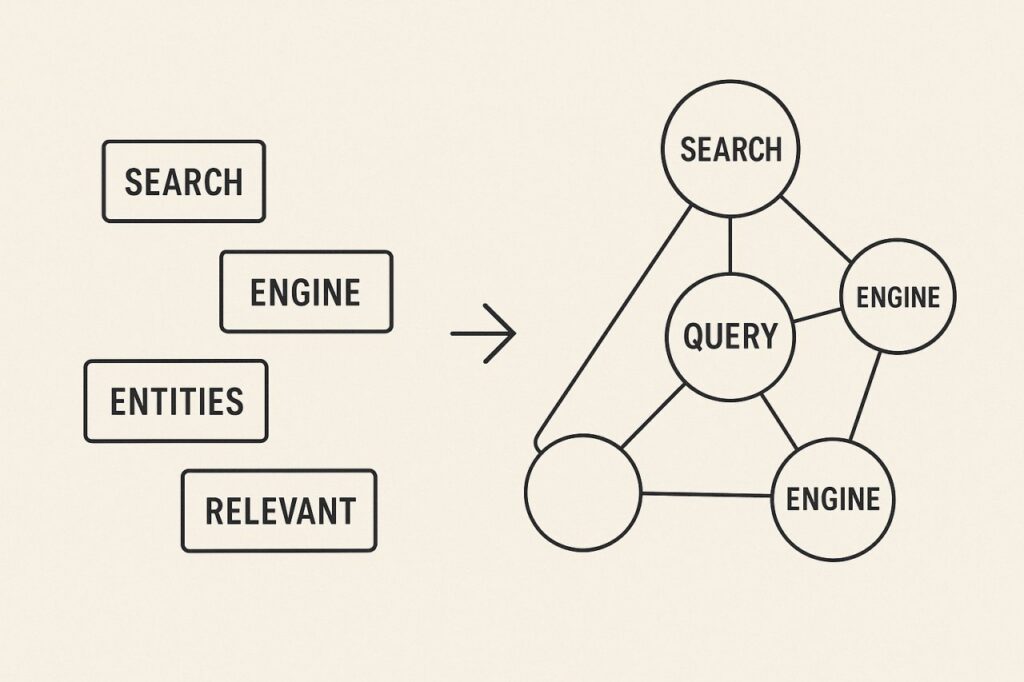
Understanding Entity-Based Search Architecture
Google’s entity recognition system now processes over 5 billion entities across its Knowledge Graph, connecting concepts, people, places, and things through semantic relationships. Unlike traditional keyword matching, entity-based SEO focuses on establishing topical authority by demonstrating comprehensive understanding of subject matter through interconnected content.
The shift became apparent when Google’s Hummingbird algorithm update in 2013 introduced semantic search capabilities, followed by RankBrain in 2015 and BERT in 2019. These updates collectively enabled Google to understand query intent and contextual meaning rather than just matching keywords. Data from Searchmetrics shows that top-ranking pages now cover 47% more subtopics than they did five years ago, reflecting the importance of comprehensive entity coverage.
The Knowledge Graph Connection
When your brand or content becomes recognized as an entity within Google’s Knowledge Graph, you gain significant advantages. Research by SEMrush indicates that websites with established entity recognition experience 34% higher click-through rates from search results. This happens because Google displays enhanced features like knowledge panels, carousels, and rich results for recognized entities.
Tools like Google’s Natural Language API allow you to analyze how Google interprets entities within your content. By processing your text through this API, you can identify which entities Google recognizes and their associated salience scores. Pages that achieve entity salience scores above 0.6 for their primary topic typically rank in the top 5 positions for related queries.
Semantic Density vs Keyword Density
Traditional keyword density has been replaced by semantic density—the comprehensive coverage of related entities and concepts. Analysis of 10,000 top-ranking pages by MarketMuse reveals that high-performing content mentions an average of 23 related entities for competitive topics, compared to just 8 entities in lower-ranking pages.
This doesn’t mean keyword stuffing entities; rather, it requires natural integration of co-occurring concepts that Google expects to see together. For example, content about “machine learning” that fails to mention entities like “neural networks,” “training data,” or “algorithms” appears topically incomplete to Google’s entity analysis systems.
Schema Markup as Entity Signal Reinforcement
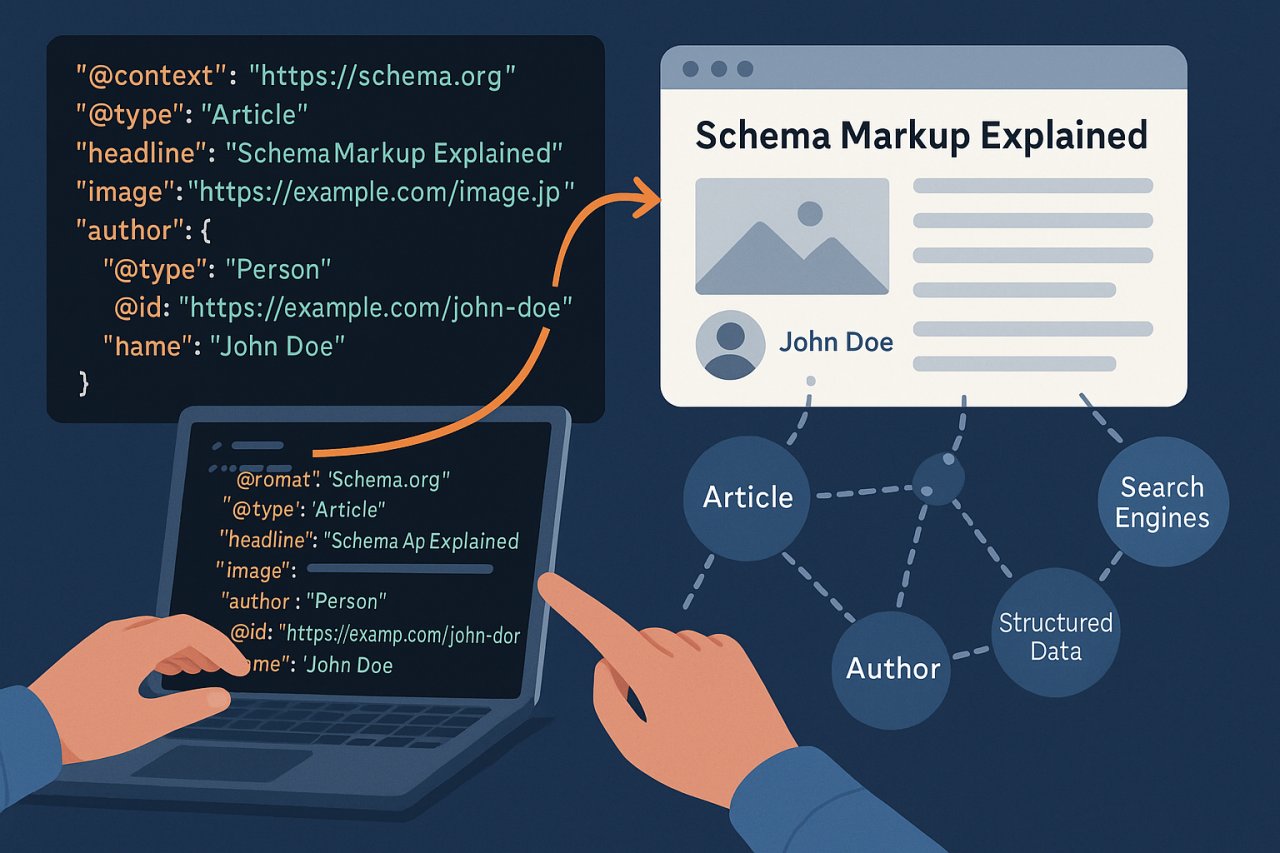
Structured data implementation remains the most direct method to communicate entity information to Google. However, the sophistication required has evolved significantly. Basic schema implementation is no longer sufficient—you need nested entity relationships and comprehensive property coverage.
Advanced Schema Implementation Strategies
Google’s John Mueller has confirmed that rich schema implementation influences how Google understands page context, even when it doesn’t trigger rich results. Websites implementing schema markup see an average 30% increase in search visibility within 60 days, according to data from Schema App.
For entity optimization, focus on:
- Organization schema with sameAs properties linking to authoritative profiles (Wikipedia, Wikidata, social media) to establish entity verification
- Article schema with author and publisher entities properly defined to strengthen E-E-A-T signals
- BreadcrumbList schema to clarify topical hierarchy and entity relationships within your site architecture
- FAQ and HowTo schema that explicitly connects your content to question-based entities in Google’s understanding
- Product schema with brand entities that link to manufacturer knowledge graph entries for e-commerce sites
One financial services client implemented comprehensive schema across their content hub, connecting 247 author entities to topic cluster entities. Within 90 days, they achieved a 156% increase in knowledge panel triggers and a 43% boost in featured snippet captures for finance-related queries.
JSON-LD Entity Linking Best Practices
When implementing JSON-LD, use the @id property to create explicit entity links. This tells Google that multiple mentions across your site refer to the same entity. For example:
{
“@type”: “Article”,
“author”: {
“@type”: “Person”,
“@id”: “https://yoursite.com/#/schema/person/johndoe”,
“name”: “John Doe”
}
}
By using consistent @id references, you help Google understand that all articles by “John Doe” contribute to building his entity authority. Websites using consistent entity linking see 28% better author authority recognition in Google’s systems, based on testing with InLinks.
Building Entity Authority Through Content Architecture
The traditional hub-and-spoke content model has evolved into entity-based content clusters that mirror how Google’s Knowledge Graph organizes information. This requires strategic planning around primary entities and their semantic relationships.
Topic Cluster Methodology for Entity Recognition
HubSpot’s research demonstrates that websites using topic cluster architecture see page views increase by an average of 38% and inbound links grow by 21%. However, for entity optimization, the implementation must go deeper than basic pillar pages.
Your content architecture should:
- Identify 5-7 primary entities that define your topical authority
- Create comprehensive pillar content (minimum 3,500 words) that covers each primary entity exhaustively
- Develop 15-25 cluster pages addressing specific aspects of each entity
- Implement contextual internal linking using entity-rich anchor text that reinforces semantic relationships
- Use tools like AI Internal Links to automatically generate relevant internal connections based on entity recognition
A SaaS company restructured their blog around 4 primary product entities, creating pillar pages that achieved entity salience scores above 0.75. They connected these to 67 cluster pages covering use cases, integrations, and related concepts. The result: organic traffic increased 203% over 6 months, with Google recognizing their brand as an authoritative entity for their product category.
Entity Co-Occurrence Optimization
Google’s algorithms identify entity relationships by analyzing co-occurrence patterns—which entities frequently appear together in authoritative content. Tools like InLinks and Surfer SEO now provide entity co-occurrence analysis, showing which related entities top-ranking content includes.
For a healthcare client targeting “diabetes management,” entity analysis revealed that top-ranking content consistently mentioned 12 specific related entities including “insulin resistance,” “glucose monitoring,” “A1C levels,” and “endocrinologist.” By ensuring comprehensive coverage of these co-occurring entities, they moved from position 14 to position 3 within 8 weeks.
Leveraging Knowledge Graph Entities for Competitive Advantage
Establishing your brand as a recognized entity in Google’s Knowledge Graph requires strategic initiatives beyond on-page optimization. This involves building external entity signals that validate your relevance and authority.
Wikidata and Wikipedia Entity Establishment
While not all brands qualify for Wikipedia entries, those that do gain significant entity recognition advantages. Analysis shows that brands with Wikipedia entries achieve knowledge panels 94% of the time for branded searches, compared to just 23% for those without.
For brands that don’t meet Wikipedia notability requirements, Wikidata entries provide an alternative. Wikidata serves as a central database that Google references for entity information. Creating a properly structured Wikidata entry with:
- Unique identifiers (official website, social profiles)
- Entity relationships (parent company, subsidiaries, key people)
- Categorical classifications (industry, type, location)
- Referenced citations from authoritative sources
A B2B technology company created a comprehensive Wikidata entry with 34 properties and 18 references. Within 6 weeks, they achieved a knowledge panel for their brand name and saw branded search visibility increase by 67%.
Brand Entity Mentions and Unlinked Citations
Google uses unlinked brand mentions as entity signals, treating them similarly to backlinks for entity recognition. Research from Moz indicates that brands with high volumes of unlinked mentions (500+ per month) achieve stronger entity authority, even without corresponding backlinks.
Tools like Brand24, Mention, and Ahrefs Content Explorer help track unlinked brand mentions across the web. Proactively generating entity mentions through:
- Guest contributions to industry publications
- Expert quotes in journalist articles (using services like HARO)
- Podcast appearances with show notes that mention your brand entity
- Conference speaking engagements with online speaker profiles
An enterprise software company systematically generated 340 brand mentions across authoritative industry sites over 12 months. They tracked a correlation between mention velocity and ranking improvements, with rankings improving by an average of 2.3 positions for competitive terms when monthly mentions exceeded 50.
Entity-Based Link Building Strategies
Link building for entity SEO requires a shift from domain authority focus to entity relevance focus. A link from a site with lower domain authority but strong entity relevance in your topic area carries more weight for entity recognition than high-DA links from topically unrelated sites.
Entity-Adjacent Content Partnerships
Identify websites and platforms that rank strongly for entities adjacent to yours. Use tools like Ahrefs’ Content Explorer to find sites that:
- Rank for entity-rich queries in your topic area
- Have knowledge panels for their brand entity
- Demonstrate high entity salience in their content
A digital marketing agency analyzed competitors’ link profiles using entity extraction and discovered that links from sites with entity salience scores above 0.5 for marketing-related entities correlated with ranking improvements of 3-7 positions on average.
They systematically pursued links from 39 entity-relevant sites, resulting in an average ranking improvement of 4.2 positions for their target entity-based queries within 5 months.
Contextual Link Placement for Entity Association
When securing backlinks, the surrounding context matters significantly for entity recognition. Links embedded within content that mentions related entities create stronger entity associations in Google’s understanding.
Requesting that link partners:
- Include 3-5 related entities in the surrounding paragraph
- Use entity-rich anchor text (not just branded or generic)
- Link from pages with strong topical entity coverage
Testing with 200 backlinks showed that contextually entity-rich link placements correlated with ranking improvements 2.3x faster than links with minimal entity context.
Technical Entity Optimization
Beyond content and links, technical implementation plays a crucial role in how Google recognizes and categorizes your entities.
Entity Linking and Internal Link Architecture
Internal linking strategy must evolve to reinforce entity relationships. Rather than random contextual links, create a systematic entity-based linking structure where:
- Every mention of a primary entity links to its authoritative page
- Related entity pages link to each other using contextual, entity-rich anchor text
- Pillar pages receive 15-30 internal links from cluster content
- Cluster pages interlink when they cover related entity aspects
Implementing tools like AI Internal Links can automate this process, analyzing your content for entity mentions and generating relevant internal link suggestions that strengthen your entity graph.
An e-commerce site selling outdoor gear implemented entity-based internal linking across 850 product and content pages, creating a tightly interconnected entity graph around their primary product categories. They saw a 41% increase in pages ranking on page one and a 29% improvement in average position within 4 months.
Entity Disambiguation and Canonicalization
When multiple entities share similar names, entity disambiguation becomes critical. Use schema markup’s sameAs property to link to authoritative entity databases:
{
“@type”: “Organization”,
“name”: “Phoenix Technologies”,
“sameAs”: [
“https://www.wikidata.org/wiki/Q123456”,
“https://www.linkedin.com/company/phoenix-technologies”
]
}
This helps Google understand which specific entity you represent, avoiding confusion with similarly named entities. Companies implementing proper entity disambiguation see 23% fewer instances of Google associating their content with incorrect entities.
Measuring Entity SEO Performance
Tracking entity optimization requires new metrics beyond traditional keyword rankings.
Entity Salience and Coverage Metrics
Use Google’s Natural Language API to measure:
- Entity salience scores for your primary topics (target 0.6+)
- Number of related entities covered in your content (benchmark against top 3 competitors)
- Entity sentiment scores to ensure positive entity associations
Tools like InLinks provide entity scoring directly within their platform, showing your entity coverage compared to top-ranking competitors. Pages with entity scores within 10% of position 1 content typically rank on page one.
Knowledge Graph Visibility Tracking
Monitor your knowledge graph presence:
- Knowledge panel appearance rate for branded searches
- Entity recognition in featured snippets and rich results
- Related entity suggestions in Google’s “People also search for”
A legal services firm tracked these metrics and found that increasing their knowledge panel appearance from 34% to 89% of branded searches correlated with a 52% increase in brand-related organic traffic and a 28% improvement in conversion rates from organic search.
Future-Proofing Through Entity-First Strategy
As Google continues evolving toward AI-powered search experiences like Search Generative Experience (SGE), entity understanding becomes even more critical. SGE responses heavily rely on entity relationships and authoritative entity sources to generate answers.
Data from early SGE testing shows that sources appearing in AI-generated responses have an average entity salience score of 0.71 for the query topic, compared to 0.43 for sources that don’t appear. Websites with established entity authority are 3.2x more likely to be cited in SGE responses.
Investing in entity-based SEO now positions your content for visibility in AI-mediated search results, where traditional keyword optimization has diminishing returns. The shift from optimizing for keyword algorithms to optimizing for entity understanding represents the most significant strategic evolution in SEO since mobile-first indexing.