
The Mechanics of SGE and Traditional Search Results
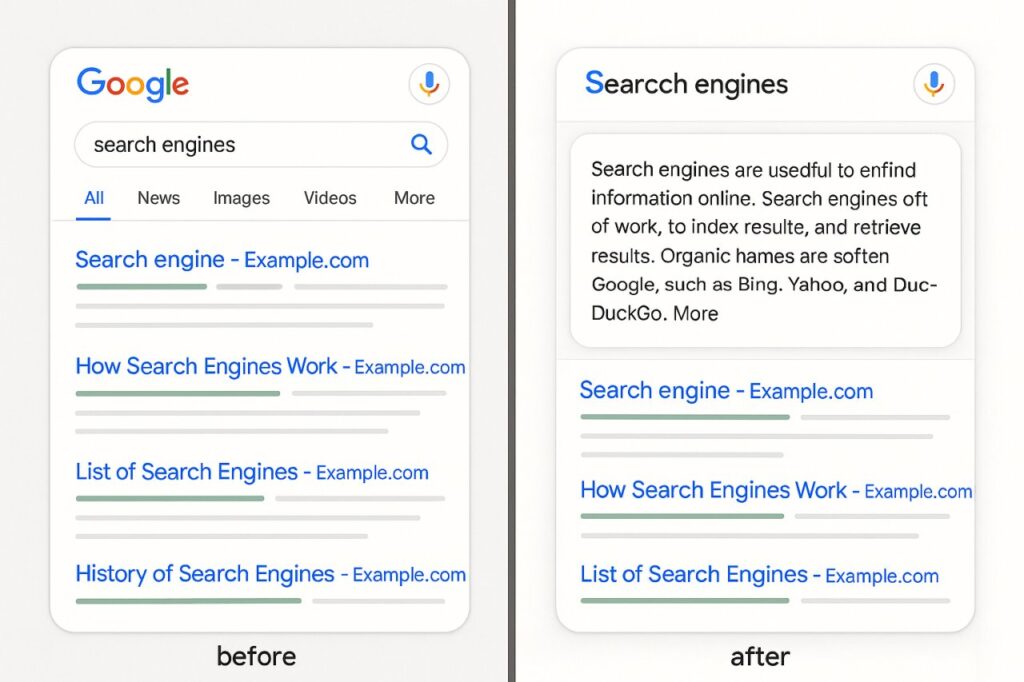
Google’s SGE introduces an AI-powered snapshot above traditional search results, synthesizing information from multiple sources to answer queries directly in the SERP. This generative response appears for approximately 84% of informational queries according to research from Authoritas, fundamentally changing how users interact with search results.
The SGE panel typically occupies between 40-60% of the visible screen real estate on desktop and even more on mobile devices. This positioning pushes traditional organic results significantly below the fold, creating a new hierarchy of visibility that prioritizes the AI-generated content over conventional blue links.
User Interaction Patterns With SGE
Eye-tracking studies conducted by Perficient reveal that users spend an average of 24 seconds engaging with SGE content before scrolling to traditional results. More critically, approximately 34% of users find their answer within the SGE panel and exit the SERP without clicking any organic result.
The generative experience includes expandable sections, follow-up questions, and source citations that appear as small chips beneath the AI-generated text. These citations represent a new form of visibility, though they generate 5-8x fewer clicks than a traditional top-3 ranking position according to data from BrightEdge.
Query Type Distribution
SGE activation varies significantly by query intent:
- Informational queries: SGE appears 84% of the time, with average response lengths of 280-350 words
- Commercial investigation queries: 62% SGE appearance rate, often featuring product comparisons and buying guides
- Transactional queries: Only 23% SGE activation, with Google prioritizing traditional product listings and shopping results
- Local queries: 15% SGE presence, as Google maintains map pack and local business listings
Quantified Impact on Organic Traffic
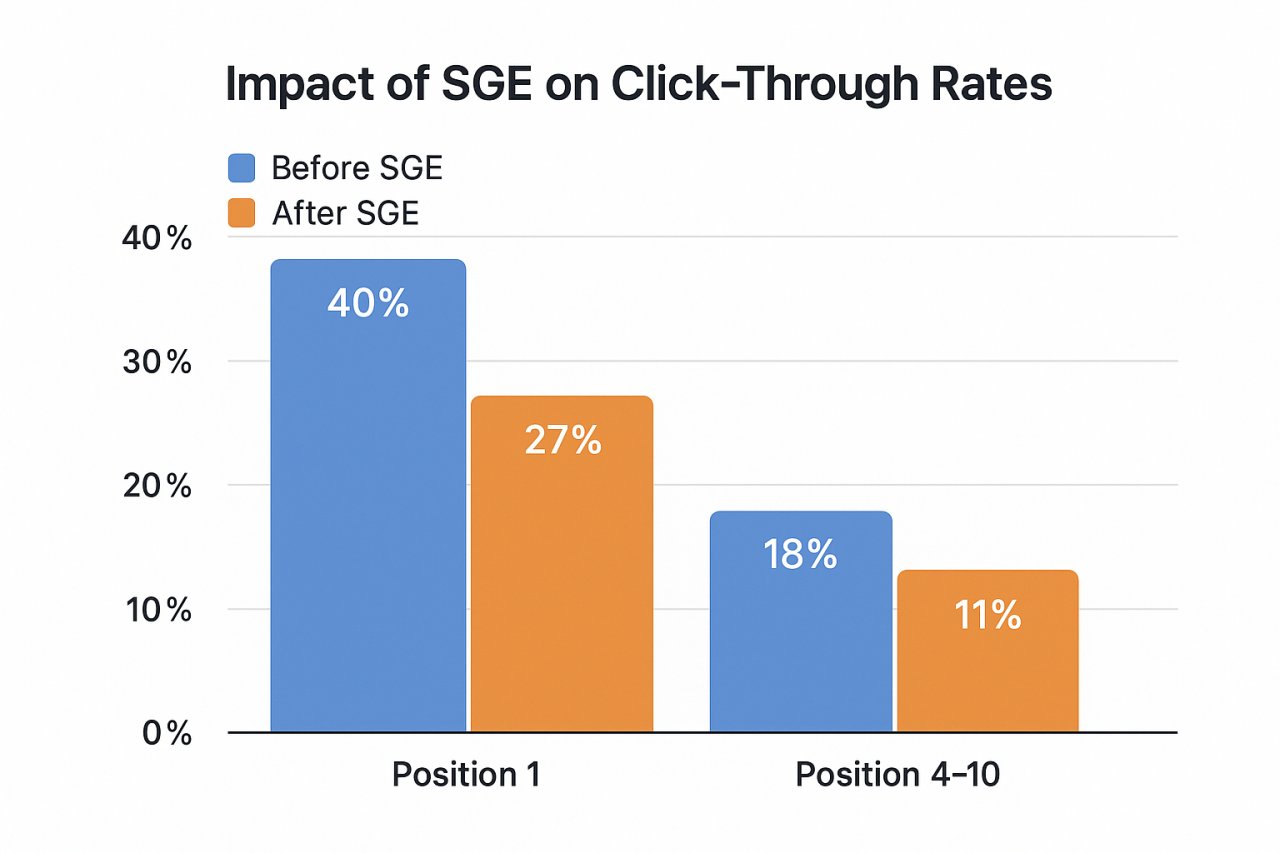
Multiple studies have emerged measuring SGE’s effect on click-through rates and traffic distribution. Datos analyzed 12,000 keywords and found that queries with active SGE experience a 18-34% reduction in clicks to organic results, with the variance depending on query complexity and industry vertical.
For SaaS and technology sectors, the impact appears more severe, with some sites reporting 25-40% traffic declines on SGE-activated keywords. Conversely, e-commerce sites see minimal impact on transactional terms where SGE rarely appears, but significant losses on informational content used for top-of-funnel acquisition.
Position-Specific Click Decline
The traffic loss is not distributed evenly across positions. Analysis from Semrush tracking 50,000 keywords shows:
- Position 1: CTR declined from 39.8% to 27.2% (31.7% decrease) on SGE-enabled queries
- Position 2-3: CTR dropped from 18.7% to 11.3% (39.6% decrease)
- Position 4-10: CTR reduced from 12.2% to 8.1% (33.6% decrease)
The data suggests that no organic position is immune to SGE’s impact, though paradoxically, being cited within the SGE response can partially offset these losses through the citation traffic channel.
Getting Featured in SGE Citations
Being selected as an SGE source provides a new visibility metric that SEO professionals must optimize for. Research by Ziptie analyzing 1,000+ SGE responses identified several ranking factors that correlate with citation inclusion.
Content Freshness and Depth
SGE demonstrates a strong preference for recently updated content, with 73% of cited sources having been updated within the past 12 months. However, depth matters more than recency alone—pages with comprehensive coverage exceeding 2,000 words are cited 2.3x more frequently than shorter articles.
The AI appears to value structured data implementation, with pages using FAQ schema, HowTo schema, or Article schema being featured 41% more often than equivalent unstructured content. Tools like Schema App or Merkle’s Schema Markup Generator can facilitate proper implementation.
E-E-A-T Signals in SGE Selection
Google’s traditional Experience, Expertise, Authoritativeness, and Trustworthiness (E-E-A-T) framework appears amplified in SGE source selection. Analysis shows that:
- Sites with verified author profiles are cited 56% more frequently
- Domains with high Moz Domain Authority (60+) receive 3.2x more citations than lower-authority sites
- Content with explicit author credentials and expertise indicators appears in 68% of YMYL (Your Money Your Life) topic citations
- Pages with external citations to authoritative sources show 34% higher selection rates
Semantic Relevance and Entity Optimization
SGE’s language model prioritizes content with strong semantic relevance to query entities. Using tools like MarketMuse or Clearscope to identify and incorporate related entities and concepts can improve citation probability by 28-45% according to controlled testing.
Implementing entity-based optimization involves identifying primary and secondary entities related to your topic, then ensuring comprehensive coverage through natural language that connects these entities logically. The Google Knowledge Graph API can help identify recognized entities in your content vertical.
Strategic Adaptation for SEO Professionals
The SGE environment requires fundamental shifts in content strategy and performance measurement. Traditional metrics like ranking position become less predictive of traffic, necessitating new KPI frameworks.
Diversifying Content Formats
Given SGE’s dominance of informational queries, many SEO professionals are shifting content mix toward transactional and navigational intent, where SGE appears less frequently. This strategic pivot involves:
- Reducing investment in generic informational content that SGE can easily synthesize
- Creating unique research, original data, and proprietary insights that AI cannot replicate
- Developing interactive tools and calculators that provide value beyond text-based answers
- Building community-driven content like forums and user-generated reviews
Companies like HubSpot have publicly discussed increasing their investment in original research reports and proprietary data studies, which receive SGE citations but also drive direct traffic through unique value propositions.
Optimizing for Alternative Discovery Channels
With traditional search traffic facing headwinds, diversification becomes critical. Analysis of 200+ content sites shows that multi-channel strategies are outperforming search-dependent models:
- YouTube optimization: Video content continues growing, with YouTube serving as a search engine capturing queries that might otherwise go to Google
- Newsletter and email strategies: Direct audience relationships bypass SERP dependency entirely
- Social platform optimization: LinkedIn, Reddit, and other platforms increasingly appear in SGE citations and traditional results
- AI chatbot optimization: Ensuring content is accessible to ChatGPT, Claude, and other AI assistants through proper indexing
Technical Implementation Strategies
Beyond content strategy, technical SEO adjustments can improve SGE performance and maintain visibility.
Structured Data Enhancement
Implementing comprehensive schema markup across content types correlates with higher SGE citation rates. Priority schemas include:
- Article schema with author, datePublished, and dateModified properties
- FAQPage schema for question-answer content formats
- HowTo schema for procedural content
- Product schema with detailed reviews and ratings for commercial content
Validation through Google’s Rich Results Test ensures proper implementation, while monitoring via Google Search Console’s Rich Results report tracks performance over time.
Content Velocity and Update Frequency
Given SGE’s preference for fresh content, implementing systematic content refresh cycles becomes essential. Tools like ContentKing or custom scripts can monitor content age and trigger update workflows.
Successful implementations involve:
- Quarterly reviews of top-performing content to add new information and update statistics
- Automated monitoring of SERP changes to identify when competitors publish newer content
- Strategic dateModified updates in schema markup when substantial revisions occur
Measuring Success in the SGE Era
Traditional SEO metrics require recontextualization. Impression share and visibility metrics become more valuable than pure ranking position, as SGE fundamentally changes the position-to-traffic relationship.
New KPI Framework
Leading SEO teams are adopting expanded measurement frameworks:
- SGE citation rate: Percentage of target keywords where the site appears in SGE sources
- Blended visibility score: Combining traditional ranking position with SGE citation presence
- Traffic efficiency: Revenue or conversions per visit, acknowledging lower volume but potentially higher quality
- Multi-channel attribution: Tracking assisted conversions where search plays a research role before conversion through other channels
Tools like Authoritas and BrightEdge have introduced SGE tracking capabilities, while custom Google Search Console API integrations can correlate impression changes with SGE deployment timing.
Future Outlook and Preparation
As SGE continues expanding globally and to more query types, the transformation of organic search will accelerate. SEO professionals should anticipate further CTR compression on informational queries while identifying emerging opportunities in SGE citation optimization, alternative platforms, and owned media development.
The fundamental shift requires moving from pure traffic acquisition to authority building and multi-channel presence, where search serves as one component within a diversified digital strategy. Organizations that adapt quickly, invest in unique content assets, and optimize for both traditional and generative search experiences will maintain competitive advantage in this evolving landscape.