
Why Topic Clusters Are Essential for Modern WordPress SEO
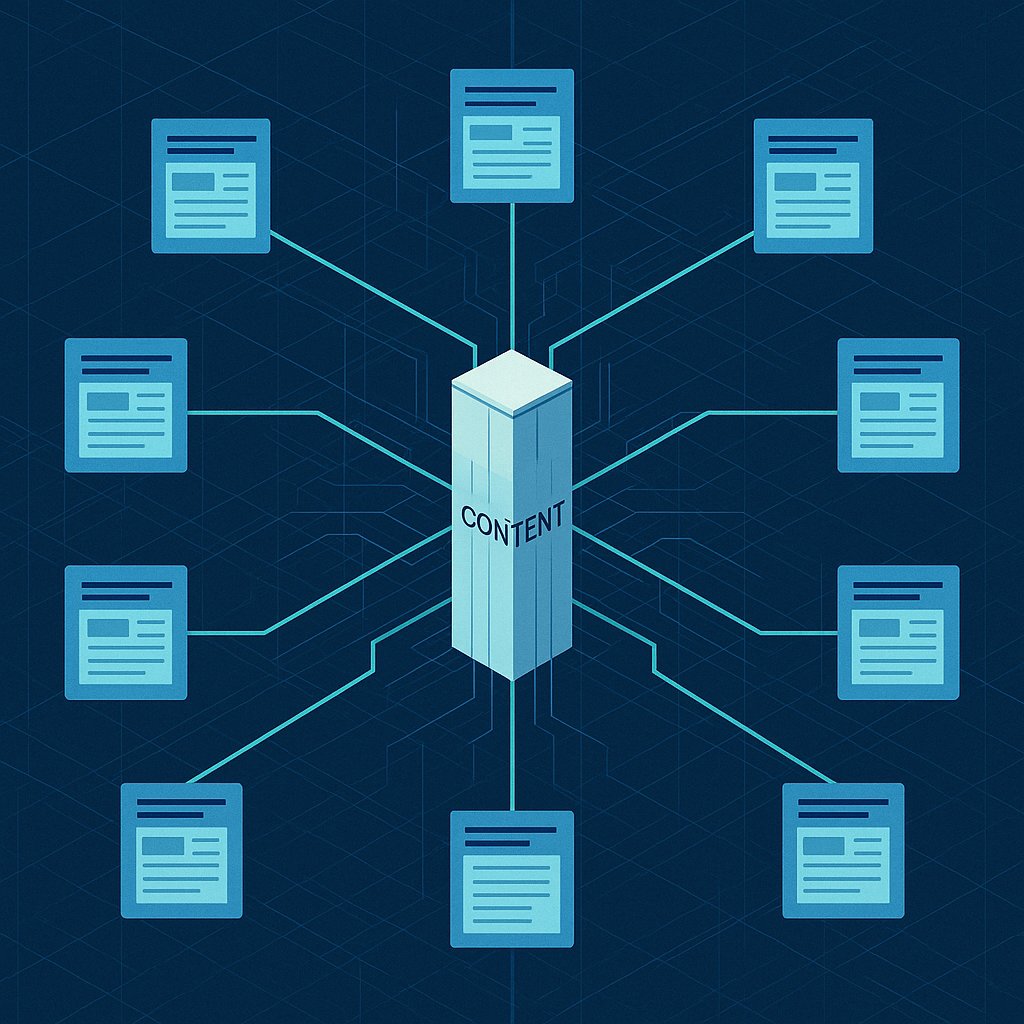
Topic clusters have fundamentally changed how search engines understand and rank content. Gone are the days when isolated blog posts could compete effectively in search results. Today’s SEO landscape demands a structured, interconnected approach where content operates as part of a cohesive ecosystem.
For WordPress site owners, implementing topic clusters means transforming your content library from a collection of standalone articles into an authoritative knowledge hub. This architectural shift signals to search engines that your site offers comprehensive coverage of specific subjects, which directly translates into improved rankings and organic visibility.
The challenge lies in execution. Building topic clusters manually requires meticulous planning, constant maintenance, and sophisticated internal linking strategies. Most WordPress sites struggle with this complexity, leaving valuable topical authority on the table. This is where AI-powered internal linking fundamentally changes the game, transforming cluster implementation from a months-long project into an automated workflow.
Understanding the Pillar-Cluster Content Model
What Defines a Pillar Page
A pillar page serves as the authoritative cornerstone of your topic cluster. Think of it as the comprehensive guide that covers all fundamental aspects of a broad subject. For a WordPress site focused on digital marketing, a pillar page might be titled ‘Complete Guide to Content Marketing Strategy’ and span 3,000-5,000 words.
Your pillar page should provide enough depth to satisfy searchers looking for comprehensive information, yet remain accessible enough to encourage exploration of related subtopics. The goal is not to answer every possible question in exhaustive detail, but to establish the framework that your cluster content will support and expand upon.
Pillar pages typically target high-volume, competitive keywords with broad search intent. They attract significant traffic and serve as the primary entry point for visitors discovering your expertise on a particular subject.
How Cluster Content Supports Topical Authority
Cluster content consists of focused articles that explore specific subtopics in depth. Each cluster piece targets a long-tail keyword variation and dives deep into one particular aspect of the broader pillar topic.
For that content marketing pillar, cluster articles might include ‘How to Create Editorial Calendars That Drive Results,’ ‘Content Distribution Strategies for B2B Companies,’ or ‘Measuring Content Marketing ROI: Metrics That Matter.’ Each piece stands alone as valuable content while reinforcing the overall authority of your pillar.
The mathematical beauty of topic clusters emerges in their linking structure. Every cluster article links back to the pillar page using relevant anchor text, while the pillar page links out to all supporting cluster content. This bidirectional linking creates a semantic relationship that search algorithms recognize as comprehensive topical coverage.
The Role of Semantic Relationships in Cluster Architecture
Search engines have evolved beyond simple keyword matching. Modern algorithms understand entity relationships, contextual relevance, and topical depth through natural language processing. When you structure content as clusters, you’re essentially creating a semantic map that aligns with how search engines categorize and understand information.
This semantic architecture means cluster content reinforces the pillar page’s authority through contextual association. When Google sees 15 in-depth articles all linking to and from a central pillar page using semantically related anchor text, it interprets this as strong evidence of comprehensive expertise.
The semantic relationships extend beyond simple parent-child connections. Cluster articles can and should link to each other when contextually relevant, creating a dense web of interconnected content that demonstrates thorough subject matter coverage.
Planning Your WordPress Topic Cluster Strategy
Conducting Topic Research for Cluster Opportunities
Effective cluster planning begins with identifying topics where you can genuinely achieve authority. Start by analyzing your existing high-performing content, customer questions, and search demand data. Look for broad topics with sufficient search volume to justify a comprehensive pillar page, plus dozens of related subtopic opportunities.
Use keyword research tools to map out the full landscape of search queries related to your potential pillar topics. You’re looking for a main topic with 1,000+ monthly searches and 20-50 supporting subtopics with 100-500 monthly searches each. This balance ensures your cluster can capture significant traffic while maintaining focused, valuable content.
Consider competitive dynamics in your topic selection. Highly competitive topics require more extensive clusters and stronger supporting content to compete effectively. Sometimes choosing a narrower topic where you can achieve clear authority delivers better results than attempting to compete in oversaturated markets.
Mapping Keyword Intent Across Cluster Content
Not all cluster content serves the same purpose in your conversion funnel. Map the search intent behind each potential cluster article to understand how it fits into the user journey.
Informational queries typically dominate the top of funnel, where users are researching problems and exploring solutions. These cluster articles build awareness and establish expertise. Commercial investigation queries occupy the middle funnel, where users compare options and evaluate approaches. Transactional queries at the bottom funnel indicate purchase readiness.
Your cluster architecture should include content targeting all intent stages, with internal linking strategically guiding users through their journey. The pillar page often targets broad informational intent, while cluster articles can span the full spectrum from pure education to buying guides.
Creating a Cluster Content Calendar
A realistic publishing schedule prevents cluster projects from stalling halfway through implementation. Break your cluster into phases, starting with the pillar page and your strongest supporting articles.
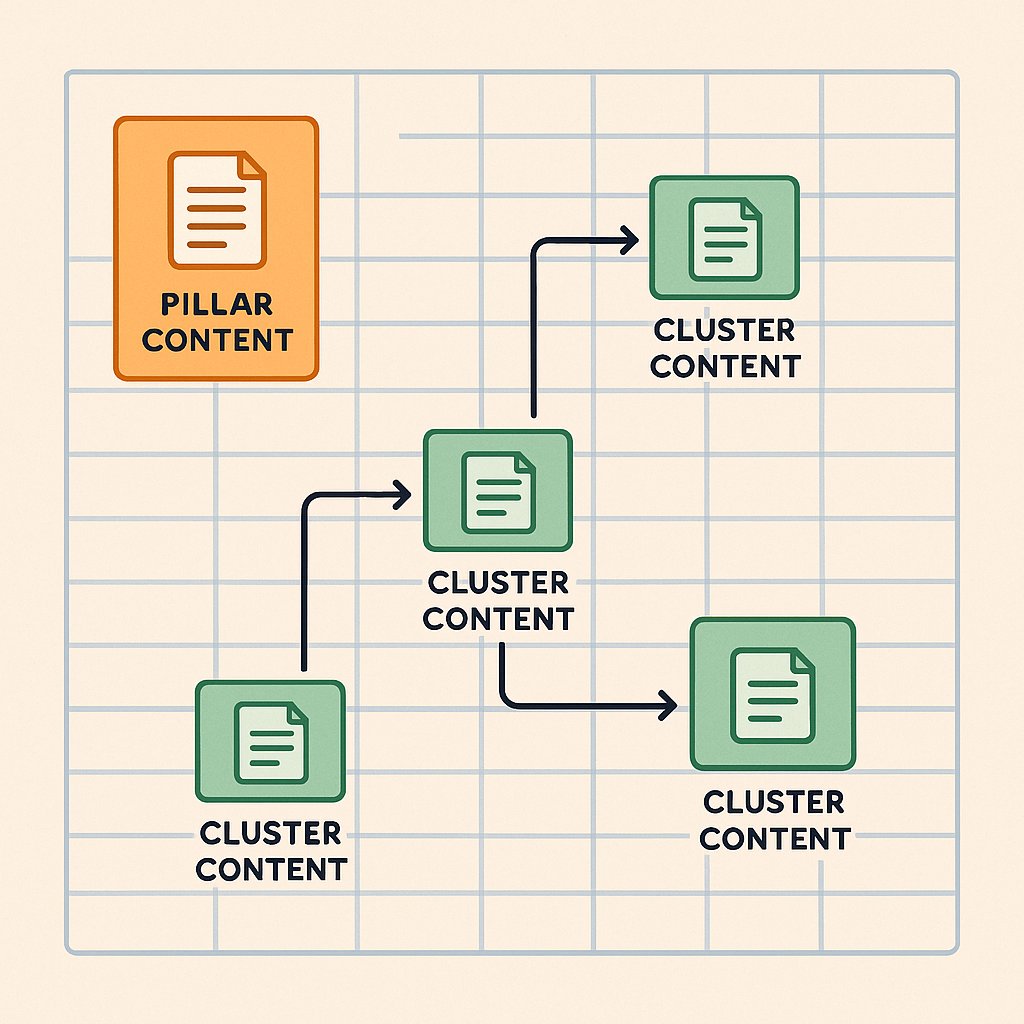
Plan to publish at least one cluster article per week, ensuring consistent progress without overwhelming your content production capacity. This cadence gives you time to maintain quality while building momentum as search engines discover and index your interconnected content.
Track dependencies in your content calendar. Some cluster articles naturally reference others, so publishing order matters. Front-load articles that other pieces will reference, creating opportunities for natural internal linking as you expand the cluster.
Building Pillar Pages That Drive Cluster Performance
Structuring Comprehensive Pillar Content
Pillar page structure requires careful balance between comprehensiveness and usability. Begin with a detailed table of contents that clearly outlines all major sections, allowing readers to navigate directly to relevant subsections while providing search engines with clear content hierarchy.
Each major section within your pillar should introduce a subtopic at a high level, providing enough detail to be genuinely useful while leaving room for cluster articles to explore specifics. Think of pillar sections as substantial introductions that answer the ‘what’ and ‘why’ questions, setting up cluster content to address the ‘how’ and ‘when’ in detail.
Integrate visual elements throughout pillar content to improve engagement and comprehension. Diagrams illustrating cluster architecture, data visualizations supporting key points, and strategic imagery breaking up text sections all contribute to pillar page effectiveness.
Optimizing Pillar Pages for High-Volume Keywords
Pillar pages should target your most valuable, competitive keywords, which means on-page optimization becomes critical. Include your primary keyword in the title tag, H1, first paragraph, and naturally throughout the content, but avoid keyword stuffing that compromises readability.
Structure content using clear heading hierarchy (H2, H3, H4) that incorporates semantic keyword variations. This hierarchy helps search engines understand content organization while addressing the breadth of related searches users might perform.
Extend pillar page optimization beyond basic keyword placement. Implement schema markup to help search engines understand content structure. Add FAQ sections addressing common questions. Include author bios and expertise indicators that support E-E-A-T signals.
Internal Link Placement Within Pillar Content
Your pillar page serves as the hub that distributes link equity throughout your cluster. Strategic placement of internal links to cluster content happens naturally as you introduce each subtopic within your pillar structure.
When discussing a concept that one of your cluster articles explores in depth, that’s the perfect opportunity to add a contextual internal link. Use descriptive anchor text that accurately represents the linked article’s topic, helping both users and search engines understand the relationship.
Avoid relegating all cluster links to a simple list at the end of your pillar page. While a comprehensive ‘related articles’ section has value, the most powerful internal links appear naturally within your pillar content, signaling strong semantic relationships to search algorithms.
Creating Cluster Content That Reinforces Authority
Determining Optimal Cluster Size and Depth
The ideal cluster contains enough supporting content to demonstrate comprehensive coverage without diluting focus through unnecessary articles. Most effective clusters include 10-30 supporting articles, though this varies based on topic breadth and competitive intensity.
Quality always trumps quantity in cluster building. Five exceptional cluster articles that thoroughly address high-value subtopics deliver better results than twenty mediocre pieces that skim surface-level information. Each cluster article should justify its existence by providing substantial value that warrants a dedicated page.
Consider cluster depth as an evolving strategy. Launch with a core set of strongest cluster articles, then expand systematically based on performance data and user engagement signals. This iterative approach lets you refine strategy based on real-world results rather than theoretical planning.
Writing Cluster Articles That Stand Alone
Each cluster article must deliver complete value independently, even as it contributes to broader cluster authority. Visitors might land on cluster content directly from search results, never seeing your pillar page, so every article needs self-contained substance.
Target specific long-tail keywords with each cluster piece, focusing on search queries that represent genuine user intent. A cluster article titled ‘Email Marketing Automation Workflows for E-commerce’ should comprehensively address that specific topic, not merely reference it as a subtopic of broader email marketing discussions.
Structure cluster articles with clear introductions that establish context, comprehensive body sections that deliver promised value, and conclusions that naturally reference related content. This self-contained structure ensures articles perform well in search results while supporting cluster cohesion through strategic internal linking.
Optimizing Cluster-to-Pillar Link Anchor Text
Every cluster article should link back to its pillar page, but anchor text selection requires strategic thinking. Generic phrases like ‘click here’ or ‘read more’ waste valuable linking opportunities that could reinforce semantic relationships.
Use descriptive, keyword-rich anchor text that accurately describes the pillar page content. If your pillar covers content marketing strategy, cluster articles might link using phrases like ‘comprehensive content marketing guide,’ ‘complete content strategy framework,’ or ‘content marketing best practices.’ This varied, relevant anchor text signals strong topical relevance to search algorithms.
Avoid over-optimizing with exact-match anchor text in every cluster article. Natural variation in how you reference your pillar page creates a more organic linking profile that search engines view favorably. Mix branded anchors, topical phrases, and natural language references to maintain diversity.
Implementing AI-Powered Internal Linking for Cluster Management
Why Manual Cluster Linking Breaks Down at Scale
Managing internal links across a 30-article cluster manually becomes exponentially complex as your content library grows. Each new article requires reviewing existing content to identify relevant linking opportunities, updating older articles to link to new content, and maintaining bidirectional connections that search engines value.
The human tendency to forget about older content means recently published articles accumulate internal links while older, potentially more authoritative content gets orphaned. This uneven link distribution undermines the cluster architecture you worked to build.
Content updates and revisions create additional complexity. When you significantly update a cluster article, you should review and potentially update internal links across related content to reflect new focus or structure. Few WordPress site owners maintain this level of ongoing optimization manually.
How Automation Maintains Cluster Integrity
Automated internal linking solutions analyze your entire content library to identify semantic relationships between articles. Rather than relying on manual discovery of linking opportunities, AI systems understand topical connections and automatically suggest or implement relevant internal links.
For topic clusters, automation ensures every cluster article maintains strong bidirectional links with the pillar page plus contextually relevant connections with related cluster content. As you publish new cluster articles, automation identifies where they fit within your existing architecture and creates appropriate internal links without manual intervention.
Tools like AI Internal Links can automatically recognize your cluster structure and maintain linking integrity as your content library expands, ensuring new additions integrate seamlessly into your existing topical architecture.
Setting Up Automated Cluster Link Patterns
While automation handles discovery and implementation, you retain strategic control over cluster linking patterns. Configure rules that ensure cluster content always links to pillar pages using varied, relevant anchor text. Set preferences for how cluster articles connect with each other based on semantic proximity.
Define linking density preferences to prevent over-optimization. You might specify that cluster articles should include 3-5 internal links to related content, with at least one always pointing to the pillar page. These guardrails ensure automation enhances rather than compromises your SEO strategy.
Regularly review automated linking suggestions to refine algorithms and improve accuracy. Most AI systems learn from your adjustments, becoming more effective at identifying relevant linking opportunities that align with your specific cluster architecture and content strategy.
Measuring and Optimizing Topic Cluster Performance
Key Metrics for Cluster Success
Track organic traffic at both pillar and cluster levels to understand how your architecture performs. The pillar page should attract significant direct traffic from high-volume keywords, while cluster articles capture long-tail variations. Combined, they should demonstrate traffic growth exceeding what isolated articles would achieve.
Monitor keyword rankings across your entire cluster vocabulary. Your pillar page should rank for broad, competitive terms, while cluster articles dominate specific long-tail queries. Look for ranking improvements that indicate growing topical authority as search engines recognize your comprehensive coverage.
Internal link metrics reveal cluster health. Analyze which cluster articles receive the most internal links, ensuring link equity distributes relatively evenly rather than concentrating on just a few pieces. Track how users navigate between cluster articles and pillar pages, identifying content that successfully guides visitors deeper into your topic hub.
Identifying Cluster Content Gaps
Regular cluster audits reveal opportunities to strengthen topical coverage. Use keyword research tools to identify related search queries you haven’t addressed. Analyze competitor content to discover subtopics where your cluster lacks depth.
Search Console data provides valuable gap insights. Look for queries where your cluster content ranks on page two or three. These represent opportunities to create new, more focused cluster articles targeting those specific searches, or to expand existing content to address them comprehensively.
User behavior metrics indicate content gaps through implicit signals. High bounce rates on pillar pages might suggest visitors aren’t finding pathways to the specific information they seek. Low time-on-site across your cluster could indicate content doesn’t deliver sufficient depth, requiring expansion or new supporting articles.
Refreshing and Expanding Existing Clusters
Topic clusters require ongoing maintenance to preserve and enhance their authority. Regularly update pillar pages with new information, emerging trends, and links to recently published cluster content. This freshness signals to search engines that your authoritative content remains current and relevant.
Expand underperforming cluster articles rather than abandoning them. If a cluster piece attracts minimal traffic, analyze whether it needs additional depth, better optimization, or stronger internal linking from other cluster content. Often, relatively minor improvements to weak cluster articles yield significant performance gains.
System periodic cluster reviews into your content calendar. Quarterly audits of each major cluster let you identify technical issues, broken internal links, outdated information, and expansion opportunities before they significantly impact performance.
Advanced Cluster Strategies for Competitive Topics
Creating Multi-Tier Cluster Hierarchies
For extremely broad topics, single-tier clusters prove insufficient to capture comprehensive coverage. Multi-tier structures feature a top-level pillar page, intermediate ‘sub-pillar’ pages covering major subtopics, and cluster articles supporting each sub-pillar.
This hierarchical approach lets you compete in highly competitive spaces by demonstrating exceptional depth. A top-level pillar on ‘Digital Marketing’ might have sub-pillars for SEO, content marketing, social media marketing, and paid advertising, with each sub-pillar supported by 10-15 cluster articles.
Internal linking in multi-tier clusters requires careful architecture. The top pillar links to all sub-pillars. Each sub-pillar links to the top pillar and its supporting cluster articles. Cluster articles link to their sub-pillar and can cross-link to related cluster articles under other sub-pillars when contextually relevant.
Leveraging Cluster Architecture for Featured Snippets
Topic clusters create natural opportunities to capture featured snippets across multiple related queries. Structure cluster articles with clear, concise answers to specific questions, formatted in ways that align with snippet formats: numbered lists, bullet points, tables, and direct-answer paragraphs.
Your pillar page should target featured snippets for broad, definitional queries in your topic area. Cluster articles pursue snippets for specific how-to, comparison, and list-based queries. This multi-pronged approach dramatically increases your snippet capture rate.
When cluster articles successfully capture featured snippets, they amplify the authority of your entire cluster through increased visibility and click-through rates. These high-performing pieces should receive enhanced internal linking from other cluster content to maximize their authority distribution.
Integrating Clusters With Conversion Funnels
Strategic topic clusters don’t just build authority—they guide visitors through conversion pathways. Map your cluster content to funnel stages, ensuring you have awareness content (informational cluster articles), consideration content (comparison and solution-focused pieces), and decision content (product-specific or service-specific articles).
Internal linking within clusters should reflect funnel progression. Top-of-funnel cluster articles link to middle-funnel content that addresses specific solutions. Middle-funnel pieces link to bottom-funnel content that facilitates conversion decisions. This strategic linking architecture transforms topical authority into business results.
Track conversion metrics across your cluster to identify which content combinations most effectively drive business outcomes. Some clusters generate leads through gated content downloads. Others drive product page visits or demo requests. Understanding these pathways lets you optimize cluster architecture for both SEO performance and revenue generation.